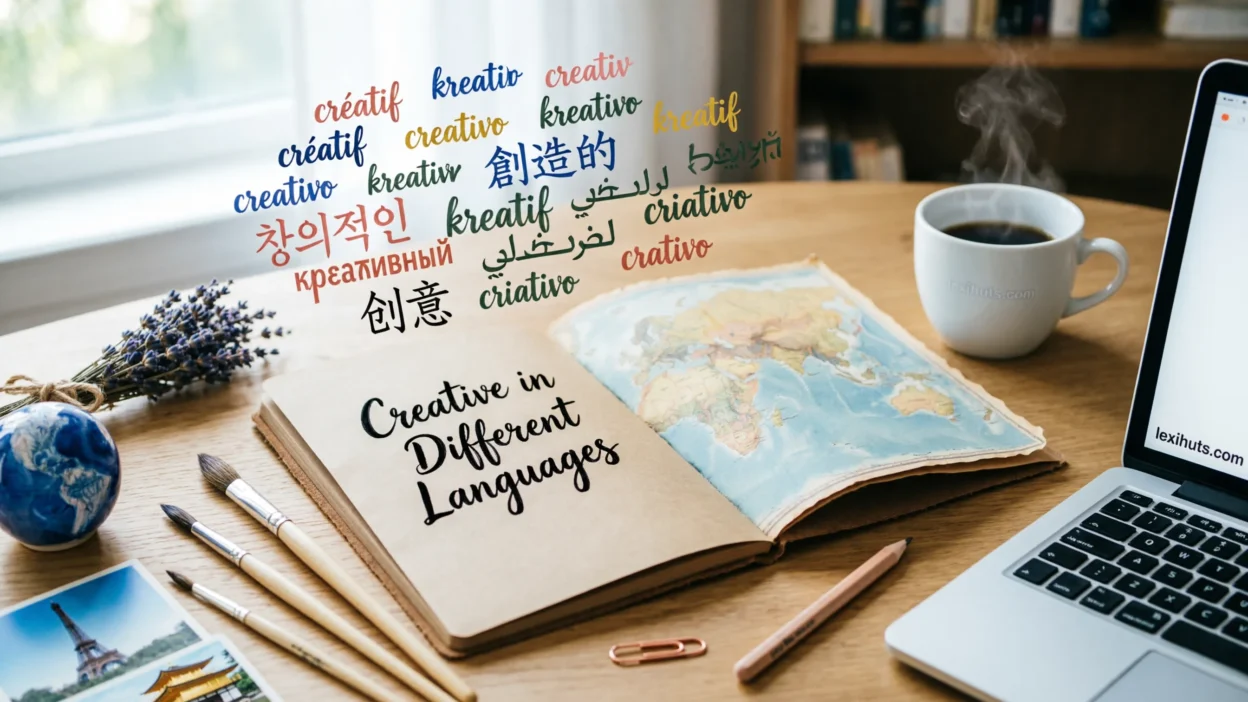
Creativity is a universal quality that connects people across cultures, industries, and languages.
If you are learning a new language, writing creatively, traveling abroad, or simply expanding your vocabulary, understanding how to say “creative” in different languages can be both useful and fascinating.
This word often represents imagination, originality, innovation, and artistic thinking.
In this guide, you will discover how to say creative in different languages with pronunciation help, meanings, and examples.
You will also learn why creativity matters globally and how these translations can improve communication, education, and cultural understanding.
Why Learn “Creative” in Different Languages?
The word “creative” is commonly used in education, business, art, marketing, and everyday conversations. Learning this term in multiple languages can help you:
- Improve your multilingual vocabulary
- Communicate better while traveling
- Understand global cultures
- Enhance language-learning skills
- Use more expressive words in conversations and writing
Creative in Different Languages With Meanings and Pronunciations
1. Creative in Spanish
Phrase: Creativo / Creativa
Pronunciation: kreh-ah-TEE-voh
Meaning: Someone who has imaginative or artistic abilities.
Example: Ella es muy creativa en su trabajo.
Explanation: Spanish uses different forms depending on gender, but both mean creative.
2. Creative in French
Phrase: Créatif / Créative
Pronunciation: kray-ah-TEEF
Meaning: Innovative or imaginative person.
Example: Il est très créatif avec ses idées.
Explanation: This word is commonly used in art, design, and business fields.
3. Creative in German
Phrase: Kreativ
Pronunciation: kray-ah-TEEF
Meaning: Having original ideas or artistic skill.
Example: Sie ist sehr kreativ.
Definition: German uses the same form for many contexts.
4. Creative in Italian
Phrase: Creativo / Creativa
Pronunciation: kray-ah-TEE-vo
Meaning: Inventive and artistic.
Example: Lui è molto creativo.
Explanation: Frequently used in fashion, cooking, and art.
5. Creative in Portuguese
Phrase: Criativo / Criativa
Pronunciation: kree-ah-CHEE-vo
Meaning: Full of imagination or innovation.
Example: Ela é uma pessoa criativa.
Definition: Popular in both Portugal and Brazil.
6. Creative in Dutch
Phrase: Creatief
Pronunciation: kray-ah-TEEF
Meaning: Artistic or imaginative.
Example: Hij is erg creatief.
Explanation: Widely used in professional and educational settings.
7. Creative in Russian
Phrase: Креативный
Pronunciation: kree-ah-TEEV-nee
Meaning: Creative or innovative.
Example: Он очень креативный.
Definition: Common in modern Russian conversations.
8. Creative in Arabic
Phrase: مبدع
Pronunciation: Mubdi’
Meaning: Talented, innovative, or artistic.
Example: هو شخص مبدع.
Explanation: Often used to praise someone’s talent.
9. Creative in Hindi
Phrase: रचनात्मक
Pronunciation: Rachnatmak
Meaning: Creative or constructive.
Example: वह बहुत रचनात्मक है।
Definition: Common in educational and artistic contexts.
10. Creative in Urdu
Phrase: تخلیقی
Pronunciation: Takhleeqi
Meaning: Related to creativity or imagination.
Example: وہ بہت تخلیقی انسان ہے۔
Explanation: Frequently used in literature and media.
11. Creative in Chinese
Phrase: 有创意
Pronunciation: Yǒu chuàngyì
Meaning: Full of creative ideas.
Example: 她很有创意。
Definition: A common expression in Mandarin Chinese.
12. Creative in Japanese
Phrase: クリエイティブ
Pronunciation: Kurieitibu
Meaning: Creative or innovative.
Example: 彼はクリエイティブです。
Explanation: Borrowed from English and widely used in Japan.
13. Creative in Korean
Phrase: 창의적인
Pronunciation: Chang-ui-jeog-in
Meaning: Imaginative and original.
Example: 그는 창의적인 사람입니다.
Definition: Often used in education and technology.
14. Creative in Turkish
Phrase: Yaratıcı
Pronunciation: yah-rah-tuh-juh
Meaning: Inventive or imaginative.
Example: O çok yaratıcı biri.
Explanation: Common in business and artistic discussions.
15. Creative in Greek
Phrase: Δημιουργικός
Pronunciation: Dimiourgikós
Meaning: Creative and productive.
Example: Είναι πολύ δημιουργικός.
Definition: Derived from the Greek word for creation.
16. Creative in Polish
Phrase: Kreatywny
Pronunciation: kreh-ah-TIV-neh
Meaning: Innovative or artistic.
Example: Ona jest bardzo kreatywna.
Explanation: Used widely in workplaces and schools.
17. Creative in Swedish
Phrase: Kreativ
Pronunciation: kreh-ah-TEEV
Meaning: Having imagination or originality.
Example: Han är kreativ.
Definition: Similar to English in spelling and meaning.
18. Creative in Norwegian
Phrase: Kreativ
Pronunciation: kreh-ah-TEEV
Meaning: Inventive and imaginative.
Example: Hun er veldig kreativ.
Explanation: Frequently used in Scandinavian languages.
19. Creative in Danish
Phrase: Kreativ
Pronunciation: kreh-ah-TEEV
Meaning: Artistic and innovative.
Example: Han er meget kreativ.
Definition: Common in professional communication.
20. Creative in Finnish
Phrase: Luova
Pronunciation: loo-oh-va
Meaning: Creative or inventive.
Example: Hän on luova henkilö.
Explanation: Derived from the concept of creating something new.
21. Creative in Thai
Phrase: สร้างสรรค์
Pronunciation: Sang-san
Meaning: Creative and constructive.
Example: เขาเป็นคนสร้างสรรค์
Definition: Popular in media and education.
22. Creative in Vietnamese
Phrase: Sáng tạo
Pronunciation: sang tao
Meaning: Innovative or imaginative.
Example: Cô ấy rất sáng tạo.
Explanation: Frequently used in business and learning.
23. Creative in Indonesian
Phrase: Kreatif
Pronunciation: kreh-ah-TEEF
Meaning: Creative and original.
Example: Dia sangat kreatif.
Definition: Similar to English spelling.
24. Creative in Malay
Phrase: Kreatif
Pronunciation: kreh-ah-TEEF
Meaning: Imaginative and artistic.
Example: Dia seorang yang kreatif.
Explanation: Commonly used in schools and workplaces.
25. Creative in Hebrew
Phrase: יצירתי
Pronunciation: Yetzirati
Meaning: Creative or inventive.
Example: הוא מאוד יצירתי.
Definition: Often used to describe artistic talent.
26. Creative in Bengali
Phrase: সৃজনশীল
Pronunciation: Srijonshil
Meaning: Creative or productive.
Example: সে খুব সৃজনশীল।
Explanation: Popular in literature and education.
27. Creative in Punjabi
Phrase: ਰਚਨਾਤਮਕ
Pronunciation: Rachnatmak
Meaning: Creative and imaginative.
Example: ਉਹ ਬਹੁਤ ਰਚਨਾਤਮਕ ਹੈ।
Definition: Common in academic writing.
28. Creative in Persian
Phrase: خلاق
Pronunciation: Khallagh
Meaning: Inventive or artistic.
Example: او بسیار خلاق است.
Explanation: Frequently used in cultural discussions.
29. Creative in Swahili
Phrase: Mbunifu
Pronunciation: mm-boo-NEE-foo
Meaning: Innovative or creative person.
Example: Yeye ni mbunifu sana.
Definition: Often used in design and business.
30. Creative in Filipino
Phrase: Malikhain
Pronunciation: mah-lee-kha-in
Meaning: Artistic and imaginative.
Example: Siya ay malikhain.
Explanation: Common in education and arts.
31. Creative in Romanian
Phrase: Creativ
Pronunciation: kreh-ah-TEEV
Meaning: Innovative or imaginative.
Example: Ea este foarte creativă.
Definition: Similar to other Romance languages.
32. Creative in Czech
Phrase: Kreativní
Pronunciation: kreh-ah-TEEV-nee
Meaning: Creative and inventive.
Example: Je velmi kreativní.
Explanation: Common in professional settings.
33. Creative in Hungarian
Phrase: Kreatív
Pronunciation: kreh-ah-TEEV
Meaning: Artistic and original.
Example: Nagyon kreatív ember.
Definition: Widely used in modern Hungarian.
34. Creative in Ukrainian
Phrase: Креативний
Pronunciation: kree-ah-TEEV-nee
Meaning: Innovative or imaginative.
Example: Він дуже креативний.
Explanation: Common in media and education.
35. Creative in Latin
Phrase: Creativus
Pronunciation: kray-ah-TEE-voos
Meaning: Related to creation or invention.
Example: Homo creativus est.
Definition: Root form connected to many modern European languages.
Why Creativity Matters Across Different Cultures
Creativity plays an important role in communication, technology, art, education, and innovation worldwide. Every culture values original thinking in different ways, but the concept remains universal. Learning how different languages express creativity helps people understand cultural perspectives and communicate more effectively.
In many countries, creativity is linked with problem-solving, artistic expression, and leadership. Businesses also value creative thinking because it drives innovation and growth.
Practical Tips for Learning Words in Different Languages
Practice Pronunciation Daily
Listening to native speakers can improve your pronunciation and confidence when using new vocabulary.
Use Words in Sentences
Creating simple example sentences helps you remember meanings more easily.
Learn Related Vocabulary
Study related words like imagination, innovation, art, and design to expand your language skills.
Watch International Content
Movies, songs, and videos from different countries can help you hear words naturally in context.
Keep a Multilingual Vocabulary Notebook
Writing translations and examples regularly improves memory and language retention.
Conclusion
Learning how to say creative in different languages is a fun and valuable way to explore global cultures and improve communication skills.
From Spanish and French to Arabic, Chinese, and Urdu, every language offers a unique expression of creativity.
If you are a student, traveler, writer, or language enthusiast, these translations can help you connect with people worldwide and better appreciate the universal power of imagination.
FAQs
1. How do you say creative in Spanish?
Creative in Spanish is “Creativo” for males and “Creativa” for females.
2. What is the meaning of creative in different languages?
The word generally refers to imagination, originality, innovation, and artistic thinking across cultures.
3. Why should I learn creative words in multiple languages?
It improves communication, cultural understanding, and vocabulary skills while helping with travel and language learning.
4. Which languages use words similar to English for creative?
Languages like German, Dutch, Swedish, Indonesian, and Danish use words very similar to the English term creative.
5. Is creativity valued in every culture?
Yes, creativity is valued globally in education, business, technology, and artistic expression.