When you’re traveling in a new country, one of the most important phrases you’ll need is “where is the bathroom?” It’s a simple question, but knowing how to say it in different languages can save you from awkward moments and help you navigate unfamiliar places with confidence.
In this guide, you’ll learn how to ask for the bathroom in multiple languages with easy pronunciations and examples.
If you’re traveling for fun, work, or study, these essential phrases will make your journey smoother and stress-free.
Why Learning “Where Is the Bathroom?” in Different Languages Matters
Understanding this phrase is more than just convenience—it’s about comfort, confidence, and basic communication. In many countries, English is not widely spoken, so knowing the local phrase can make a big difference.
You’ll also come across variations like “restroom,” “toilet,” or “washroom,” depending on the region. Learning these terms improves your ability to connect with locals and get help quickly.
Common Translations of “Where Is the Bathroom?” in Different Languages
1. Spanish
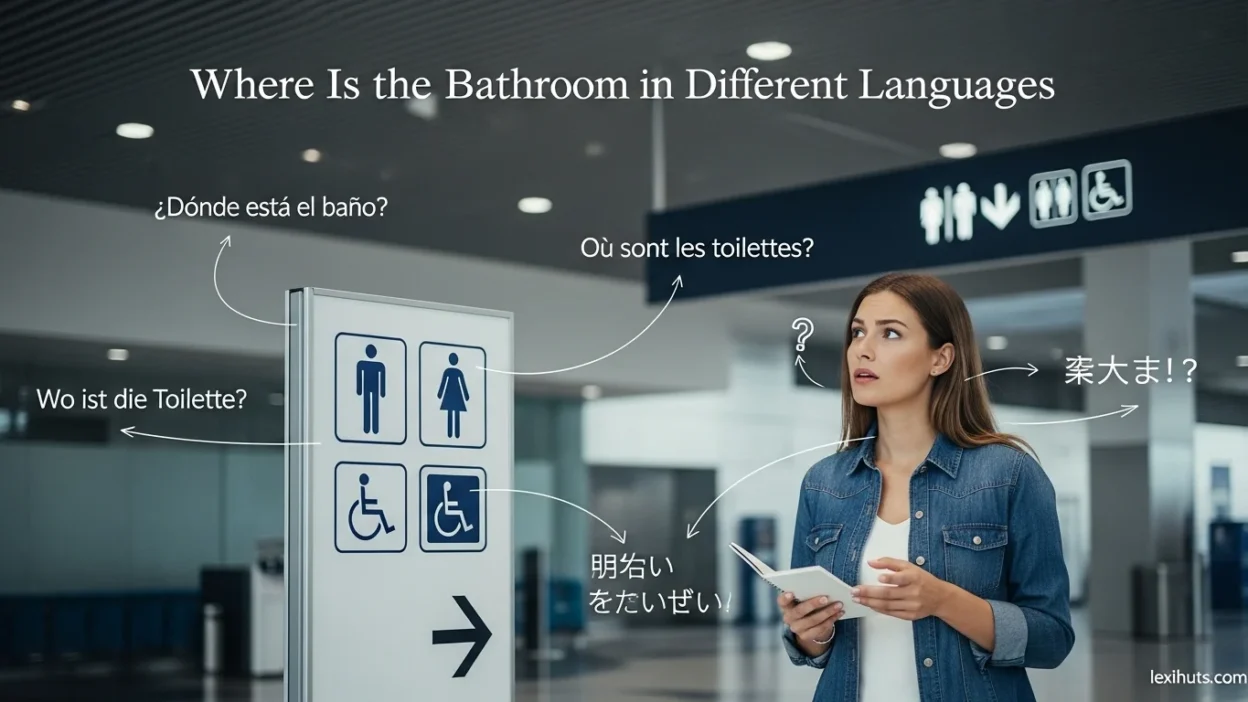
Phrase: ¿Dónde está el baño?
Pronunciation: Don-de es-tah el ban-yo
Meaning: Where is the bathroom?
Example: ¿Dónde está el baño, por favor?
2. French
Phrase: Où sont les toilettes ?
Pronunciation: Oo son lay twah-let
Meaning: Where are the toilets?
Example: Où sont les toilettes, s’il vous plaît ?
3. German
Phrase: Wo ist die Toilette?
Pronunciation: Vo ist dee toy-let-uh
Meaning: Where is the toilet?
Example: Wo ist die Toilette, bitte?
4. Italian
Phrase: Dov’è il bagno?
Pronunciation: Doh-veh eel ban-yo
Meaning: Where is the bathroom?
Example: Dov’è il bagno, per favore?
5. Chinese (Mandarin)
Phrase: 洗手间在哪里?
Pronunciation: Xǐ shǒu jiān zài nǎ lǐ
Meaning: Where is the bathroom?
Example: 请问,洗手间在哪里?
6. Japanese
Phrase: トイレはどこですか?
Pronunciation: Toi-re wa doko desu ka
Meaning: Where is the toilet?
Example: トイレはどこですか?
7. Arabic
Phrase: أين الحمام؟
Pronunciation: Ayn al-hammam
Meaning: Where is the bathroom?
Example: من فضلك، أين الحمام؟
8. Hindi
Phrase: बाथरूम कहाँ है?
Pronunciation: Bathroom kahan hai
Meaning: Where is the bathroom?
Example: कृपया बताइए, बाथरूम कहाँ है?
9. Portuguese
Phrase: Onde fica o banheiro?
Pronunciation: On-jee fee-kah o ban-yeh-ro
Meaning: Where is the bathroom?
Example: Onde fica o banheiro, por favor?
10. Russian
Phrase: Где туалет?
Pronunciation: Gdye too-a-lyet
Meaning: Where is the toilet?
Example: Скажите, где туалет?
11. Korean
Phrase: 화장실 어디예요?
Pronunciation: Hwa-jang-shil eo-di-ye-yo
Meaning: Where is the bathroom?
Example: 화장실 어디예요?
12. Turkish
Phrase: Tuvalet nerede?
Pronunciation: Too-va-let neh-reh-deh
Meaning: Where is the toilet?
Example: Tuvalet nerede, lütfen?
13. Thai
Phrase: ห้องน้ำอยู่ที่ไหน?
Pronunciation: Hong-nam yoo tee nai
Meaning: Where is the bathroom?
Example: ห้องน้ำอยู่ที่ไหน?
14. Greek
Phrase: Πού είναι η τουαλέτα;
Pronunciation: Poo ee-neh ee too-ah-leh-ta
Meaning: Where is the toilet?
Example: Πού είναι η τουαλέτα;
15. Dutch
Phrase: Waar is het toilet?
Pronunciation: Vaar is het toy-let
Meaning: Where is the toilet?
Example: Waar is het toilet, alstublieft?
Variations You Should Know
Formal vs Informal Requests
- Adding “please” makes your question polite.
- Example: “Excuse me, where is the bathroom?”
Regional Differences
- USA: Bathroom / Restroom
- UK: Toilet / Loo
- Canada: Washroom
Non-Verbal Help
- Use hand gestures if language fails.
- Look for universal restroom signs.
SEO Section: Why This Topic Is Important
The keyword “where is the bathroom in different languages” has strong global search demand because it solves a real, immediate need for travelers. It targets informational search intent and provides high practical value. Content like this ranks well because it is evergreen, useful across cultures, and frequently searched by tourists, students, and business travelers.
By covering multiple languages and including pronunciation and examples, this article increases dwell time, improves user satisfaction, and aligns with Google’s helpful content guidelines.
Practical Tips for Using These Phrases
Speak Clearly and Slowly
Even if your pronunciation isn’t perfect, speaking slowly helps others understand you.
Learn Key Words
Sometimes just saying “toilet” or “bathroom” in the local language is enough.
Use Translation Apps
Apps can help when you’re unsure, especially in countries with less English usage.
Be Polite
Always include polite words like “please” and “thank you.”
Observe Signs
Public places often have clear restroom signs—look for icons if unsure.
Conclusion
Knowing how to say “where is the bathroom?” in different languages is a small skill that makes a big difference while traveling.
It helps you stay comfortable, communicate effectively, and navigate new environments with ease.
With just a little preparation, you can avoid stress and enjoy your journey with confidence.
FAQs:
1. What is the easiest way to ask for a bathroom abroad?
Use simple phrases like “toilet?” or learn the local translation for better clarity.
2. Is “bathroom” the same as “toilet” worldwide?
No, different countries use different terms like restroom, washroom, or loo.
3. Can people understand English if I ask for a bathroom?
In many tourist areas yes, but not always in rural or non-English-speaking regions.
4. Should I use formal language when asking?
Yes, using polite phrases increases your chances of getting a helpful response.
5. Are there universal signs for bathrooms?
Yes, most public places use standard icons for male and female restrooms.