
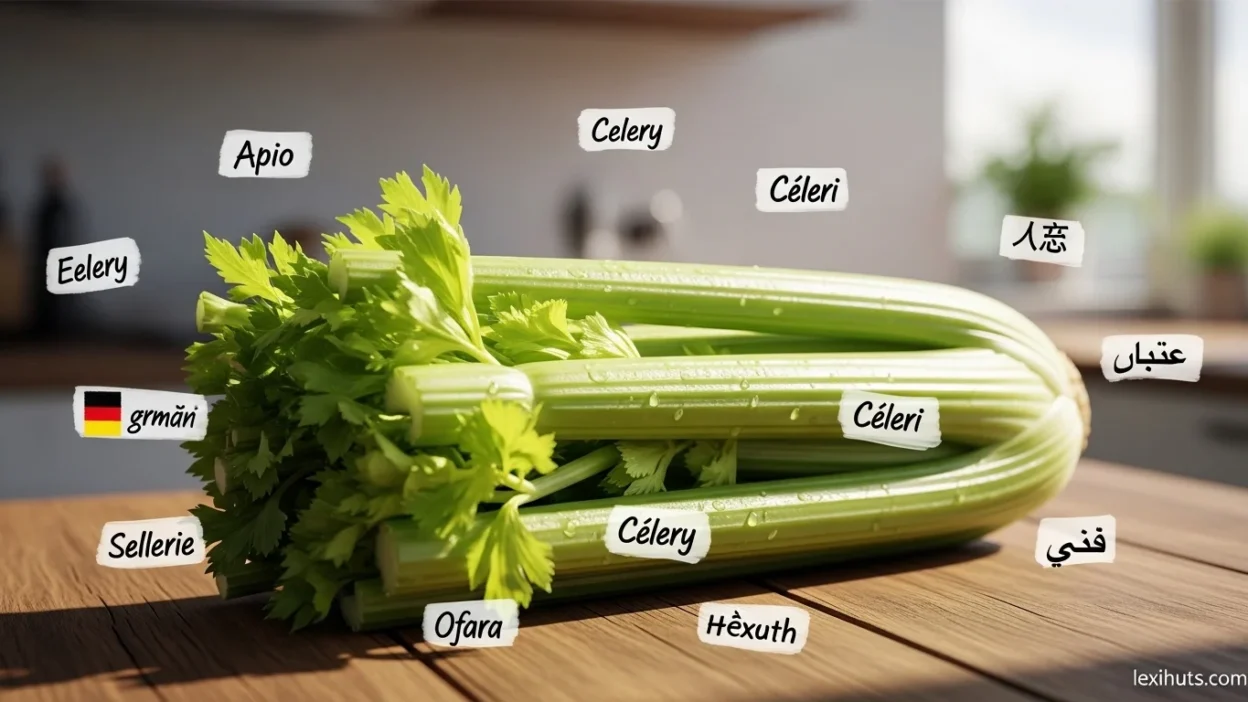
Celery is a common vegetable used in kitchens across the globe, known for its crisp texture and fresh taste. But have you ever wondered how the word “celery” is spoken in different languages?
Learning this not only helps in travel and communication but also deepens your understanding of global cultures and cuisines.
In this guide, you’ll explore how to say “celery” in multiple languages, along with pronunciation tips, meanings, and simple examples.
If you’re a language learner, traveler, or food enthusiast, this article will give you a clear and practical overview.
What Does Celery Mean?
Celery is a green vegetable with long stalks, commonly used in salads, soups, and healthy snacks. It is known for being low in calories and rich in nutrients.
Key Features of Celery
- Definition: A crunchy, fibrous vegetable used in cooking and raw dishes
- Taste: Mild, slightly bitter, and refreshing
- Usage: Salads, soups, juices, and garnishes
Celery in Different Languages
Below are common translations of “celery” in various languages. Each includes pronunciation and examples to make learning easier.
1. Spanish
- Phrase: Apio
- Pronunciation: AH-pee-oh
- Example: Me gusta el apio en ensaladas.
- Meaning: I like celery in salads.
2. French
- Phrase: Céleri
- Pronunciation: say-luh-ree
- Example: Le céleri est bon pour la santé.
- Meaning: Celery is good for health.
3. German
- Phrase: Sellerie
- Pronunciation: zeh-LEH-ree
- Example: Sellerie wird oft in Suppen verwendet.
- Meaning: Celery is often used in soups.
4. Italian
- Phrase: Sedano
- Pronunciation: seh-DAH-no
- Example: Il sedano è croccante e fresco.
- Meaning: Celery is crunchy and fresh.
5. Portuguese
- Phrase: Aipo
- Pronunciation: EYE-po
- Example: O aipo é saudável.
- Meaning: Celery is healthy.
6. Hindi
- Phrase: अजवाइन का डंठल (Ajwain ka danthal)
- Pronunciation: uj-WINE ka dun-thal
- Example: यह सब्जी अजवाइन का डंठल है।
- Meaning: This vegetable is celery.
7. Arabic
- Phrase: كرفس (Karfas)
- Pronunciation: KAR-fas
- Example: الكرفس مفيد للصحة.
- Meaning: Celery is beneficial for health.
8. Chinese (Mandarin)
- Phrase: 芹菜 (Qín cài)
- Pronunciation: chin-tsai
- Example: 我喜欢吃芹菜。
- Meaning: I like eating celery.
9. Japanese
- Phrase: セロリ (Serori)
- Pronunciation: seh-roh-ree
- Example: セロリは体に良いです。
- Meaning: Celery is good for the body.
10. Russian
- Phrase: Сельдерей (Sel’derey)
- Pronunciation: syel-deh-RAY
- Example: Сельдерей полезен.
- Meaning: Celery is полезен.
11. Turkish
- Phrase: Kereviz
- Pronunciation: keh-reh-VEEZ
- Example: Kereviz sağlıklıdır.
- Meaning: Celery is healthy.
12. Korean
- Phrase: 셀러리 (Selleri)
- Pronunciation: sel-leo-ri
- Example: 셀러리는 건강에 좋아요.
- Meaning: Celery is good for health.
13. Urdu
- Phrase: اجوائن کا ڈنٹھل
- Pronunciation: Ajwain ka danthal
- Example: یہ سبزی اجوائن کا ڈنٹھل ہے۔
- Meaning: This vegetable is celery.
14. Greek
- Phrase: Σέλινο (Selino)
- Pronunciation: SEH-lee-no
- Example: Το σέλινο είναι θρεπτικό.
- Meaning: Celery is nutritious.
15. Dutch
- Phrase: Selderij
- Pronunciation: SEL-duh-rye
- Example: Selderij wordt gebruikt in soepen.
- Meaning: Celery is used in soups.
Why Learning “Celery” in Different Languages Matters
Understanding how to say common foods like celery in different languages can be surprisingly useful. It helps in:
- Travel: Ordering food or shopping in local markets
- Cultural Learning: Understanding global cuisines
- Language Skills: Building everyday vocabulary quickly
Food-related words are among the easiest and most practical terms to learn in any language.
Practical Tips for Learning Food Names in Different Languages
Focus on Daily Use Words
Start with common vegetables like celery, onion, and carrot since they appear in daily conversations.
Practice Pronunciation
Repeat words out loud and listen to native speakers to improve accuracy.
Use Real-Life Examples
Try using the word in a sentence to remember it better.
Learn in Groups
Memorize similar food words together to build vocabulary faster.
Connect with Culture
Understand how celery is used in different cuisines to make learning more interesting.
Conclusion
Learning how to say “celery” in different languages is a simple yet effective way to expand your vocabulary and cultural knowledge.
From Spanish “apio” to Chinese “芹菜,” each term reflects a unique linguistic style.
By practicing these translations, you not only improve language skills but also gain confidence in real-world situations like travel and communication.
FAQs
1. What is celery called in Spanish?
Celery in Spanish is called “apio,” commonly used in salads and cooking.
2. How do you say celery in French?
In French, celery is known as “céleri.”
3. What is the Arabic word for celery?
The Arabic word for celery is “karfas” (كرفس).
4. Is celery the same in all languages?
No, the word changes across languages, but the vegetable remains the same.
5. Why should I learn food names in different languages?
It helps with travel, communication, and understanding different cultures.