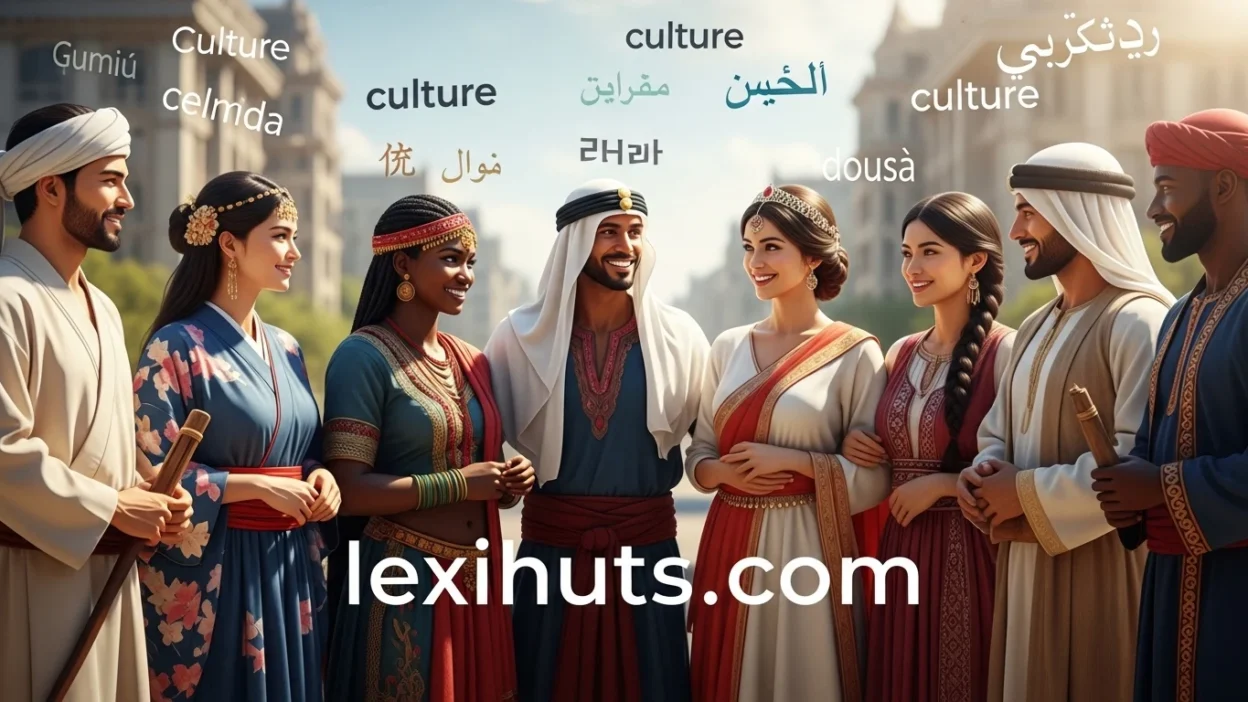
Culture is a powerful concept that shapes how people live, think, and connect across the world.
If you’ve ever wondered how the word “culture” is expressed in different languages, you’re not alone. Understanding culture in different languages not only expands your vocabulary but also deepens your appreciation of global traditions, beliefs, and identities.
In this guide, you’ll explore how “culture” is translated and understood worldwide, along with meanings, pronunciations, and real-life usage. This helps learners, travelers, and content creators better connect with diverse audiences.
What Does “Culture” Mean Globally?
Culture generally refers to the customs, traditions, arts, and social behaviors of a particular group or society. While the core idea remains similar worldwide, each language gives it a slightly unique nuance based on history and context.
Culture in Different Languages
1. Spanish
Phrase: Cultura
Pronunciation: kool-TOO-rah
Meaning: Refers to traditions, arts, and shared social values
Example: La cultura española es muy rica.
Explanation: In Spanish, “cultura” covers both artistic expression and societal traditions.
2. French
Phrase: Culture
Pronunciation: kul-TYOOR
Meaning: Intellectual and artistic development of society
Example: La culture française est célèbre dans le monde.
Explanation: French emphasizes refinement, arts, and education within culture.
3. German
Phrase: Kultur
Pronunciation: kool-TOOR
Meaning: Traditions, heritage, and intellectual achievements
Example: Deutsche Kultur ist vielfältig.
Explanation: In German, “Kultur” often highlights philosophy, arts, and history.
4. Italian
Phrase: Cultura
Pronunciation: kool-TOO-rah
Meaning: Social customs and intellectual growth
Example: La cultura italiana è famosa per il cibo e l’arte.
Explanation: Italian culture strongly connects to lifestyle, cuisine, and art.
5. Arabic
Phrase: ثقافة (Thaqafa)
Pronunciation: tha-qa-fa
Meaning: Knowledge, education, and cultural identity
Example: الثقافة العربية غنية بالتاريخ
Explanation: Arabic links culture closely with knowledge and heritage.
6. Chinese (Simplified)
Phrase: 文化 (Wénhuà)
Pronunciation: wen-hwah
Meaning: Civilization, arts, and intellectual traditions
Example: 中国文化非常古老
Explanation: Chinese culture emphasizes history, philosophy, and harmony.
7. Japanese
Phrase: 文化 (Bunka)
Pronunciation: boon-kah
Meaning: Arts, traditions, and lifestyle
Example: 日本の文化は独特です
Explanation: Japanese “bunka” reflects both modern and traditional life.
8. Hindi
Phrase: संस्कृति (Sanskriti)
Pronunciation: sun-skri-tee
Meaning: Traditions, values, and heritage
Example: भारतीय संस्कृति बहुत समृद्ध है
Explanation: In Hindi, culture is deeply tied to spiritual and social values.
9. Urdu
Phrase: ثقافت (Saqafat)
Pronunciation: sa-qa-fat
Meaning: Customs, traditions, and societal norms
Example: پاکستانی ثقافت خوبصورت ہے
Explanation: Urdu emphasizes cultural identity and traditions.
10. Russian
Phrase: Культура (Kultura)
Pronunciation: kool-TOO-rah
Meaning: Arts, education, and societal development
Example: Русская культура богата
Explanation: Russian culture includes literature, music, and intellectual growth.
11. Portuguese
Phrase: Cultura
Pronunciation: kool-TOO-rah
Meaning: Social traditions and artistic expression
Example: A cultura brasileira é vibrante
Explanation: Portuguese-speaking cultures highlight diversity and celebration.
12. Korean
Phrase: 문화 (Munhwa)
Pronunciation: moon-hwa
Meaning: Lifestyle, traditions, and modern influences
Example: 한국 문화는 인기가 많다
Explanation: Korean culture blends tradition with modern global trends.
Why Understanding Culture in Different Languages Matters
Learning how “culture” is expressed in various languages helps you:
- Communicate more effectively across cultures
- Respect global traditions and values
- Improve language learning with deeper context
- Create culturally relevant content for global audiences
It’s not just about translation—it’s about understanding perspectives.
Practical Tips to Learn Cultural Vocabulary
1. Learn with Context
Don’t just memorize words—study how they’re used in real sentences.
2. Practice Pronunciation
Listening and repeating helps you sound more natural when speaking.
3. Explore Native Content
Watch movies, read books, or listen to music in different languages.
4. Compare Meanings
Notice how “culture” may slightly differ across societies.
5. Use in Daily Conversations
Try using new words when speaking or writing to reinforce learning.
Conclusion
Exploring culture in different languages opens a window into how people around the world think and live.
While the word may change in pronunciation and spelling, its essence—shared identity and human expression—remains universal.
By learning these variations, you not only expand your vocabulary but also build meaningful global connections.
FAQs
1. What is the meaning of culture in simple words?
Culture refers to the traditions, beliefs, and way of life of a group of people.
2. Is the word “culture” the same in all languages?
No, while many languages have similar terms, each carries unique cultural nuances.
3. Why is it important to learn culture in different languages?
It improves communication, cultural understanding, and global awareness.
4. Which language has the closest word to “culture”?
Languages like Spanish, French, and Italian use very similar words like “cultura” or “culture.”
5. How can I remember cultural words in different languages?
Practice regularly, use examples, and engage with native content.