
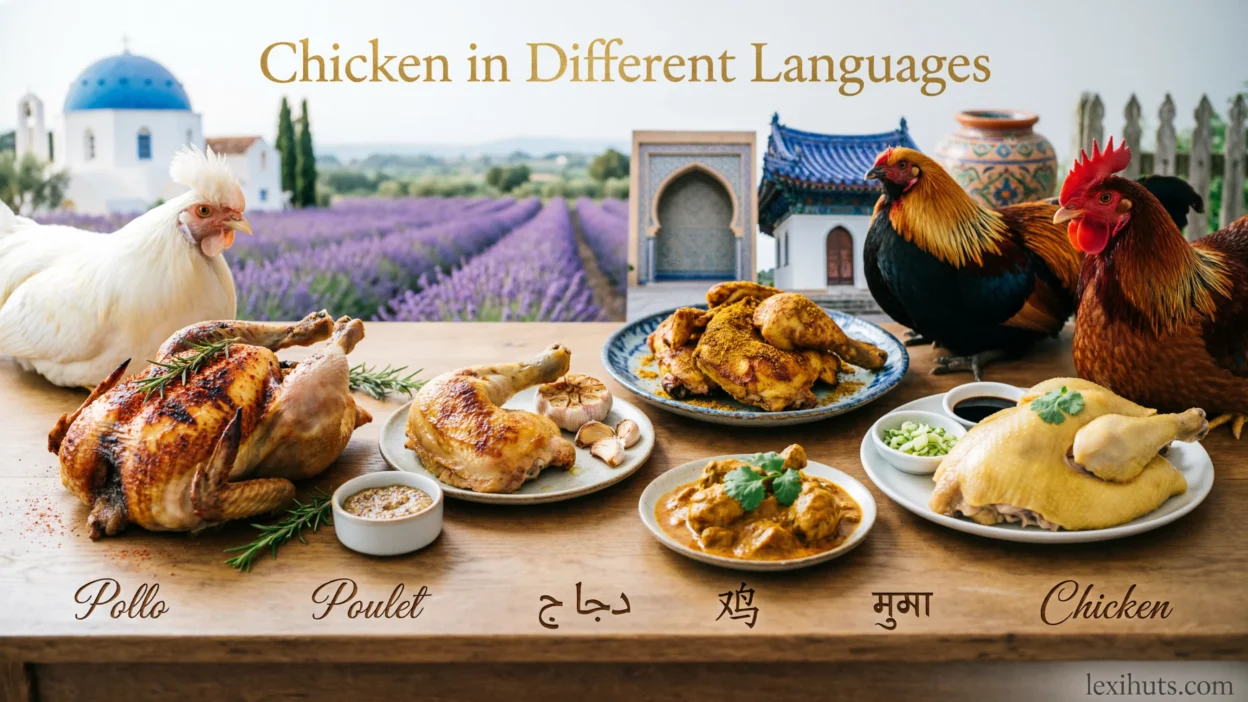
Chicken is one of the most common food and animal-related words used in daily conversations worldwide.
If you are traveling, learning a new language, studying international cultures, or simply curious about translations, knowing how to say “chicken” in different languages can be both useful and interesting.
This guide covers popular translations, pronunciations, meanings, and examples to help you understand the word across many countries and cultures.
From European languages to Asian and Middle Eastern dialects, this article provides a simple and easy-to-read collection of chicken translations for language learners, travelers, students, and food enthusiasts.
Why Learn Chicken in Different Languages?
Learning food and animal vocabulary is one of the easiest ways to improve language skills. The word “chicken” is especially important because it is commonly used in restaurants, recipes, farming, and daily communication.
Benefits of learning this word include:
- Better travel communication
- Easier restaurant ordering
- Improved vocabulary building
- Understanding global food culture
- Enhanced language learning confidence
Chicken in Different Languages List
1. Chicken in Spanish
Phrase: Pollo
Pronunciation: Poh-yoh
Meaning: Chicken
Example: Me gusta el pollo asado.
Explanation: Spanish speakers commonly use “pollo” when talking about cooked chicken or the animal itself.
2. Chicken in French
Phrase: Poulet
Pronunciation: Poo-lay
Meaning: Chicken
Example: Le poulet est délicieux.
Explanation: “Poulet” is widely used in French cuisine and recipes.
3. Chicken in German
Phrase: Huhn
Pronunciation: Hoon
Meaning: Chicken or hen
Example: Das Huhn ist frisch.
Explanation: Germans often use “Huhn” for chicken in general conversations.
4. Chicken in Italian
Phrase: Pollo
Pronunciation: Poh-loh
Meaning: Chicken
Example: Il pollo è molto buono.
Explanation: Italian food culture commonly includes chicken dishes called “pollo.”
5. Chicken in Portuguese
Phrase: Frango
Pronunciation: Fran-go
Meaning: Chicken
Example: Eu gosto de frango grelhado.
Explanation: “Frango” is popular in Portuguese-speaking countries like Brazil and Portugal.
6. Chicken in Arabic
Phrase: دجاج
Pronunciation: Dajaj
Meaning: Chicken
Example: أحب الدجاج المشوي.
Explanation: Arabic speakers use this term for both chicken meat and poultry.
7. Chicken in Urdu
Phrase: مرغی
Pronunciation: Murghi
Meaning: Chicken
Example: مجھے مرغی پسند ہے۔
Explanation: Urdu speakers use “murghi” in daily conversations and cooking discussions.
8. Chicken in Hindi
Phrase: मुर्गा / मुर्गी
Pronunciation: Murga / Murgi
Meaning: Rooster / Chicken
Example: मुझे चिकन खाना पसंद है।
Explanation: Hindi uses different forms depending on gender and context.
9. Chicken in Chinese
Phrase: 鸡
Pronunciation: Ji
Meaning: Chicken
Example: 我喜欢吃鸡肉。
Explanation: This is one of the most common Chinese words related to food.
10. Chicken in Japanese
Phrase: 鶏
Pronunciation: Tori
Meaning: Chicken
Example: 鶏肉が好きです。
Explanation: Japanese cuisine often uses chicken in ramen and grilled dishes.
11. Chicken in Korean
Phrase: 닭
Pronunciation: Dak
Meaning: Chicken
Example: 닭고기를 좋아합니다.
Explanation: Korean fried chicken made this word globally popular.
12. Chicken in Russian
Phrase: Курица
Pronunciation: Kuritsa
Meaning: Chicken
Example: Я люблю курицу.
Explanation: Russian speakers use this word for poultry and chicken meat.
13. Chicken in Turkish
Phrase: Tavuk
Pronunciation: Tah-vook
Meaning: Chicken
Example: Tavuk çok lezzetli.
Explanation: Turkish food recipes often include “tavuk.”
14. Chicken in Greek
Phrase: Κοτόπουλο
Pronunciation: Kotopoulo
Meaning: Chicken
Example: Μου αρέσει το κοτόπουλο.
Explanation: This word is commonly seen in Greek restaurants.
15. Chicken in Dutch
Phrase: Kip
Pronunciation: Kip
Meaning: Chicken
Example: Ik eet graag kip.
Explanation: Dutch speakers frequently use “kip” in everyday speech.
16. Chicken in Swedish
Phrase: Kyckling
Pronunciation: Shu-kling
Meaning: Chicken
Example: Jag gillar kyckling.
Explanation: This word is common in Swedish cooking vocabulary.
17. Chicken in Norwegian
Phrase: Kylling
Pronunciation: Shilling
Meaning: Chicken
Example: Jeg liker kylling.
Explanation: Norwegian restaurants often use this term in menus.
18. Chicken in Danish
Phrase: Kylling
Pronunciation: Kyu-ling
Meaning: Chicken
Example: Jeg elsker kylling.
Explanation: Danish language learners commonly study this word early.
19. Chicken in Polish
Phrase: Kurczak
Pronunciation: Koor-chak
Meaning: Chicken
Example: Lubię kurczaka.
Explanation: It is one of the most common Polish food words.
20. Chicken in Thai
Phrase: ไก่
Pronunciation: Gai
Meaning: Chicken
Example: ฉันชอบไก่ทอด
Explanation: Thai street food often includes chicken dishes.
21. Chicken in Vietnamese
Phrase: Gà
Pronunciation: Gah
Meaning: Chicken
Example: Tôi thích thịt gà.
Explanation: Vietnamese cuisine widely uses chicken in soups and noodles.
22. Chicken in Indonesian
Phrase: Ayam
Pronunciation: Ah-yam
Meaning: Chicken
Example: Saya suka ayam goreng.
Explanation: “Ayam” is extremely popular in Indonesian food culture.
23. Chicken in Malay
Phrase: Ayam
Pronunciation: Ah-yam
Meaning: Chicken
Example: Saya makan ayam.
Explanation: Malay and Indonesian share many similar food words.
24. Chicken in Bengali
Phrase: মুরগি
Pronunciation: Murgi
Meaning: Chicken
Example: আমি মুরগি পছন্দ করি।
Explanation: Bengali speakers use this word in daily cooking language.
25. Chicken in Punjabi
Phrase: ਮੁਰਗੀ
Pronunciation: Murgi
Meaning: Chicken
Example: ਮੈਨੂੰ ਮੁਰਗੀ ਪਸੰਦ ਹੈ।
Explanation: Punjabi families commonly use this term in food discussions.
26. Chicken in Persian
Phrase: مرغ
Pronunciation: Morgh
Meaning: Chicken
Example: من مرغ دوست دارم.
Explanation: Persian cuisine includes many traditional chicken dishes.
27. Chicken in Hebrew
Phrase: עוף
Pronunciation: Of
Meaning: Chicken
Example: אני אוהב עוף.
Explanation: Hebrew speakers often use this word in everyday meals.
28. Chicken in Swahili
Phrase: Kuku
Pronunciation: Koo-koo
Meaning: Chicken
Example: Ninapenda kuku.
Explanation: Swahili uses simple vocabulary for common animals and foods.
29. Chicken in Filipino
Phrase: Manok
Pronunciation: Mah-nok
Meaning: Chicken
Example: Gusto ko ng manok.
Explanation: Filipino cuisine frequently includes roasted chicken dishes.
30. Chicken in Romanian
Phrase: Pui
Pronunciation: Poo-ee
Meaning: Chicken
Example: Îmi place puiul.
Explanation: Romanian speakers use this word regularly in meals and recipes.
31. Chicken in Czech
Phrase: Kuře
Pronunciation: Koor-zheh
Meaning: Chicken
Example: Mám rád kuře.
Explanation: Czech restaurants often include this item on menus.
32. Chicken in Finnish
Phrase: Kana
Pronunciation: Kah-nah
Meaning: Chicken
Example: Kana on herkullista.
Explanation: Finnish vocabulary for food is generally simple and practical.
33. Chicken in Hungarian
Phrase: Csirke
Pronunciation: Cheer-keh
Meaning: Chicken
Example: Szeretem a csirkét.
Explanation: Hungarian cooking frequently includes chicken recipes.
34. Chicken in Ukrainian
Phrase: Курка
Pronunciation: Kurka
Meaning: Chicken
Example: Я люблю курку.
Explanation: Ukrainian households commonly use chicken in traditional meals.
35. Chicken in Tamil
Phrase: கோழி
Pronunciation: Kozhi
Meaning: Chicken
Example: எனக்கு கோழி பிடிக்கும்.
Explanation: Tamil cuisine uses chicken in many spicy dishes.
Different Meanings of Chicken Around the World
The word “chicken” can refer to:
- A farm bird raised for eggs or meat
- Chicken meat used in cooking
- A slang expression in some cultures
- Traditional recipes and dishes
- Symbolic meanings in stories and traditions
Different cultures may use separate words for rooster, hen, and cooked chicken.
Why Chicken Vocabulary Is Important in Language Learning
Learning animal names and food vocabulary helps people communicate faster in real-life situations. “Chicken” is especially useful because it appears in:
- Restaurant menus
- Grocery shopping
- Cooking recipes
- Travel conversations
- Farming discussions
- Cultural food traditions
It is one of the first food words many language learners study.
Practical Tips for Remembering Chicken in Different Languages
Use Flashcards
Create flashcards with the language on one side and the translation on the other side.
Practice Pronunciation Daily
Repeat the words aloud to improve speaking confidence and memory retention.
Watch International Cooking Videos
Cooking videos help you hear native pronunciation naturally.
Group Similar Words Together
Words like “pollo,” “pui,” and “poulet” become easier to remember when studied together.
Use Language Apps
Daily practice through language apps improves vocabulary quickly.
SEO Importance of Learning Chicken in Different Languages
Searches related to language translations continue to grow because people travel more, learn online, and explore global cultures. Keywords such as “how to say chicken in different languages,” “chicken translation,” and “chicken meaning in foreign languages” attract students, travelers, and multilingual readers.
This topic is valuable because it combines language learning, food culture, and practical communication in one easy-to-understand guide. It also supports educational searches and featured snippet opportunities in search engines.
Useful Insights About Chicken Translations
- Some languages use separate words for live chickens and cooked chicken meat.
- Pronunciation can vary depending on regional accents.
- Food-related vocabulary is often easier to remember than complex grammar.
- Chicken words are commonly used in restaurant conversations worldwide.
- Similar language families often share related vocabulary patterns.
Conclusion
Learning how to say chicken in different languages is a fun and practical way to improve your global vocabulary.
If you are traveling, studying languages, or exploring international cuisine, these translations can help you communicate more confidently.
By practicing pronunciation and using the words regularly, you can quickly remember chicken translations from around the world.
FAQs
1. How do you say chicken in Spanish?
Chicken in Spanish is “Pollo.”
2. What is chicken called in French?
In French, chicken is called “Poulet.”
3. How do you pronounce chicken in Japanese?
Chicken in Japanese is pronounced “Tori.”
4. Why is learning food vocabulary important in languages?
Food vocabulary helps with travel, restaurant communication, and daily conversations.
5. Which languages use similar words for chicken?
Languages like Spanish and Italian both use similar forms such as “Pollo.”