
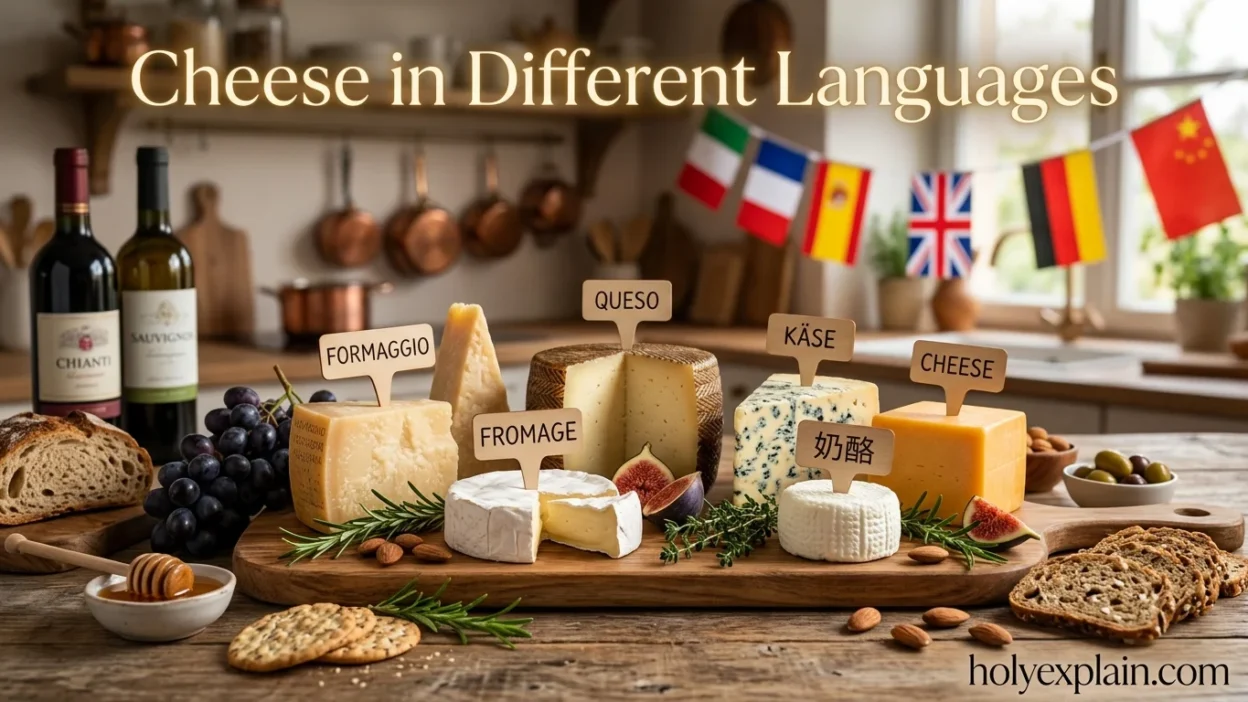
Cheese is one of the most loved foods worldwide, enjoyed in countless dishes, snacks, and recipes.
If you are traveling, learning a new language, exploring international cuisine, or simply curious about food vocabulary, knowing how to say “cheese” in different languages can be both fun and useful.
In this guide, you will discover how to say cheese in many languages along with pronunciation tips, meanings, and examples.
This article is designed for language learners, travelers, students, and food enthusiasts who want quick and easy translations in a readable format.
What Does Cheese Mean?
Cheese is a dairy product made from milk and produced in many textures and flavors around the world. Different cultures have unique cheese traditions, which is why the word appears in many forms across languages.
Definition of Cheese
Definition: A food made from pressed curds of milk.
Meaning: Cheese is commonly used in pizzas, sandwiches, pasta, burgers, salads, and traditional dishes worldwide.
Cheese in Different Languages List
1. Cheese in Spanish
Phrase: Queso
Pronunciation: Keh-soh
Example: Me gusta el queso.
Meaning: I like cheese.
2. Cheese in French
Phrase: Fromage
Pronunciation: Froh-mahzh
Example: Le fromage est délicieux.
Meaning: The cheese is delicious.
3. Cheese in German
Phrase: Käse
Pronunciation: Keh-zuh
Example: Ich esse Käse.
Meaning: I eat cheese.
4. Cheese in Italian
Phrase: Formaggio
Pronunciation: For-maj-joh
Example: Amo il formaggio.
Meaning: I love cheese.
5. Cheese in Portuguese
Phrase: Queijo
Pronunciation: Kay-zhoo
Example: O queijo é saboroso.
Meaning: The cheese is tasty.
6. Cheese in Arabic
Phrase: جبن
Pronunciation: Jubn
Example: أحب الجبن.
Meaning: I love cheese.
7. Cheese in Urdu
Phrase: پنیر
Pronunciation: Paneer
Example: مجھے پنیر پسند ہے۔
Meaning: I like cheese.
8. Cheese in Hindi
Phrase: पनीर
Pronunciation: Paneer
Example: मुझे पनीर पसंद है।
Meaning: I like cheese.
9. Cheese in Chinese
Phrase: 奶酪
Pronunciation: Nai-lao
Example: 我喜欢奶酪。
Meaning: I like cheese.
10. Cheese in Japanese
Phrase: チーズ
Pronunciation: Chīzu
Example: チーズが好きです。
Meaning: I like cheese.
11. Cheese in Korean
Phrase: 치즈
Pronunciation: Chi-jeu
Example: 치즈를 좋아해요.
Meaning: I like cheese.
12. Cheese in Russian
Phrase: Сыр
Pronunciation: Seer
Example: Я люблю сыр.
Meaning: I love cheese.
13. Cheese in Turkish
Phrase: Peynir
Pronunciation: Pay-neer
Example: Peynir çok lezzetli.
Meaning: Cheese is very delicious.
14. Cheese in Greek
Phrase: Τυρί
Pronunciation: Tee-ree
Example: Μου αρέσει το τυρί.
Meaning: I like cheese.
15. Cheese in Dutch
Phrase: Kaas
Pronunciation: Kahs
Example: Ik hou van kaas.
Meaning: I love cheese.
16. Cheese in Polish
Phrase: Ser
Pronunciation: Sehr
Example: Lubię ser.
Meaning: I like cheese.
17. Cheese in Swedish
Phrase: Ost
Pronunciation: Oost
Example: Jag gillar ost.
Meaning: I like cheese.
18. Cheese in Danish
Phrase: Ost
Pronunciation: Oast
Example: Jeg elsker ost.
Meaning: I love cheese.
19. Cheese in Norwegian
Phrase: Ost
Pronunciation: Oost
Example: Jeg liker ost.
Meaning: I like cheese.
20. Cheese in Finnish
Phrase: Juusto
Pronunciation: Yoo-stoh
Example: Rakastan juustoa.
Meaning: I love cheese.
21. Cheese in Thai
Phrase: ชีส
Pronunciation: Cheez
Example: ฉันชอบชีส
Meaning: I like cheese.
22. Cheese in Vietnamese
Phrase: Phô mai
Pronunciation: Fo-my
Example: Tôi thích phô mai.
Meaning: I like cheese.
23. Cheese in Indonesian
Phrase: Keju
Pronunciation: Keh-joo
Example: Saya suka keju.
Meaning: I like cheese.
24. Cheese in Malay
Phrase: Keju
Pronunciation: Keh-joo
Example: Saya suka keju.
Meaning: I like cheese.
25. Cheese in Hebrew
Phrase: גבינה
Pronunciation: Gvee-nah
Example: אני אוהב גבינה.
Meaning: I love cheese.
26. Cheese in Swahili
Phrase: Jibini
Pronunciation: Jee-bee-nee
Example: Ninapenda jibini.
Meaning: I like cheese.
27. Cheese in Romanian
Phrase: Brânză
Pronunciation: Brin-zah
Example: Îmi place brânza.
Meaning: I like cheese.
28. Cheese in Hungarian
Phrase: Sajt
Pronunciation: Shite
Example: Szeretem a sajtot.
Meaning: I like cheese.
29. Cheese in Czech
Phrase: Sýr
Pronunciation: Seer
Example: Mám rád sýr.
Meaning: I like cheese.
30. Cheese in Bengali
Phrase: পনির
Pronunciation: Ponir
Example: আমি পনির পছন্দ করি।
Meaning: I like cheese.
31. Cheese in Punjabi
Phrase: ਪਨੀਰ
Pronunciation: Paneer
Example: ਮੈਨੂੰ ਪਨੀਰ ਪਸੰਦ ਹੈ।
Meaning: I like cheese.
32. Cheese in Tamil
Phrase: சீஸ்
Pronunciation: Sees
Example: எனக்கு சீஸ் பிடிக்கும்.
Meaning: I like cheese.
33. Cheese in Telugu
Phrase: చీజ్
Pronunciation: Cheez
Example: నాకు చీజ్ ఇష్టం.
Meaning: I like cheese.
34. Cheese in Persian
Phrase: پنیر
Pronunciation: Paneer
Example: من پنیر دوست دارم.
Meaning: I like cheese.
35. Cheese in Filipino
Phrase: Keso
Pronunciation: Keh-so
Example: Mahilig ako sa keso.
Meaning: I like cheese.
Why Learning Cheese in Different Languages Is Important
Learning food vocabulary in multiple languages helps improve communication while traveling, dining, or studying abroad. Food words are among the most commonly used daily expressions, making them valuable for beginners learning a language.
Understanding how to say cheese in different languages can also help you connect with different cultures and cuisines. From Italian pizza to French cheese boards and Indian paneer dishes, cheese has a global presence in cooking traditions.
Useful Tips for Remembering Cheese Translations
Practice With Native Pronunciation
Listening to native speakers helps improve pronunciation and confidence. Repeat each word several times for better memory.
Use Food Vocabulary Daily
Try using cheese-related phrases while cooking, shopping, or ordering food at restaurants.
Learn Similar Language Patterns
Some languages use similar words for cheese. For example, “keso,” “queso,” and “keju” sound alike and are easier to remember together.
Write Short Example Sentences
Simple examples help you remember words faster than memorizing translations alone.
Explore International Foods
Trying dishes from different countries can help connect language learning with real-life experiences.
Common Cheese Vocabulary Variations
Cheese Lover in Different Languages
Many languages have special expressions for cheese lovers or cheese dishes. Learning these phrases can improve your vocabulary naturally.
Types of Cheese Around the World
Different cultures are famous for unique cheeses such as mozzarella, cheddar, parmesan, feta, gouda, and paneer.
Cheese Pronunciation Tips
Pronunciation may vary depending on accents and regional dialects. Always practice slowly before speaking naturally.
Conclusion
Learning how to say cheese in different languages is a fun way to explore global cultures, improve vocabulary, and connect with people worldwide.
If you are a traveler, student, foodie, or language learner, these translations can help you communicate more confidently in everyday situations.
FAQs:
1. How do you say cheese in Spanish?
Cheese in Spanish is called “Queso.”
2. What is cheese called in French?
In French, cheese is called “Fromage.”
3. How do you pronounce cheese in Japanese?
Cheese in Japanese is pronounced “Chīzu.”
4. Is paneer the same as cheese?
Paneer is a type of fresh cheese commonly used in Indian cuisine.
5. Why is learning food vocabulary important in languages?
Food vocabulary helps with travel, communication, restaurant ordering, and cultural understanding.