
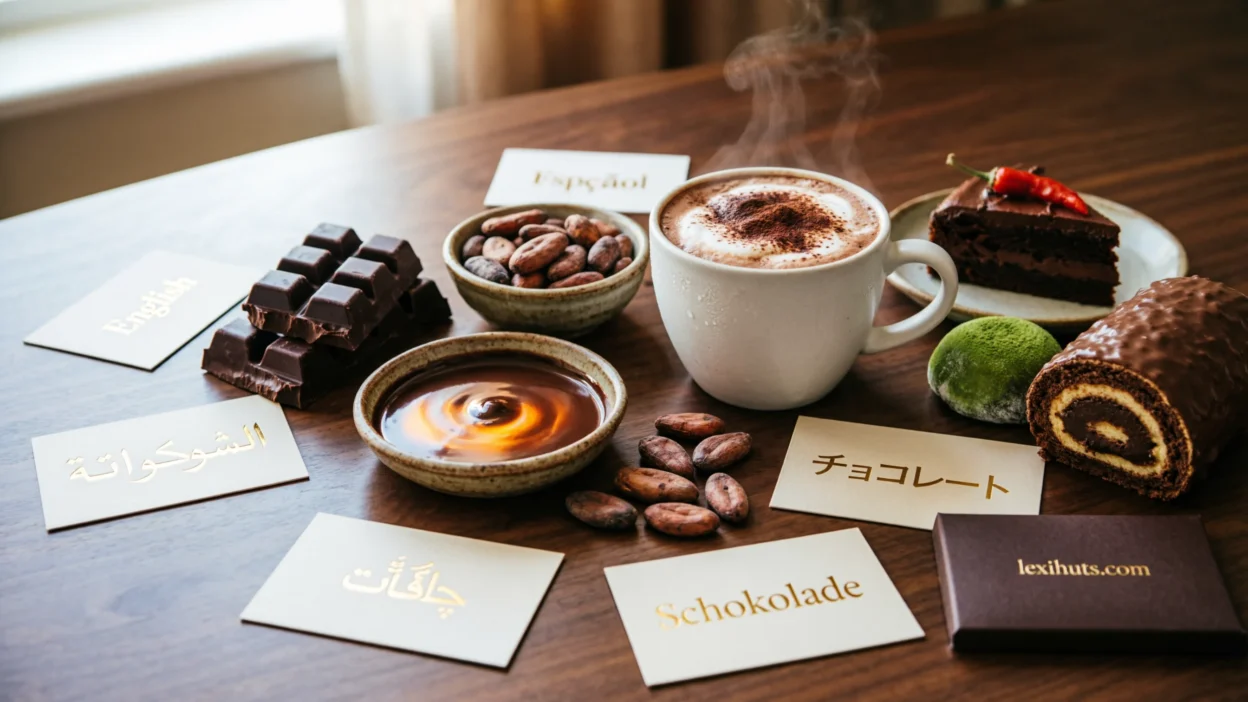
Chocolate is one of the world’s most loved treats, enjoyed in desserts, drinks, candies, and snacks across nearly every culture.
Learning how to say “chocolate” in different languages is not only fun but also useful for travelers, language learners, students, and food lovers who want to connect with people from different countries.
In this guide, you will discover how to say chocolate in many popular languages along with pronunciation tips and examples.
You are exploring global cultures, improving your vocabulary, or simply curious about international words for chocolate, this article will help you learn in an easy and enjoyable way.
Why Learn Chocolate in Different Languages?
Knowing food names in multiple languages can improve communication while traveling, shopping, or studying languages. Since chocolate is recognized worldwide, it is one of the easiest and most interesting food words to learn internationally.
People often search for translations of common food items to:
- Improve language skills
- Communicate while traveling
- Understand menus and recipes
- Teach children new vocabulary
- Explore world cultures
Chocolate in Different Languages List
1. Chocolate in Spanish
Phrase: Chocolate
Pronunciation: Cho-co-LAH-teh
Example: Me gusta el chocolate.
Meaning: I like chocolate.
2. Chocolate in French
Phrase: Chocolat
Pronunciation: Sho-ko-LAH
Example: J’adore le chocolat.
Meaning: I love chocolate.
3. Chocolate in German
Phrase: Schokolade
Pronunciation: Sho-ko-LAH-deh
Example: Ich esse Schokolade.
Meaning: I eat chocolate.
4. Chocolate in Italian
Phrase: Cioccolato
Pronunciation: Cho-ko-LAH-to
Example: Il cioccolato è delizioso.
Meaning: Chocolate is delicious.
5. Chocolate in Portuguese
Phrase: Chocolate
Pronunciation: Sho-ko-LAH-chee
Example: Eu amo chocolate.
Meaning: I love chocolate.
6. Chocolate in Arabic
Phrase: شوكولاتة (Shokolata)
Pronunciation: Sho-ko-LAH-ta
Example: أحب الشوكولاتة
Meaning: I love chocolate.
7. Chocolate in Chinese
Phrase: 巧克力 (Qiǎokèlì)
Pronunciation: Chyao-kuh-lee
Example: 我喜欢巧克力。
Meaning: I like chocolate.
8. Chocolate in Japanese
Phrase: チョコレート (Chokorēto)
Pronunciation: Cho-ko-ray-to
Example: チョコレートが好きです。
Meaning: I like chocolate.
9. Chocolate in Korean
Phrase: 초콜릿 (Chokollit)
Pronunciation: Cho-kol-lit
Example: 저는 초콜릿을 좋아해요.
Meaning: I like chocolate.
10. Chocolate in Russian
Phrase: Шоколад (Shokolad)
Pronunciation: Sho-ko-LAHD
Example: Я люблю шоколад.
Meaning: I love chocolate.
11. Chocolate in Hindi
Phrase: चॉकलेट (Chocolate)
Pronunciation: Chok-let
Example: मुझे चॉकलेट पसंद है।
Meaning: I like chocolate.
12. Chocolate in Urdu
Phrase: چاکلیٹ
Pronunciation: Chok-let
Example: مجھے چاکلیٹ پسند ہے۔
Meaning: I like chocolate.
13. Chocolate in Turkish
Phrase: Çikolata
Pronunciation: Chi-ko-LAH-ta
Example: Çikolata çok tatlıdır.
Meaning: Chocolate is very sweet.
14. Chocolate in Greek
Phrase: Σοκολάτα (Sokoláta)
Pronunciation: So-ko-LAH-ta
Example: Μου αρέσει η σοκολάτα.
Meaning: I like chocolate.
15. Chocolate in Dutch
Phrase: Chocolade
Pronunciation: Sho-ko-LAH-duh
Example: Ik hou van chocolade.
Meaning: I love chocolate.
16. Chocolate in Swedish
Phrase: Choklad
Pronunciation: Sho-klad
Example: Jag älskar choklad.
Meaning: I love chocolate.
17. Chocolate in Polish
Phrase: Czekolada
Pronunciation: Che-ko-LA-da
Example: Lubię czekoladę.
Meaning: I like chocolate.
18. Chocolate in Bengali
Phrase: চকোলেট (Chokoleṭ)
Pronunciation: Cho-ko-let
Example: আমি চকোলেট পছন্দ করি।
Meaning: I like chocolate.
19. Chocolate in Punjabi
Phrase: ਚਾਕਲੇਟ
Pronunciation: Chak-let
Example: ਮੈਨੂੰ ਚਾਕਲੇਟ ਪਸੰਦ ਹੈ।
Meaning: I like chocolate.
20. Chocolate in Tamil
Phrase: சாக்லேட்
Pronunciation: Saak-let
Example: எனக்கு சாக்லேட் பிடிக்கும்.
Meaning: I like chocolate.
21. Chocolate in Telugu
Phrase: చాక్లెట్
Pronunciation: Chak-let
Example: నాకు చాక్లెట్ ఇష్టం.
Meaning: I like chocolate.
22. Chocolate in Vietnamese
Phrase: Sô cô la
Pronunciation: So-ko-la
Example: Tôi thích sô cô la.
Meaning: I like chocolate.
23. Chocolate in Thai
Phrase: ช็อกโกแลต
Pronunciation: Chok-go-let
Example: ฉันชอบช็อกโกแลต
Meaning: I like chocolate.
24. Chocolate in Indonesian
Phrase: Cokelat
Pronunciation: Cho-ke-lat
Example: Saya suka cokelat.
Meaning: I like chocolate.
25. Chocolate in Malay
Phrase: Coklat
Pronunciation: Chok-lat
Example: Saya suka coklat.
Meaning: I like chocolate.
26. Chocolate in Hebrew
Phrase: שוקולד (Shokolad)
Pronunciation: Sho-ko-LAHD
Example: אני אוהב שוקולד.
Meaning: I love chocolate.
27. Chocolate in Persian
Phrase: شکلات (Shekolat)
Pronunciation: She-ko-LAAT
Example: من شکلات دوست دارم.
Meaning: I like chocolate.
28. Chocolate in Swahili
Phrase: Chokoleti
Pronunciation: Cho-ko-LEH-tee
Example: Ninapenda chokoleti.
Meaning: I like chocolate.
29. Chocolate in Danish
Phrase: Chokolade
Pronunciation: Sho-ko-LAY-the
Example: Jeg elsker chokolade.
Meaning: I love chocolate.
30. Chocolate in Norwegian
Phrase: Sjokolade
Pronunciation: Sho-ko-LAH-de
Example: Jeg liker sjokolade.
Meaning: I like chocolate.
31. Chocolate in Finnish
Phrase: Suklaa
Pronunciation: Sook-laa
Example: Rakastan suklaata.
Meaning: I love chocolate.
32. Chocolate in Czech
Phrase: Čokoláda
Pronunciation: Cho-ko-LAA-da
Example: Mám rád čokoládu.
Meaning: I like chocolate.
33. Chocolate in Romanian
Phrase: Ciocolată
Pronunciation: Cho-ko-LAH-tuh
Example: Îmi place ciocolata.
Meaning: I like chocolate.
34. Chocolate in Ukrainian
Phrase: Шоколад (Shokolad)
Pronunciation: Sho-ko-LAHD
Example: Я люблю шоколад.
Meaning: I love chocolate.
35. Chocolate in Filipino
Phrase: Tsokolate
Pronunciation: Cho-ko-la-te
Example: Mahilig ako sa tsokolate.
Meaning: I like chocolate.
Common Variations of Chocolate Around the World
Dark Chocolate
Dark chocolate usually contains a higher percentage of cocoa and less sugar. It is popular for its rich flavor and health benefits.
Milk Chocolate
Milk chocolate is sweeter and creamier because it includes milk solids and sugar. It is the most commonly consumed type worldwide.
White Chocolate
White chocolate is made with cocoa butter, milk, and sugar but does not contain cocoa solids.
Hot Chocolate
Hot chocolate is a warm chocolate-based drink enjoyed in many countries during winter seasons.
Why This Topic Is Important for Language Learners
Learning food vocabulary helps people communicate in real-life situations faster than memorizing difficult grammar rules. Words like chocolate are common in restaurants, stores, recipes, and conversations, making them practical and memorable.
Understanding chocolate translations can also:
- Improve pronunciation skills
- Build multilingual vocabulary
- Increase cultural awareness
- Help travelers order food confidently
- Support children learning new languages
Useful Tips for Learning Chocolate in Different Languages
Practice Pronunciation Daily
Say each word aloud several times to improve your accent and confidence.
Use Flashcards
Create simple flashcards with the language on one side and the chocolate translation on the other.
Watch International Food Videos
Hearing native speakers pronounce food words can improve listening and speaking skills.
Learn Similar Food Words
After learning chocolate, try related vocabulary such as candy, cake, cocoa, coffee, sugar, and dessert.
Group Languages by Region
Studying similar languages together makes vocabulary easier to remember.
Conclusion
Learning how to say chocolate in different languages is a fun and useful way to explore cultures and improve language skills.
From Spanish and French to Japanese and Arabic, the word for chocolate connects people worldwide through one of the most loved foods ever created.
By practicing these translations and pronunciations, you can expand your vocabulary and communicate more confidently across different cultures.
FAQs
1. How do you say chocolate in Spanish?
Chocolate in Spanish is “Chocolate,” pronounced as cho-co-LAH-teh.
2. What is chocolate called in French?
In French, chocolate is called “Chocolat.”
3. How do you pronounce chocolate in Japanese?
Chocolate in Japanese is pronounced “Cho-ko-ray-to.”
4. Why is chocolate similar in many languages?
Many languages borrowed the word from European trade and global food culture, so the pronunciation stayed similar.
5. What is the easiest way to learn chocolate in different languages?
The easiest way is to practice daily, use flashcards, and listen to native speakers pronounce the words.