
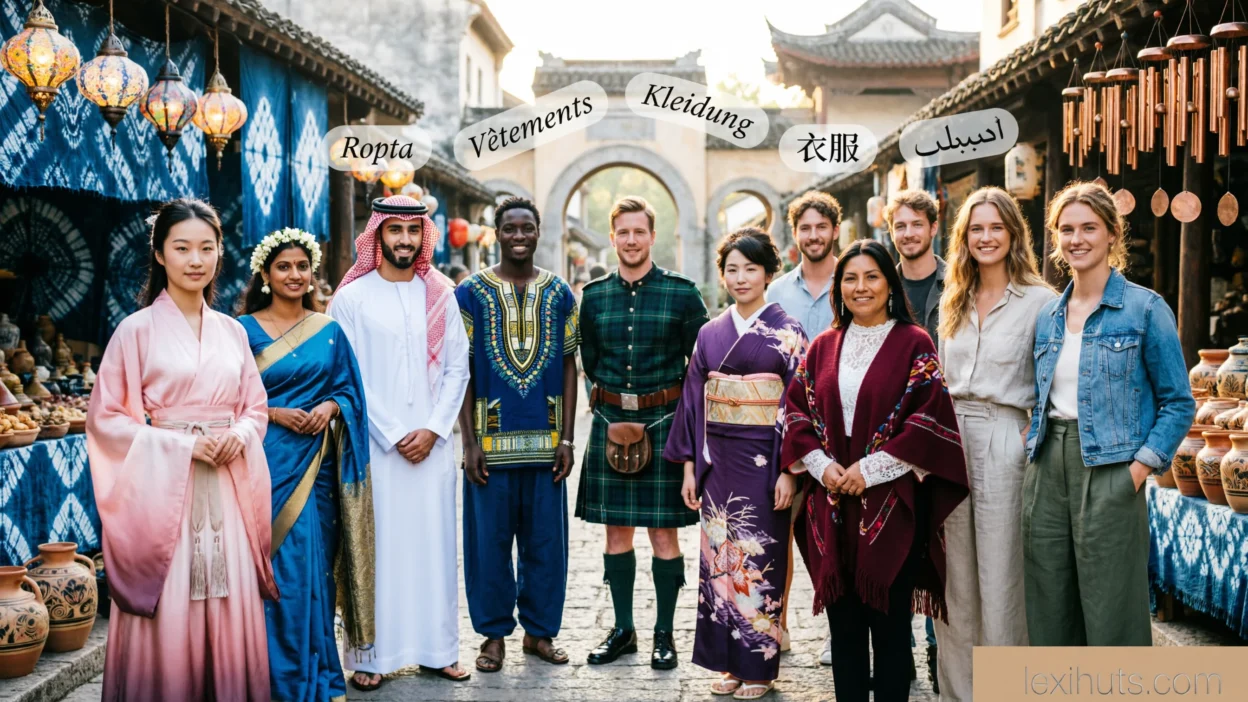
Clothes are an important part of everyday life, culture, and communication.
If you are traveling, learning a new language, shopping internationally, or simply curious about global vocabulary, knowing how to say “clothes” in different languages can be very useful.
From European languages to Asian and African dialects, the word for clothes changes beautifully across cultures.
In this guide, you will discover how to say clothes in different languages along with pronunciation tips, meanings, and simple examples.
This article is designed to help language learners, travelers, students, and anyone interested in world languages understand clothing-related vocabulary more easily.
Why Learn Clothes in Different Languages?
Learning clothing vocabulary in multiple languages can help you:
- Communicate while traveling
- Understand fashion and shopping terms
- Improve language-learning skills
- Connect with people from different cultures
- Expand your global vocabulary knowledge
1. Clothes in Spanish
Phrase: Ropa
Pronunciation: Roh-pah
Meaning: Clothes or clothing
Example: Necesito comprar ropa nueva.
Explanation: This Spanish word is commonly used when talking about clothing, fashion, or outfits.
2. Clothes in French
Phrase: Vêtements
Pronunciation: Vet-mon
Meaning: Clothes
Example: J’aime acheter des vêtements modernes.
Explanation: French speakers use this word for garments and apparel.
3. Clothes in German
Phrase: Kleidung
Pronunciation: Kly-doong
Meaning: Clothing
Example: Die Kleidung ist teuer.
Explanation: It refers to clothes in general in the German language.
4. Clothes in Italian
Phrase: Vestiti
Pronunciation: Ves-tee-tee
Meaning: Clothes or dresses
Example: Ho comprato nuovi vestiti.
Explanation: Italians commonly use this term while shopping or discussing fashion.
5. Clothes in Portuguese
Phrase: Roupa
Pronunciation: Ho-pah
Meaning: Clothing
Example: Minha roupa é confortável.
Explanation: This is the standard Portuguese word for clothes.
6. Clothes in Russian
Phrase: Одежда
Pronunciation: A-dyezh-da
Meaning: Clothes
Example: Мне нравится эта одежда.
Explanation: Russians use this term for clothing and apparel.
7. Clothes in Chinese
Phrase: 衣服
Pronunciation: Yī fú
Meaning: Clothes
Example: 我喜欢这件衣服。
Explanation: One of the most common Mandarin Chinese words for clothing.
8. Clothes in Japanese
Phrase: 服
Pronunciation: Fuku
Meaning: Clothes
Example: 新しい服を買いました。
Explanation: A simple and widely used Japanese word for clothes.
9. Clothes in Korean
Phrase: 옷
Pronunciation: Ot
Meaning: Clothes
Example: 이 옷은 예뻐요.
Explanation: Koreans use this word for clothing and outfits.
10. Clothes in Arabic
Phrase: ملابس
Pronunciation: Malabis
Meaning: Clothes
Example: أحتاج إلى ملابس جديدة.
Explanation: Commonly used in Arabic-speaking countries for garments.
11. Clothes in Hindi
Phrase: कपड़े
Pronunciation: Kapde
Meaning: Clothes
Example: मुझे नए कपड़े चाहिए।
Explanation: A very common Hindi word related to clothing.
12. Clothes in Urdu
Phrase: کپڑے
Pronunciation: Kapray
Meaning: Clothes
Example: مجھے نئے کپڑے پسند ہیں۔
Explanation: Frequently used in everyday Urdu conversations.
13. Clothes in Turkish
Phrase: Giysiler
Pronunciation: Gee-see-ler
Meaning: Clothes
Example: Yeni giysiler aldım.
Explanation: Used for garments and clothing items in Turkish.
14. Clothes in Dutch
Phrase: Kleding
Pronunciation: Clay-ding
Meaning: Clothing
Example: De kleding is mooi.
Explanation: Refers to clothes in Dutch-speaking regions.
15. Clothes in Greek
Phrase: Ρούχα
Pronunciation: Roo-ha
Meaning: Clothes
Example: Τα ρούχα είναι καθαρά.
Explanation: A common Greek term for clothing.
16. Clothes in Polish
Phrase: Ubrania
Pronunciation: Oo-brahn-yah
Meaning: Clothes
Example: Kupiłem nowe ubrania.
Explanation: Used for clothing items in Polish.
17. Clothes in Swedish
Phrase: Kläder
Pronunciation: Klay-der
Meaning: Clothes
Example: Jag behöver nya kläder.
Explanation: Swedish speakers use this word daily.
18. Clothes in Norwegian
Phrase: Klær
Pronunciation: Klar
Meaning: Clothes
Example: Jeg liker disse klærne.
Explanation: Refers to garments and apparel.
19. Clothes in Danish
Phrase: Tøj
Pronunciation: Toy
Meaning: Clothes
Example: Mit tøj er nyt.
Explanation: Commonly used in Denmark for clothing.
20. Clothes in Finnish
Phrase: Vaatteet
Pronunciation: Vaa-teyt
Meaning: Clothes
Example: Minulla on uudet vaatteet.
Explanation: The standard Finnish term for clothes.
21. Clothes in Thai
Phrase: เสื้อผ้า
Pronunciation: Suea-pah
Meaning: Clothes
Example: ฉันซื้อเสื้อผ้าใหม่
Explanation: A popular Thai word for clothing.
22. Clothes in Vietnamese
Phrase: Quần áo
Pronunciation: Kwan ow
Meaning: Clothes
Example: Tôi thích quần áo đẹp.
Explanation: Widely used in Vietnamese conversations.
23. Clothes in Indonesian
Phrase: Pakaian
Pronunciation: Pa-kai-an
Meaning: Clothes
Example: Saya membeli pakaian baru.
Explanation: Refers to clothes and garments in Indonesian.
24. Clothes in Malay
Phrase: Baju
Pronunciation: Bah-joo
Meaning: Clothes or shirt
Example: Baju ini cantik.
Explanation: A commonly spoken Malay clothing term.
25. Clothes in Hebrew
Phrase: בגדים
Pronunciation: Begadim
Meaning: Clothes
Example: אני צריך בגדים חדשים.
Explanation: Used in Hebrew for garments and apparel.
26. Clothes in Bengali
Phrase: কাপড়
Pronunciation: Kapor
Meaning: Clothes
Example: আমার নতুন কাপড় আছে।
Explanation: A frequently used Bengali word for clothing.
27. Clothes in Punjabi
Phrase: ਕੱਪੜੇ
Pronunciation: Kapray
Meaning: Clothes
Example: ਮੈਨੂੰ ਨਵੇਂ ਕੱਪੜੇ ਚਾਹੀਦੇ ਹਨ।
Explanation: Commonly spoken in Punjabi households and markets.
28. Clothes in Tamil
Phrase: ஆடைகள்
Pronunciation: Aa-dai-gal
Meaning: Clothes
Example: எனக்கு புதிய ஆடைகள் வேண்டும்.
Explanation: Used for garments and outfits in Tamil.
29. Clothes in Telugu
Phrase: బట్టలు
Pronunciation: Battalu
Meaning: Clothes
Example: నాకు కొత్త బట్టలు కావాలి.
Explanation: A standard Telugu term for clothing.
30. Clothes in Marathi
Phrase: कपडे
Pronunciation: Kapde
Meaning: Clothes
Example: मला नवीन कपडे आवडतात.
Explanation: Used in everyday Marathi language.
31. Clothes in Swahili
Phrase: Nguo
Pronunciation: N-goo-oh
Meaning: Clothes
Example: Ninahitaji nguo mpya.
Explanation: Common East African word for clothing.
32. Clothes in Afrikaans
Phrase: Klere
Pronunciation: Klay-ruh
Meaning: Clothes
Example: Ek koop nuwe klere.
Explanation: Used widely in Afrikaans-speaking regions.
33. Clothes in Filipino
Phrase: Damit
Pronunciation: Dah-mit
Meaning: Clothes
Example: Maganda ang damit mo.
Explanation: A common Filipino word for apparel.
34. Clothes in Romanian
Phrase: Haine
Pronunciation: Hi-neh
Meaning: Clothes
Example: Am haine noi.
Explanation: Refers to clothing items in Romanian.
35. Clothes in Czech
Phrase: Oblečení
Pronunciation: Ob-leh-cheh-nee
Meaning: Clothes
Example: Potřebuji nové oblečení.
Explanation: A standard Czech word for clothing.
Importance of Learning Clothing Words in Multiple Languages
Knowing how to say clothes in different languages helps improve communication and cultural understanding. Fashion, shopping, travel, and social conversations often involve clothing vocabulary. Language learners can also build stronger speaking skills by mastering common everyday words like clothes, shoes, shirts, jackets, and outfits.
Understanding clothing translations can also help international shoppers, fashion enthusiasts, and students studying foreign languages. Since clothing is a universal topic, these words are among the most practical vocabulary terms to learn.
Useful Tips for Remembering Clothes in Different Languages
Practice Pronunciation Daily
Repeat the word aloud several times to improve memory and pronunciation accuracy.
Use Flashcards
Create flashcards with the language on one side and the translation on the other side.
Watch Foreign Fashion Videos
Fashion videos and shopping content can help you hear real pronunciation naturally.
Learn Related Clothing Vocabulary
Expand your knowledge by learning words like shirt, pants, shoes, jacket, dress, and uniform in different languages.
Speak With Native Speakers
Practicing with native speakers can improve fluency and confidence faster.
Conclusion
Learning how to say clothes in different languages is a fun and practical way to expand your vocabulary and understand global cultures.
If you are traveling, studying languages, shopping abroad, or exploring international fashion, these translations can help you communicate more confidently.
Start practicing a few words daily and you will quickly improve your language skills.
FAQs
1. How do you say clothes in Spanish?
The word for clothes in Spanish is “Ropa.”
2. What is the Japanese word for clothes?
In Japanese, clothes are called “Fuku.”
3. Why should I learn clothing vocabulary in different languages?
It helps with travel, communication, shopping, and language learning.
4. What language uses the word “Kapde” for clothes?
Hindi and Marathi commonly use the word “Kapde.”
5. Is clothing vocabulary important for beginners learning languages?
Yes, clothing words are everyday vocabulary terms that beginners use frequently in conversations.