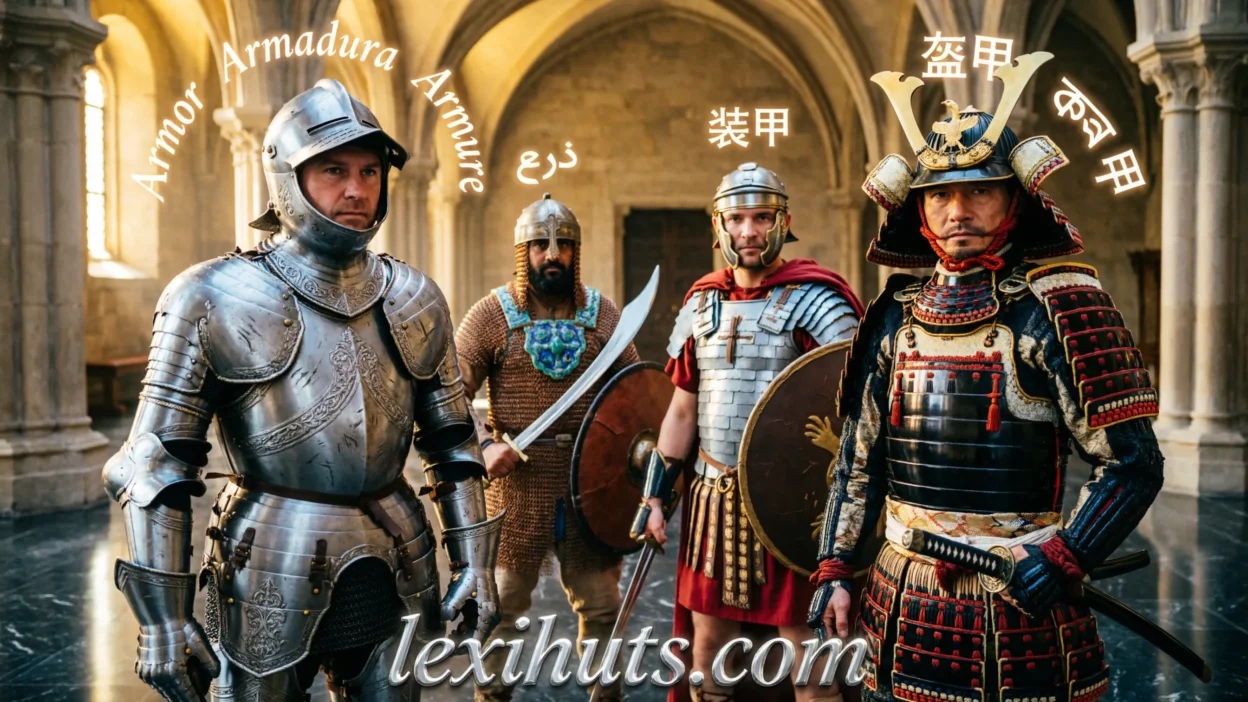
Armor has been an important part of human history for centuries. From medieval knights to modern military gear, the word “armor” symbolizes protection, defense, and strength.
Many people search for armor in different languages for travel, education, gaming, writing, tattoos, or cultural learning.
In this guide, you will discover how to say armor in multiple languages along with pronunciation, meanings, and examples.
If you are curious about foreign vocabulary or looking for unique translations, this article provides an easy-to-read and SEO-friendly resource.
What Does Armor Mean?
Armor refers to protective clothing or equipment designed to defend the body from weapons, attacks, or injuries. Historically, armor was made from leather, metal, or chainmail. Today, the term can also describe symbolic protection in literature, religion, and gaming culture.
Common Meanings of Armor
- Physical body protection
- Military defense equipment
- Emotional or symbolic protection
- Protective gear in games and fantasy stories
Armor in Different Languages
1. Armor in Spanish
Phrase: Armadura
Pronunciation: ar-ma-DOO-ra
Meaning: Protective armor or suit worn in battle
Example: El caballero llevaba una armadura pesada.
2. Armor in French
Phrase: Armure
Pronunciation: ar-MYOOR
Meaning: Armor used for protection in combat
Example: Le soldat portait une armure brillante.
3. Armor in German
Phrase: Rüstung
Pronunciation: ROOS-toong
Meaning: Protective military armor
Example: Der Ritter trug eine starke Rüstung.
4. Armor in Italian
Phrase: Armatura
Pronunciation: ar-ma-TOO-ra
Meaning: Metal protective covering
Example: Il guerriero indossava un’armatura.
5. Armor in Portuguese
Phrase: Armadura
Pronunciation: ar-ma-DOO-ra
Meaning: Protective battle equipment
Example: O cavaleiro usava uma armadura pesada.
6. Armor in Dutch
Phrase: Pantser
Pronunciation: PAN-ser
Meaning: Armor or protective shell
Example: De soldaat droeg een pantser.
7. Armor in Russian
Phrase: Броня
Pronunciation: BRON-ya
Meaning: Armor or armored protection
Example: Воин носил крепкую броню.
8. Armor in Chinese
Phrase: 盔甲
Pronunciation: kuī jiǎ
Meaning: Traditional battle armor
Example: 战士穿着盔甲。
9. Armor in Japanese
Phrase: 鎧
Pronunciation: yoroi
Meaning: Samurai or battle armor
Example: 武士は鎧を着ていた。
10. Armor in Korean
Phrase: 갑옷
Pronunciation: gap-ot
Meaning: Protective armor clothing
Example: 병사는 갑옷을 입었다.
11. Armor in Arabic
Phrase: درع
Pronunciation: dir‘
Meaning: Shield or armor
Example: ارتدى المحارب درعًا قويًا.
12. Armor in Hindi
Phrase: कवच
Pronunciation: ka-vach
Meaning: Protective armor or shield
Example: योद्धा ने कवच पहना।
13. Armor in Urdu
Phrase: زرہ
Pronunciation: zirah
Meaning: Armor or protective covering
Example: سپاہی نے زرہ پہنی۔
14. Armor in Turkish
Phrase: Zırh
Pronunciation: zurh
Meaning: Military armor protection
Example: Asker sağlam bir zırh giydi.
15. Armor in Greek
Phrase: Πανοπλία
Pronunciation: pa-no-plee-A
Meaning: Full suit of armor
Example: Ο πολεμιστής φορούσε πανοπλία.
16. Armor in Polish
Phrase: Zbroja
Pronunciation: ZBRO-ya
Meaning: Protective battle armor
Example: Rycerz miał ciężką zbroję.
17. Armor in Swedish
Phrase: Rustning
Pronunciation: ROOST-ning
Meaning: Armor or combat gear
Example: Krigaren bar rustning.
18. Armor in Norwegian
Phrase: Rustning
Pronunciation: ROOST-ning
Meaning: Body armor for protection
Example: Soldaten brukte rustning.
19. Armor in Danish
Phrase: Rustning
Pronunciation: ROOST-ning
Meaning: Armor used in warfare
Example: Ridderen havde rustning på.
20. Armor in Finnish
Phrase: Haarniska
Pronunciation: HAR-nis-ka
Meaning: Metal armor suit
Example: Ritari käytti haarniskaa.
21. Armor in Latin
Phrase: Lorica
Pronunciation: lo-REE-ka
Meaning: Ancient Roman armor
Example: Miles loricam gerebat.
22. Armor in Hebrew
Phrase: שריון
Pronunciation: shir-yon
Meaning: Protective armor gear
Example: הלוחם לבש שריון.
23. Armor in Thai
Phrase: เกราะ
Pronunciation: groh
Meaning: Armor or shield protection
Example: นักรบสวมเกราะ
24. Armor in Vietnamese
Phrase: Áo giáp
Pronunciation: ow zap
Meaning: Protective armor clothing
Example: Chiến binh mặc áo giáp.
25. Armor in Indonesian
Phrase: Baju zirah
Pronunciation: ba-joo zee-rah
Meaning: Armor worn in battle
Example: Prajurit memakai baju zirah.
26. Armor in Malay
Phrase: Perisai
Pronunciation: pe-ri-sai
Meaning: Armor or shield
Example: Pahlawan memakai perisai.
27. Armor in Bengali
Phrase: বর্ম
Pronunciation: bor-mo
Meaning: Body armor or shield
Example: যোদ্ধা বর্ম পরেছিল।
28. Armor in Punjabi
Phrase: ਬਖਤਰ
Pronunciation: bakh-tar
Meaning: Protective armor suit
Example: ਯੋਧੇ ਨੇ ਬਖਤਰ ਪਾਇਆ।
29. Armor in Persian
Phrase: زره
Pronunciation: ze-reh
Meaning: Armor for defense
Example: جنگجو زره پوشیده بود.
30. Armor in Swahili
Phrase: Silaha za kujikinga
Pronunciation: see-LA-ha za koo-jee-KEEN-ga
Meaning: Protective armor equipment
Example: Askari alivaa silaha za kujikinga.
31. Armor in Romanian
Phrase: Armură
Pronunciation: ar-moo-ruh
Meaning: Protective armor covering
Example: Cavalerul purta armură.
32. Armor in Czech
Phrase: Brnění
Pronunciation: ber-nye-nyee
Meaning: Defensive armor suit
Example: Rytíř měl brnění.
33. Armor in Hungarian
Phrase: Páncél
Pronunciation: PAN-tsale
Meaning: Armor or protective shell
Example: A harcos páncélt viselt.
34. Armor in Ukrainian
Phrase: Броня
Pronunciation: BRO-nya
Meaning: Protective combat armor
Example: Воїн носив броню.
35. Armor in Filipino
Phrase: Baluti
Pronunciation: ba-loo-tee
Meaning: Armor or protective wear
Example: Ang mandirigma ay nagsuot ng baluti.
Why Learning Armor in Different Languages Is Important
Understanding armor translations helps in many real-world situations. Travelers, students, gamers, historians, and writers often need accurate foreign-language terms for communication and research.
Benefits of Learning Armor Translations
- Improves multilingual vocabulary
- Helps with historical and cultural studies
- Useful for games and fantasy writing
- Supports language learning skills
- Enhances travel communication
Practical Tips for Using Armor Translations
Learn Pronunciation Carefully
Correct pronunciation helps improve speaking confidence and avoids misunderstandings.
Understand Cultural Context
Some languages use different words for medieval armor, military armor, or symbolic protection.
Practice With Sentences
Using armor translations in complete sentences improves memory retention and language fluency.
Use Native Scripts
Learning the original writing system helps with reading and authenticity.
Explore Historical Meanings
Many armor-related words come from ancient military traditions and cultural history.
Common Uses of the Word Armor
People use the word armor in different industries and topics, including:
- Medieval history
- Military studies
- Video games
- Fantasy novels
- Religious symbolism
- Protective technology
Conclusion
Learning armor in different languages is both educational and fascinating.
From European battle traditions to Asian warrior cultures, every language offers a unique expression for protection and defense.
These translations can help with language learning, creative writing, travel, gaming, and cultural understanding.
FAQs
1. What is the most common translation of armor?
The most common translations include Armadura in Spanish, Armure in French, and Rüstung in German.
2. How do you say armor in Japanese?
Armor in Japanese is 鎧, pronounced as yoroi.
3. Why is armor important in history?
Armor protected soldiers and warriors during battles and represented strength, status, and survival.
4. Is armor used only for military purposes?
No, armor can also refer to symbolic protection, emotional defense, and gaming equipment.
5. What language uses the word Lorica for armor?
Latin uses the word Lorica to describe ancient Roman armor.