
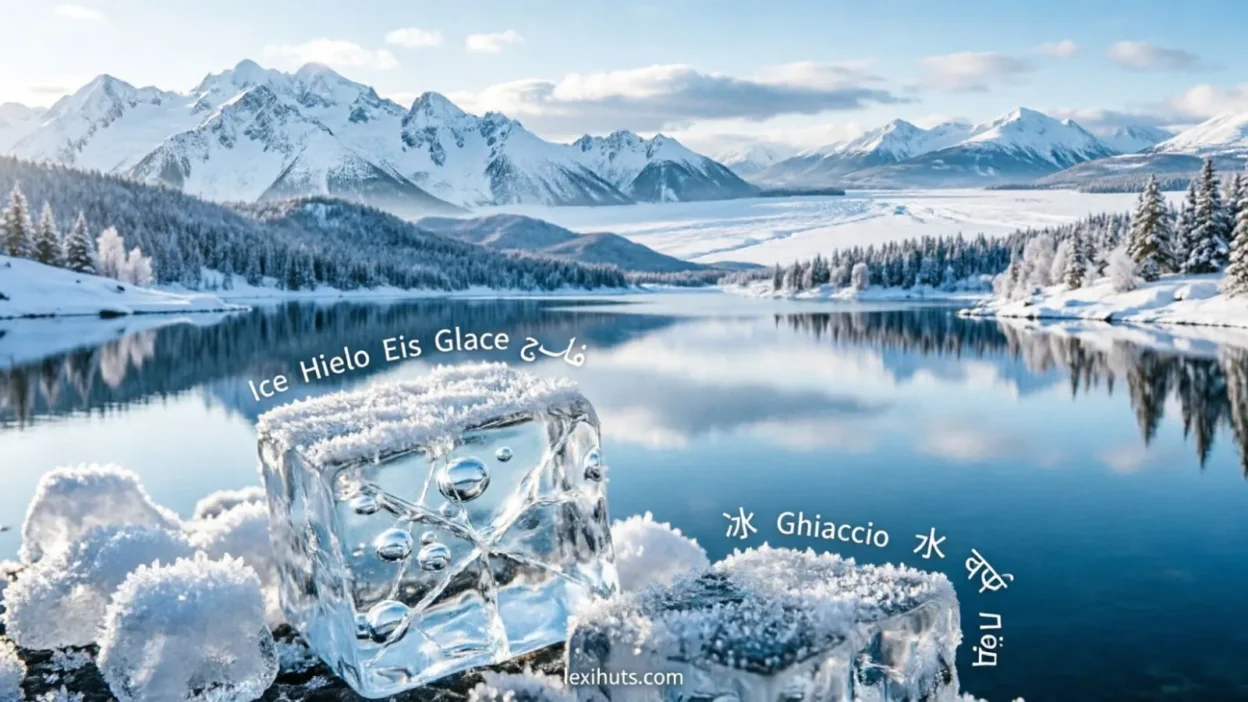
Ice is a simple yet essential part of everyday life. Whether you are traveling, learning a new language, studying world cultures, or simply curious about translations, knowing how to say “ice” in different languages can be both useful and fascinating.
In this guide, you will discover how the word “ice” is translated across many languages from different regions of the world.
Along with each translation, you’ll find pronunciation tips and examples to help you understand and use the word correctly.
This resource is perfect for language learners, travelers, students, and anyone interested in multilingual communication.
Ice in Different Languages
1. Ice in Spanish
Phrase: Hielo
Pronunciation: EE-eh-loh
Meaning: Frozen water
Example: Quiero hielo en mi bebida. (I want ice in my drink.)
2. Ice in French
Phrase: Glace
Pronunciation: GLAHS
Meaning: Ice or frozen surface
Example: La glace est très froide. (The ice is very cold.)
3. Ice in German
Phrase: Eis
Pronunciation: ICE
Meaning: Ice
Example: Das Eis schmilzt. (The ice is melting.)
4. Ice in Italian
Phrase: Ghiaccio
Pronunciation: GYAH-cho
Meaning: Ice
Example: Metti del ghiaccio nel bicchiere. (Put some ice in the glass.)
5. Ice in Portuguese
Phrase: Gelo
Pronunciation: ZHEH-loo
Meaning: Ice
Example: Preciso de gelo. (I need ice.)
6. Ice in Dutch
Phrase: IJs
Pronunciation: AYS
Meaning: Ice
Example: Het ijs is glad. (The ice is slippery.)
7. Ice in Russian
Phrase: Лёд (Lyod)
Pronunciation: LYOD
Meaning: Ice
Example: Лёд очень холодный. (The ice is very cold.)
8. Ice in Ukrainian
Phrase: Лід
Pronunciation: LEED
Meaning: Ice
Example: Лід тане. (The ice is melting.)
9. Ice in Polish
Phrase: Lód
Pronunciation: WOOD
Meaning: Ice
Example: Lód jest twardy. (Ice is hard.)
10. Ice in Czech
Phrase: Led
Pronunciation: LET
Meaning: Ice
Example: Led je studený. (Ice is cold.)
11. Ice in Greek
Phrase: Πάγος
Pronunciation: PA-gos
Meaning: Ice
Example: Ο πάγος λιώνει. (The ice is melting.)
12. Ice in Turkish
Phrase: Buz
Pronunciation: BOOZ
Meaning: Ice
Example: Biraz buz istiyorum. (I want some ice.)
13. Ice in Arabic
Phrase: ثلج
Pronunciation: THALJ
Meaning: Ice or snow
Example: أضف بعض الثلج. (Add some ice.)
14. Ice in Hebrew
Phrase: קרח
Pronunciation: KEH-rahkh
Meaning: Ice
Example: הקרח נמס. (The ice melted.)
15. Ice in Persian
Phrase: یخ
Pronunciation: YAKH
Meaning: Ice
Example: لطفا یخ بدهید. (Please give ice.)
16. Ice in Hindi
Phrase: बर्फ
Pronunciation: BARF
Meaning: Ice
Example: मुझे बर्फ चाहिए। (I need ice.)
17. Ice in Urdu
Phrase: برف
Pronunciation: BARAF
Meaning: Ice
Example: مجھے برف چاہیے۔ (I need ice.)
18. Ice in Bengali
Phrase: বরফ
Pronunciation: BO-ROF
Meaning: Ice
Example: বরফ ঠান্ডা। (Ice is cold.)
19. Ice in Punjabi
Phrase: ਬਰਫ਼
Pronunciation: BARAF
Meaning: Ice
Example: ਮੈਨੂੰ ਬਰਫ਼ ਚਾਹੀਦੀ ਹੈ। (I need ice.)
20. Ice in Gujarati
Phrase: બરફ
Pronunciation: BARAF
Meaning: Ice
Example: મને બરફ જોઈએ. (I need ice.)
21. Ice in Chinese
Phrase: 冰
Pronunciation: BING
Meaning: Ice
Example: 请给我冰。 (Please give me ice.)
22. Ice in Japanese
Phrase: 氷
Pronunciation: KOH-REE
Meaning: Ice
Example: 氷をください。 (Please give me ice.)
23. Ice in Korean
Phrase: 얼음
Pronunciation: EO-REUM
Meaning: Ice
Example: 얼음을 주세요. (Please give me ice.)
24. Ice in Thai
Phrase: น้ำแข็ง
Pronunciation: NAM-KHAENG
Meaning: Ice
Example: ขอ น้ำแข็ง หน่อย. (Please give me some ice.)
25. Ice in Vietnamese
Phrase: Đá
Pronunciation: DAH
Meaning: Ice
Example: Tôi cần đá. (I need ice.)
26. Ice in Indonesian
Phrase: Es
Pronunciation: ESS
Meaning: Ice
Example: Saya ingin es. (I want ice.)
27. Ice in Malay
Phrase: Ais
Pronunciation: EYES
Meaning: Ice
Example: Saya mahu ais. (I want ice.)
28. Ice in Filipino
Phrase: Yelo
Pronunciation: YEH-lo
Meaning: Ice
Example: Kailangan ko ng yelo. (I need ice.)
29. Ice in Swahili
Phrase: Barafu
Pronunciation: BA-ra-foo
Meaning: Ice
Example: Barafu ni baridi. (Ice is cold.)
30. Ice in Zulu
Phrase: Iqhwa
Pronunciation: EE-khwa
Meaning: Ice
Example: Iqhwa liyancibilika. (The ice is melting.)
Why Learning Ice in Different Languages Is Important
Learning the translation of common words like “ice” helps improve communication when traveling, studying, or interacting with people from different cultures. It also strengthens vocabulary retention because everyday words are often easier to remember and use in real conversations.
Understanding how different languages express simple concepts can also provide insight into cultural differences and language structures. This makes language learning more engaging and practical.
Practical Tips for Remembering the Word Ice in Different Languages
Use Flashcards
Create digital or physical flashcards with the word “ice” on one side and the translation on the other.
Practice with Sentences
Instead of memorizing individual words, use them in complete sentences to improve retention.
Group Languages by Region
Learning related languages together can help you recognize patterns and similarities.
Listen to Native Pronunciations
Hearing native speakers pronounce the word helps improve speaking confidence and accuracy.
Use the Word Daily
Try using the translated word whenever you order drinks, discuss weather, or practice conversations.
Conclusion
Learning how to say ice in different languages is a simple yet effective way to expand your vocabulary and connect with people worldwide.
If you’re traveling, studying a new language, or exploring global cultures, these translations can help you communicate more confidently and understand linguistic diversity better.
FAQs
1. How do you say ice in Spanish?
Ice in Spanish is “Hielo.”
2. What is the Japanese word for ice?
The Japanese word for ice is “氷” (Kōri).
3. How do you say ice in French?
Ice in French is “Glace.”
4. Why should I learn common words in different languages?
Learning common words improves communication, travel experiences, and language-learning skills.
5. Is the word for ice similar across languages?
Some languages share similar roots, but many have unique words and pronunciations for ice.