
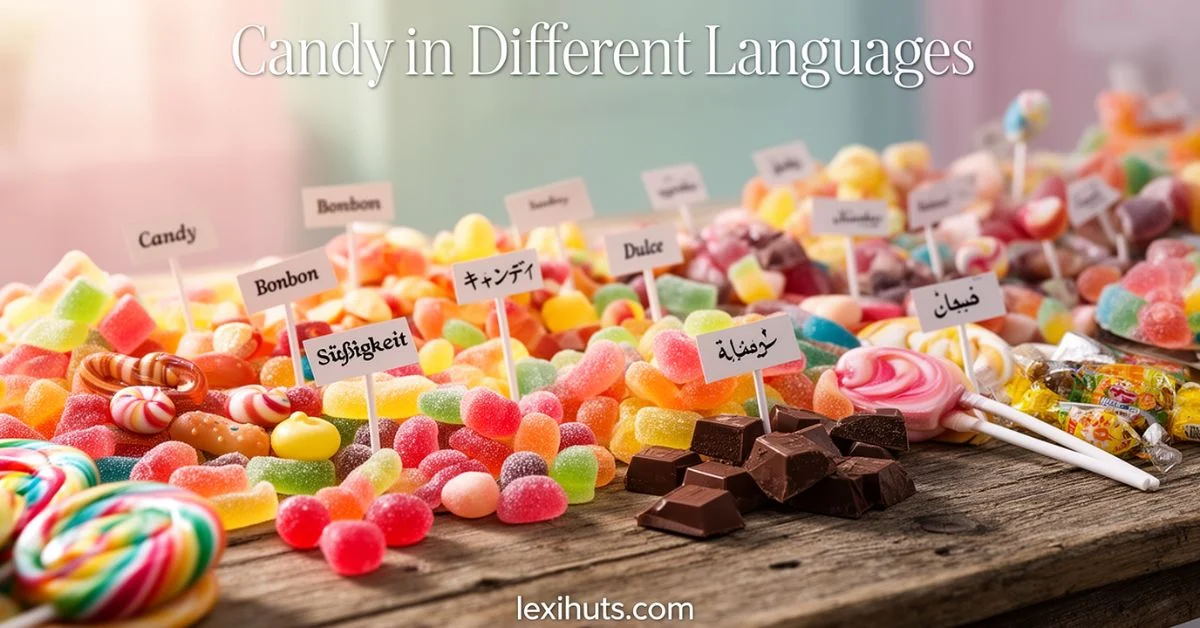
Candy is a universal treat loved by people of all ages, but the word for it changes beautifully across cultures and languages.
If you’re curious about how to say “candy” in different languages, whether for travel, learning, or fun, this guide will help you explore sweet vocabulary from around the globe in a simple and engaging way.
What Does “Candy” Mean Around the World?
Candy generally refers to sweet confections made with sugar, chocolate, or flavorings. While the concept stays the same, each language adds its own cultural flavor to the word, reflecting traditions, ingredients, and local preferences.
Candy in Different Languages (With Pronunciation and Examples)
1. Spanish
Phrase: Dulce / Caramelo
Pronunciation: DOOL-seh / kah-rah-MEH-loh
Meaning: Sweet or candy
Example: Me gusta el dulce. (I like candy.)
2. French
Phrase: Bonbon
Pronunciation: bon-bon
Meaning: Small sweet treat
Example: Je mange un bonbon. (I eat a candy.)
3. German
Phrase: Süßigkeit
Pronunciation: ZOOS-ig-kite
Meaning: Sweet or confection
Example: Kinder lieben Süßigkeiten. (Children love candy.)
4. Italian
Phrase: Caramella
Pronunciation: kah-rah-MEL-lah
Meaning: Candy or sweet
Example: Voglio una caramella. (I want a candy.)
5. Portuguese
Phrase: Doce
Pronunciation: DOH-see
Meaning: Sweet or dessert
Example: Eu adoro doce. (I love candy.)
6. Hindi
Phrase: मिठाई (Mithai)
Pronunciation: mith-ai
Meaning: Sweet or traditional dessert
Example: मुझे मिठाई पसंद है। (I like sweets.)
7. Arabic
Phrase: حلوى (Halwa)
Pronunciation: hal-wah
Meaning: Sweet or candy
Example: الأطفال يحبون الحلوى. (Children love candy.)
8. Chinese (Mandarin)
Phrase: 糖果 (Tángguǒ)
Pronunciation: tang-gwo
Meaning: Candy or sweets
Example: 我喜欢糖果。 (I like candy.)
9. Japanese
Phrase: キャンディ (Kyandi) / 飴 (Ame)
Pronunciation: kyan-dee / ah-meh
Meaning: Candy or sweet
Example: キャンディを食べます。 (I eat candy.)
10. Korean
Phrase: 사탕 (Satang)
Pronunciation: sah-tang
Meaning: Candy
Example: 사탕을 좋아해요. (I like candy.)
11. Russian
Phrase: Конфета (Konfeta)
Pronunciation: kon-FYE-ta
Meaning: Candy
Example: Я люблю конфеты. (I love candy.)
12. Turkish
Phrase: Şeker
Pronunciation: sheh-ker
Meaning: Sugar or candy
Example: Şeker istiyorum. (I want candy.)
13. Greek
Phrase: Καραμέλα (Karamela)
Pronunciation: kah-rah-MEH-lah
Meaning: Candy or caramel
Example: Θέλω καραμέλα. (I want candy.)
14. Dutch
Phrase: Snoep
Pronunciation: snoop
Meaning: Candy or sweets
Example: Kinderen eten snoep. (Children eat candy.)
15. Swedish
Phrase: Godis
Pronunciation: goo-dis
Meaning: Candy or sweets
Example: Jag älskar godis. (I love candy.)
Why Learning “Candy” in Different Languages Matters for SEO and Users
Understanding how to say “candy” in multiple languages is useful for travelers, students, and content creators. It also helps improve multilingual SEO by targeting global audiences searching for translations, meanings, or cultural variations of common words. This kind of content answers direct user intent and increases visibility in search engines.
Practical Tips for Using Candy Translations
Learn with Context
Instead of memorizing words alone, use them in sentences. This improves retention and real-life usage.
Focus on Pronunciation
Correct pronunciation helps you communicate clearly, especially when traveling or interacting with native speakers.
Explore Cultural Differences
In some cultures, “candy” may include traditional sweets that differ from Western-style candy. Understanding this adds depth to your learning.
Use Flashcards or Apps
Practice regularly using language apps or flashcards to reinforce vocabulary.
Combine with Travel Phrases
Pair candy-related words with phrases like “I want” or “Do you have” for practical communication.
Conclusion
Learning how to say “candy” in different languages is a fun and practical way to expand your vocabulary and connect with cultures worldwide.
If you’re traveling, studying, or creating content, these translations help you communicate more effectively and appreciate global diversity.
FAQs
1. What is the most common word for candy worldwide?
There is no single universal word, but terms like “bonbon,” “caramelo,” and “konfeta” are widely recognized.
2. Is “candy” the same as “sweets” in all languages?
Not always. Some languages use one word for both, while others have separate terms depending on the type.
3. How do you say candy in Asian languages?
In Chinese it’s “tángguǒ,” in Japanese “ame” or “kyandi,” and in Korean “satang.”
4. Why does candy have different meanings in some cultures?
Cultural traditions and local ingredients influence what is considered candy or sweets.
5. Can learning simple words like candy help with language learning?
Yes, starting with common everyday words makes it easier to build vocabulary and confidence.