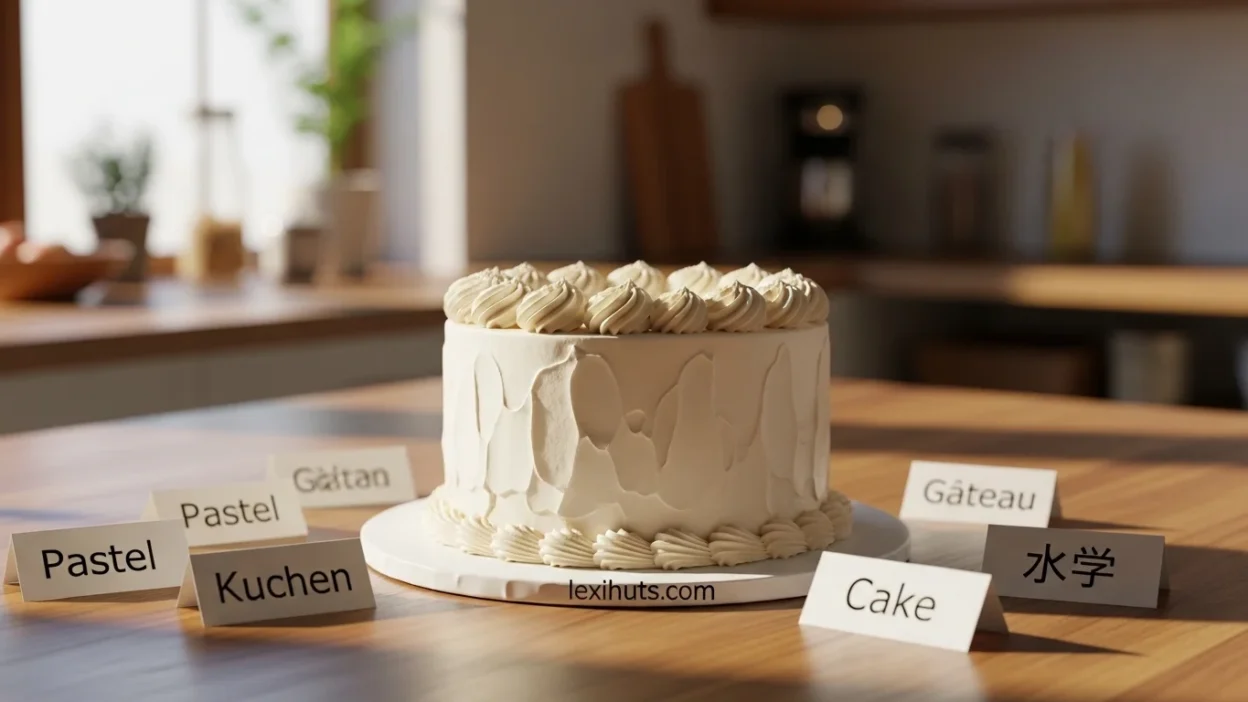
Cake is one of the most loved desserts across cultures, enjoyed during birthdays, celebrations, and special moments.
But have you ever wondered how to say “cake” in different languages? Learning this simple word can help you connect with people globally, explore cultures, and even enhance your travel or language skills.
In this guide, you’ll discover how the word “cake” is expressed in multiple languages, along with pronunciation tips and examples to make learning easier and more practical.
Why Learn “Cake” in Different Languages?
Understanding how to say common food items like cake in various languages is useful for travelers, food lovers, and language learners. It also helps in cultural appreciation and communication in everyday situations.
Cake in Different Languages List
1. Spanish
Phrase: Pastel
Pronunciation: pah-STEL
Meaning: Refers to cake or pastry
Example: Me gusta el pastel de chocolate.
Explanation: Commonly used in Latin America for cakes.
2. French
Phrase: Gâteau
Pronunciation: gah-TOH
Meaning: Cake or sweet baked dessert
Example: Je mange un gâteau.
Explanation: Often used for celebration cakes in France.
3. German
Phrase: Kuchen
Pronunciation: KOO-ken
Meaning: Cake or baked dessert
Example: Ich esse Kuchen.
Explanation: A general term for many types of cakes.
4. Italian
Phrase: Torta
Pronunciation: TOR-tah
Meaning: Cake or pie
Example: Mangio una torta.
Explanation: Used for sweet and sometimes savory cakes.
5. Urdu
Phrase: کیک
Pronunciation: Cake
Meaning: Cake
Example: مجھے کیک پسند ہے۔
Explanation: Borrowed directly from English.
6. Hindi
Phrase: केक
Pronunciation: Cake
Meaning: Cake
Example: मुझे केक पसंद है।
Explanation: Widely used in urban areas.
7. Arabic
Phrase: كعكة
Pronunciation: ka’ka
Meaning: Cake
Example: أحب الكعكة.
Explanation: Used across Arabic-speaking countries.
8. Chinese (Mandarin)
Phrase: 蛋糕
Pronunciation: dàn gāo
Meaning: Cake
Example: 我喜欢蛋糕。
Explanation: Popular word for desserts in China.
9. Japanese
Phrase: ケーキ
Pronunciation: kēki
Meaning: Cake
Example: ケーキが好きです。
Explanation: Borrowed from English pronunciation.
10. Korean
Phrase: 케이크
Pronunciation: ke-i-keu
Meaning: Cake
Example: 케이크를 좋아해요.
Explanation: Modern loanword from English.
11. Russian
Phrase: Торт
Pronunciation: tort
Meaning: Cake
Example: Я люблю торт.
Explanation: Refers to layered cakes.
12. Portuguese
Phrase: Bolo
Pronunciation: BO-lo
Meaning: Cake
Example: Eu gosto de bolo.
Explanation: Commonly used in Brazil and Portugal.
13. Turkish
Phrase: Pasta
Pronunciation: PAS-ta
Meaning: Cake
Example: Pasta yiyorum.
Explanation: Refers to sweet cakes, not Italian pasta.
14. Greek
Phrase: Κέικ
Pronunciation: keik
Meaning: Cake
Example: Μου αρέσει το κέικ.
Explanation: Borrowed word similar to English.
15. Dutch
Phrase: Cake
Pronunciation: kah-keh
Meaning: Cake
Example: Ik eet cake.
Explanation: Similar spelling but slightly different pronunciation.
SEO Importance of Learning “Cake in Different Languages”
The keyword “cake in different languages” is highly relevant for language learners, bloggers, and travelers. It targets informational search intent and attracts users looking for quick translations and cultural insights. By understanding such keywords, content creators can improve visibility, drive organic traffic, and provide value to a global audience.
Practical Tips for Learning Food Words in Multiple Languages
Focus on Common Words
Start with everyday food items like cake, bread, and water to build a strong vocabulary base.
Practice Pronunciation
Use phonetic guides to say words correctly and confidently.
Use in Sentences
Learning words in context helps you remember them better and improves communication.
Explore Culture
Understanding how food is used in traditions makes learning more meaningful.
Repeat and Revise
Regular practice ensures long-term memory retention.
Conclusion
Learning how to say “cake” in different languages is a fun and useful way to expand your vocabulary and connect with cultures worldwide.
If you’re traveling, studying languages, or simply curious, these translations offer a sweet introduction to global communication.
FAQs
1. What is “cake” in most languages?
Many languages either have unique words like “gâteau” or borrowed versions like “cake.”
2. Is “cake” the same in all languages?
No, each language has its own term, though some borrow from English.
3. Why do some languages use the English word “cake”?
Globalization and modern influence have made English words common in many languages.
4. Which language has the most unique word for cake?
Languages like Chinese (蛋糕) and Arabic (كعكة) have completely distinct terms.
5. Is learning food words useful in language learning?
Yes, food vocabulary is practical and commonly used in daily conversations.