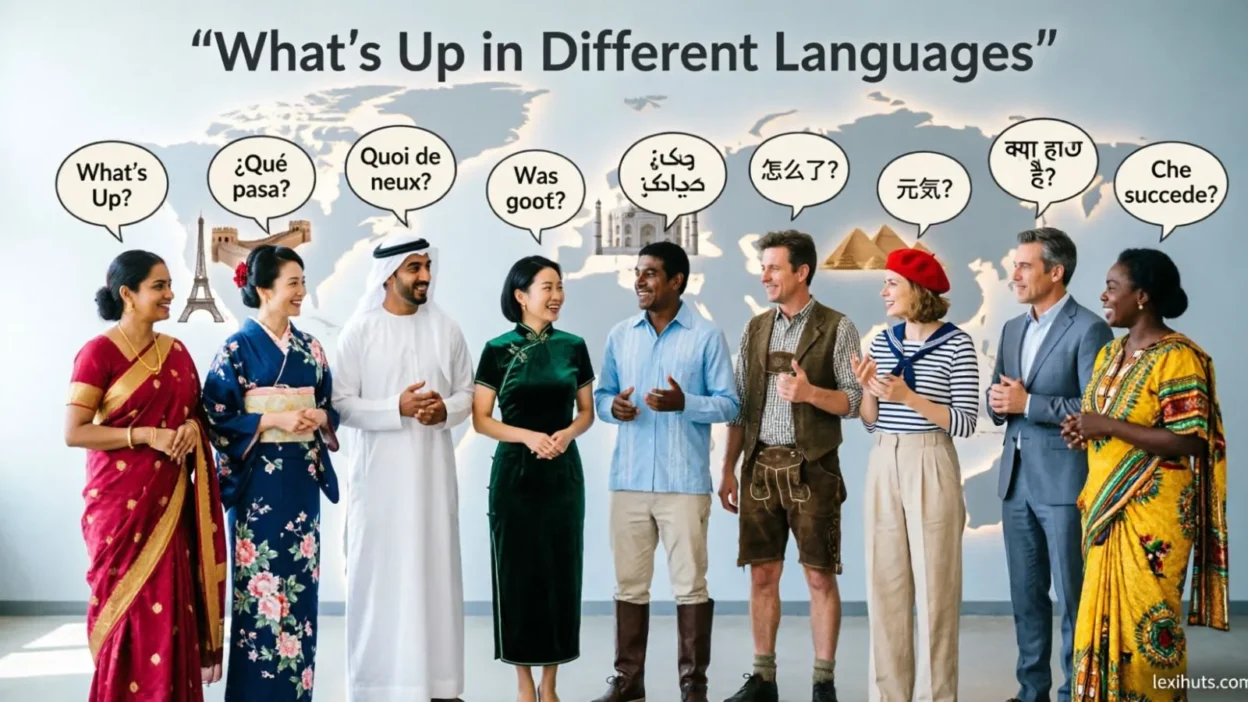
Have you ever wondered how to say “What’s up?” in different languages?
This casual greeting is commonly used in everyday conversations to ask someone how they are doing or what they are currently doing.
Learning these expressions can help you communicate more naturally when traveling, studying languages, or connecting with people from different cultures.
In many countries, direct translations of “What’s up?” may not exist, but similar informal greetings are widely used.
Understanding these phrases can improve your language skills and make conversations feel more friendly and authentic.
What Does “What’s Up?” Mean?
“What’s up?” is an informal greeting used to ask about someone’s current situation, mood, or activities. It is similar to expressions such as:
- How are you?
- What’s going on?
- How’s everything?
- What’s happening?
The phrase is most commonly used among friends, family members, and colleagues in casual settings.
30 Ways to Say What’s Up in Different Languages
1. Spanish
Phrase: ¿Qué tal?
Pronunciation: Keh tahl
Meaning: How’s it going?
Example: ¡Hola! ¿Qué tal?
2. French
Phrase: Quoi de neuf ?
Pronunciation: Kwa duh nuhf
Meaning: What’s new?
Example: Salut, quoi de neuf ?
3. German
Phrase: Was geht?
Pronunciation: Vahs gayt
Meaning: What’s going on?
Example: Hey, was geht?
4. Italian
Phrase: Come va?
Pronunciation: Koh-meh vah
Meaning: How’s it going?
Example: Ciao, come va?
5. Portuguese
Phrase: E aí?
Pronunciation: Eh ah-ee
Meaning: What’s up?
Example: Oi, e aí?
6. Dutch
Phrase: Hoe gaat het?
Pronunciation: Hoo ghaht het
Meaning: How are things?
Example: Hallo, hoe gaat het?
7. Russian
Phrase: Что нового?
Pronunciation: Shto noh-vo-vo
Meaning: What’s new?
Example: Привет! Что нового?
8. Chinese (Mandarin)
Phrase: 最近怎么样?
Pronunciation: Zuìjìn zěnmeyàng
Meaning: How have you been lately?
Example: 你好,最近怎么样?
9. Japanese
Phrase: 元気?
Pronunciation: Gen-kee?
Meaning: Are you well?
Example: 元気?
10. Korean
Phrase: 잘 지냈어?
Pronunciation: Jal ji-nae-sseo?
Meaning: Have you been well?
Example: 안녕, 잘 지냈어?
11. Arabic
Phrase: كيف الحال؟
Pronunciation: Kayf al-hal
Meaning: How are things?
Example: مرحباً، كيف الحال؟
12. Hindi
Phrase: क्या हाल है?
Pronunciation: Kya haal hai?
Meaning: How are you?
Example: नमस्ते, क्या हाल है?
13. Urdu
Phrase: کیا حال ہے؟
Pronunciation: Kya haal hai?
Meaning: How are you?
Example: السلام علیکم، کیا حال ہے؟
14. Turkish
Phrase: Ne haber?
Pronunciation: Neh hah-ber
Meaning: What’s the news?
Example: Merhaba, ne haber?
15. Greek
Phrase: Τι νέα;
Pronunciation: Tee neh-ah
Meaning: What’s new?
Example: Γεια σου, τι νέα;
16. Polish
Phrase: Co słychać?
Pronunciation: Tso swih-hach
Meaning: What’s up?
Example: Cześć, co słychać?
17. Swedish
Phrase: Hur är läget?
Pronunciation: Hoor air leh-get
Meaning: How are things?
Example: Hej, hur är läget?
18. Norwegian
Phrase: Hva skjer?
Pronunciation: Vah sher
Meaning: What’s happening?
Example: Hei, hva skjer?
19. Danish
Phrase: Hvad så?
Pronunciation: Vahd soh
Meaning: What’s up?
Example: Hej, hvad så?
20. Finnish
Phrase: Mitä kuuluu?
Pronunciation: Mee-tah koo-loo
Meaning: How are you?
Example: Hei, mitä kuuluu?
21. Czech
Phrase: Co je nového?
Pronunciation: Tso yeh noh-veh-ho
Meaning: What’s new?
Example: Ahoj, co je nového?
22. Hungarian
Phrase: Mi újság?
Pronunciation: Mee oo-zhag
Meaning: What’s the news?
Example: Szia, mi újság?
23. Romanian
Phrase: Ce mai faci?
Pronunciation: Cheh my fahch
Meaning: How are you doing?
Example: Salut, ce mai faci?
24. Thai
Phrase: เป็นไงบ้าง?
Pronunciation: Pen ngai bang?
Meaning: How are things?
Example: สวัสดี เป็นไงบ้าง?
25. Vietnamese
Phrase: Có gì mới?
Pronunciation: Koh zee moy
Meaning: What’s new?
Example: Xin chào, có gì mới?
26. Indonesian
Phrase: Apa kabar?
Pronunciation: Ah-pah kah-bar
Meaning: How are you?
Example: Halo, apa kabar?
27. Malay
Phrase: Apa khabar?
Pronunciation: Ah-pah kha-bar
Meaning: How are you?
Example: Hai, apa khabar?
28. Hebrew
Phrase: מה נשמע?
Pronunciation: Mah nish-mah
Meaning: What’s up?
Example: שלום, מה נשמע?
29. Swahili
Phrase: Mambo?
Pronunciation: Mahm-boh
Meaning: What’s up?
Example: Jambo! Mambo?
30. Filipino (Tagalog)
Phrase: Kumusta?
Pronunciation: Koo-moos-tah
Meaning: How are you?
Example: Kumusta ka?
Why Learning “What’s Up” in Different Languages Is Important
Learning informal greetings helps you communicate more naturally with native speakers. While grammar and vocabulary are important, greetings are often the first words exchanged in a conversation.
Knowing how to say “What’s up?” in different languages can:
- Improve conversational skills
- Build cultural awareness
- Help during international travel
- Create stronger personal connections
- Make language learning more enjoyable
Useful Tips for Using These Greetings
Match the Situation
Many of these phrases are informal. Use them with friends, classmates, coworkers, or people you know well.
Pay Attention to Pronunciation
Correct pronunciation helps others understand you and makes your speech sound more natural.
Learn Common Responses
After asking “What’s up?”, be prepared for responses such as “I’m fine,” “Not much,” or “Everything is good.”
Practice With Native Speakers
Using these greetings in real conversations helps build confidence and improves fluency.
Understand Cultural Differences
Some cultures prefer formal greetings, especially when speaking with older people or strangers. Always consider the social context.
Conclusion
Learning how to say “What’s up?” in different languages is a fun and practical way to expand your communication skills.
These everyday greetings help you connect with people worldwide, understand different cultures, and sound more natural when speaking a new language.
If you’re traveling, studying, or simply curious about languages, these phrases are a great place to start.
FAQs:
1. How do you say “What’s up?” in Spanish?
The most common informal expression is “¿Qué tal?” which means “How’s it going?” or “What’s up?”
2. Is “What’s up?” considered a formal greeting?
No. “What’s up?” is generally an informal greeting used among friends, family, and acquaintances.
3. What is the French equivalent of “What’s up?”
A common French expression is “Quoi de neuf?” which literally means “What’s new?”
4. Why should I learn greetings in different languages?
Greetings are often the first step in communication and help create positive interactions with native speakers.
5. Are direct translations of “What’s up?” available in every language?
Not always. Many languages use similar phrases that express the same idea rather than a word-for-word translation.