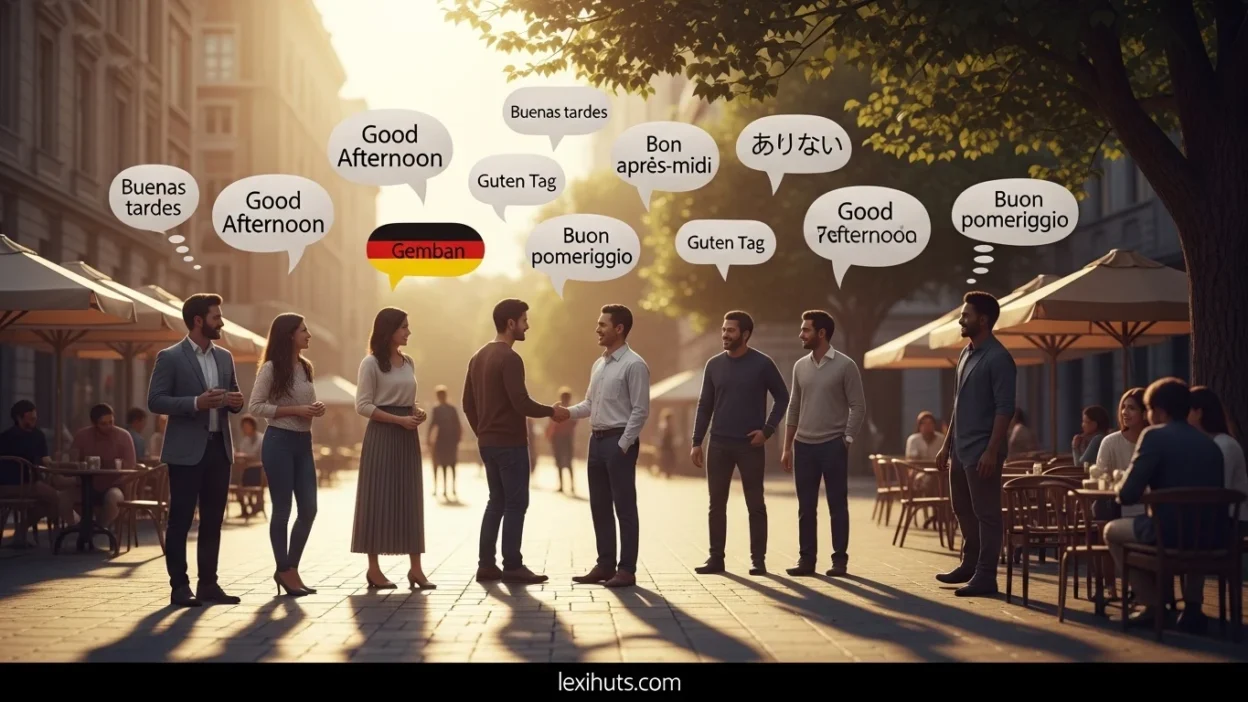
Learning how to say good afternoon in different languages is a simple way to connect with people from various cultures.
If you are traveling, studying a new language, or just curious about global greetings, knowing afternoon greetings can help you communicate politely and confidently.
In many cultures, greetings change depending on the time of day. Afternoon greetings are commonly used from around midday until early evening.
In this guide, you will discover how to say good afternoon in multiple languages, along with pronunciation and examples to help you use them naturally.
What Does “Good Afternoon” Mean?
“Good afternoon” is a polite greeting used between 12:00 PM and early evening. It is commonly used in professional settings, formal conversations, and polite interactions.
In many languages, the phrase directly translates to “good” + “afternoon”, while in others it may simply mean “hello during the afternoon.”
Good Afternoon in Different Languages
Below are common ways to say good afternoon in languages spoken around the world.
1. Spanish
Phrase: Buenas tardes
Pronunciation: BWEH-nahs TAR-des
Meaning: Good afternoon
Example: Buenas tardes, ¿cómo está?
2. French
Phrase: Bon après-midi
Pronunciation: Bon ah-preh mee-dee
Meaning: Good afternoon
Example: Bon après-midi à tous.
3. German
Phrase: Guten Nachmittag
Pronunciation: GOO-ten NAHKH-mit-tahk
Meaning: Good afternoon
Example: Guten Nachmittag, wie geht es Ihnen?
4. Italian
Phrase: Buon pomeriggio
Pronunciation: Bwon po-meh-REE-joh
Meaning: Good afternoon
Example: Buon pomeriggio, signore.
5. Portuguese
Phrase: Boa tarde
Pronunciation: BO-ah TAR-jee
Meaning: Good afternoon
Example: Boa tarde, tudo bem?
6. Dutch
Phrase: Goedemiddag
Pronunciation: HOO-de-mi-dakh
Meaning: Good afternoon
Example: Goedemiddag, hoe gaat het?
7. Russian
Phrase: Добрый день (Dobryy den)
Pronunciation: DOH-briy DYEN
Meaning: Good afternoon / Good day
Example: Добрый день, как дела?
8. Chinese (Mandarin)
Phrase: 下午好 (Xiàwǔ hǎo)
Pronunciation: SHYAH-woo how
Meaning: Good afternoon
Example: 下午好,你好吗?
9. Japanese
Phrase: こんにちは (Konnichiwa)
Pronunciation: KON-nee-chee-wah
Meaning: Hello / Good afternoon
Example: こんにちは、お元気ですか?
10. Korean
Phrase: 안녕하세요 (Annyeonghaseyo)
Pronunciation: AN-nyong-ha-se-yo
Meaning: Hello / Good afternoon
Example: 안녕하세요!
11. Arabic
Phrase: مساء الخير (Masaa al-khair)
Pronunciation: ma-SAA al-KHAIR
Meaning: Good afternoon / Good evening
Example: مساء الخير، كيف حالك؟
12. Turkish
Phrase: İyi öğleden sonra
Pronunciation: EE-yee ur-len-den SON-ra
Meaning: Good afternoon
Example: İyi öğleden sonra!
13. Hindi
Phrase: नमस्कार (Namaskar)
Pronunciation: NUM-us-kar
Meaning: Respectful greeting used during the day
Example: नमस्कार, आप कैसे हैं?
14. Bengali
Phrase: শুভ অপরাহ্ন (Shubho Oporahno)
Pronunciation: SHU-bho o-po-ROH-no
Meaning: Good afternoon
Example: শুভ অপরাহ্ন!
15. Greek
Phrase: Καλό απόγευμα (Kaló apógevma)
Pronunciation: ka-LO a-PO-yev-ma
Meaning: Good afternoon
Example: Καλό απόγευμα σε όλους.
16. Polish
Phrase: Dzień dobry
Pronunciation: jen DOH-bri
Meaning: Good afternoon / Good day
Example: Dzień dobry, jak się masz?
17. Swedish
Phrase: God eftermiddag
Pronunciation: good EF-ter-mid-dag
Meaning: Good afternoon
Example: God eftermiddag!
18. Danish
Phrase: God eftermiddag
Pronunciation: go EF-ter-mid-dah
Meaning: Good afternoon
Example: God eftermiddag.
19. Norwegian
Phrase: God ettermiddag
Pronunciation: goo ET-ter-mid-dag
Meaning: Good afternoon
Example: God ettermiddag!
20. Finnish
Phrase: Hyvää iltapäivää
Pronunciation: HOO-va il-ta-pai-va
Meaning: Good afternoon
Example: Hyvää iltapäivää!
21. Thai
Phrase: สวัสดีตอนบ่าย (Sawasdee ton bai)
Pronunciation: sa-wat-dee ton bai
Meaning: Good afternoon
Example: สวัสดีตอนบ่าย!
22. Vietnamese
Phrase: Chào buổi chiều
Pronunciation: chow boo-ee chee-oo
Meaning: Good afternoon
Example: Chào buổi chiều!
23. Indonesian
Phrase: Selamat sore
Pronunciation: suh-LA-mat SO-reh
Meaning: Good afternoon / Good evening
Example: Selamat sore!
24. Swahili
Phrase: Habari za mchana
Pronunciation: ha-BA-ri za m-cha-na
Meaning: Good afternoon
Example: Habari za mchana!
25. Filipino (Tagalog)
Phrase: Magandang hapon
Pronunciation: ma-gan-DANG HA-pon
Meaning: Good afternoon
Example: Magandang hapon po!
Why Learning “Good Afternoon” in Different Languages Is Important
Understanding greetings in multiple languages helps improve communication, cultural awareness, and social connections.
Key benefits include:
- Making a positive first impression when meeting people abroad
- Showing respect for different cultures and traditions
- Improving language learning skills
- Enhancing travel experiences
- Building stronger international relationships
Even learning a few greetings can make conversations smoother and more welcoming.
Practical Tips for Using Afternoon Greetings Correctly
If you want to use these greetings naturally, keep the following tips in mind:
Know the Time Range
In most cultures, good afternoon is used from around 12 PM to 5 PM or sunset.
Consider Formal vs Informal Use
Some languages have formal greetings for professional settings and casual greetings for friends.
Pay Attention to Pronunciation
Listening to native speakers or language apps can help you pronounce greetings correctly.
Use Body Language
In some cultures, greetings are combined with handshakes, bows, or nods.
Practice Regularly
Using these greetings daily will help you remember them faster and sound more natural.
Conclusion
Learning how to say good afternoon in different languages is an easy yet meaningful way to connect with people worldwide.
From Spanish and French to Japanese and Swahili, afternoon greetings reflect cultural respect and friendliness.
By practicing these phrases, you can improve communication, show politeness, and enjoy richer interactions when meeting people from different backgrounds.
FAQs
1. How do you say good afternoon in Spanish?
You say “Buenas tardes.” It is commonly used from noon until evening in Spanish-speaking countries.
2. What time is considered afternoon for greetings?
In most cultures, afternoon greetings are used between 12 PM and around 5–6 PM.
3. Is “hello” the same as good afternoon in some languages?
Yes. In languages like Japanese and Korean, common greetings such as Konnichiwa or Annyeonghaseyo can also be used during the afternoon.
4. Why do greetings change depending on the time of day?
Many cultures use time-based greetings to show politeness and acknowledge the time of interaction.
5. What is the easiest language greeting to learn?
Simple greetings like Boa tarde (Portuguese) or Buenas tardes (Spanish) are easy to learn because their pronunciation closely matches their spelling.