
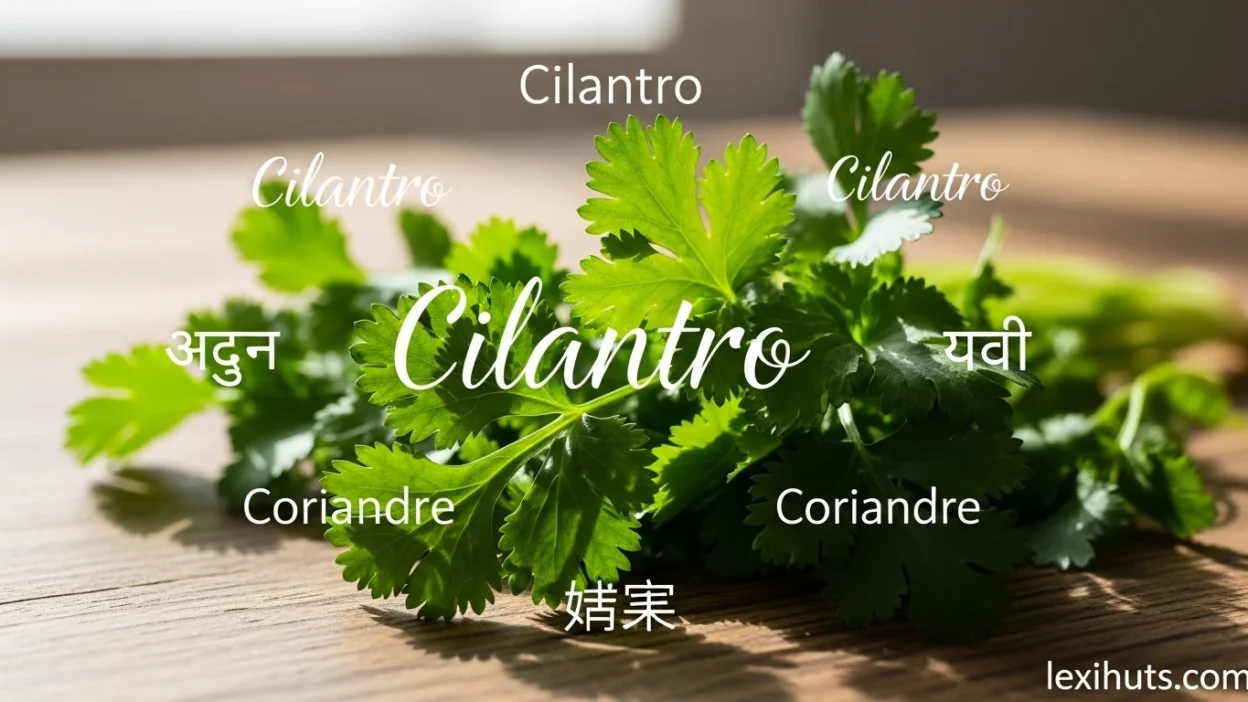
Cilantro is a widely used herb known for its fresh flavor and aroma, but its name varies greatly across cultures and languages.
If you’re cooking an international recipe, traveling, or simply curious about global food terms, understanding how cilantro is called in different languages can be incredibly useful.
In this guide, you’ll explore the names, pronunciations, and meanings of cilantro across the world in a simple and easy-to-follow format.
What Is Cilantro?
Cilantro refers to the leaves of the coriander plant, commonly used in cooking for its bright and citrusy flavor. In some regions, “cilantro” specifically means the leaves, while “coriander” refers to the seeds. This distinction often leads to confusion, especially across languages.
Cilantro in Different Languages
Below is a list of cilantro names in various languages, along with pronunciation and meaning to help you understand and use them correctly.
1. Spanish
Phrase: Cilantro
Pronunciation: see-LAHN-troh
Meaning: Refers to fresh coriander leaves
Explanation: In Spanish-speaking countries, “cilantro” is the standard term used in cooking and markets.
2. French
Phrase: Coriandre
Pronunciation: koh-ree-AHND
Meaning: Both leaves and seeds of the coriander plant
Explanation: French does not differentiate between cilantro and coriander like English does.
3. Hindi
Phrase: Dhaniya (धनिया)
Pronunciation: dhu-NAI-yah
Meaning: Coriander leaves or seeds depending on context
Explanation: Widely used in Indian cuisine, “dhaniya” is essential in many spice blends.
4. Urdu
Phrase: Dhania (دھنیا)
Pronunciation: dhu-NAI-ya
Meaning: Fresh coriander leaves
Explanation: Commonly used in Pakistani cooking for garnishing and flavoring dishes.
5. Arabic
Phrase: Kuzbara (كزبرة)
Pronunciation: kuz-bah-rah
Meaning: Coriander herb
Explanation: Used in Middle Eastern dishes for both fresh and dried forms.
6. Chinese (Mandarin)
Phrase: Xiāngcài (香菜)
Pronunciation: shyang-tsai
Meaning: “Fragrant vegetable”
Explanation: Highlights the strong aroma of cilantro in Chinese cuisine.
7. Japanese
Phrase: Pakuchi (パクチー)
Pronunciation: pah-koo-chee
Meaning: Refers specifically to cilantro
Explanation: Borrowed from Thai, this term is popular in modern Japanese cooking.
8. Thai
Phrase: Pak Chi (ผักชี)
Pronunciation: pahk-chee
Meaning: Coriander leaves
Explanation: A staple herb in Thai soups and curries.
9. German
Phrase: Koriander
Pronunciation: koh-ree-AN-der
Meaning: Coriander plant
Explanation: Like French, German uses one term for both seeds and leaves.
10. Italian
Phrase: Coriandolo
Pronunciation: koh-ree-AHN-doh-loh
Meaning: Coriander
Explanation: Less commonly used fresh, but still recognized in Italian cuisine.
11. Portuguese
Phrase: Coentro
Pronunciation: kwen-troh
Meaning: Coriander herb
Explanation: Common in Brazilian and Portuguese dishes.
12. Russian
Phrase: Kinza (кинза)
Pronunciation: KEEN-zah
Meaning: Fresh cilantro leaves
Explanation: Distinct from coriander seeds, which have a different name.
13. Korean
Phrase: Gochu-namul (고수)
Pronunciation: goh-soo
Meaning: Coriander leaves
Explanation: Not traditionally common but increasingly used in modern Korean dishes.
14. Turkish
Phrase: Kişniş
Pronunciation: keesh-neesh
Meaning: Coriander
Explanation: Used in both seed and leaf form in Turkish cuisine.
15. Vietnamese
Phrase: Rau Mùi
Pronunciation: row-mwee
Meaning: Coriander herb
Explanation: A key ingredient in Vietnamese soups and salads.
Why Cilantro Has Different Names Worldwide
The variation in names comes from cultural, linguistic, and culinary differences. Some languages use a single word for both the seeds and leaves, while others have distinct terms. Regional cooking styles also influence how commonly the herb is used and named.
Importance of Knowing Cilantro in Different Languages (SEO Value)
Understanding cilantro in different languages is important for travelers, chefs, and food enthusiasts. It helps you:
- Identify ingredients in international recipes
- Communicate effectively in local markets
- Avoid confusion between cilantro and coriander
- Enhance your global culinary knowledge
This topic is highly searched because people often encounter unfamiliar ingredient names when exploring global cuisines.
Practical Tips and Useful Insights
- Always check whether the recipe refers to seeds or leaves when you see “coriander.”
- In Asian countries, cilantro is often used fresh, so look for leafy greens rather than spices.
- When shopping abroad, showing the local name can make it easier to find the herb.
- If you dislike cilantro’s taste, note that some cultures use it more heavily than others.
- Learning a few key food terms in different languages can greatly improve your cooking and travel experience.
Conclusion
Cilantro is a globally loved herb with a wide range of names depending on the language and region.
From “cilantro” in Spanish to “dhaniya” in Hindi and “xiāngcài” in Chinese, each term reflects cultural and culinary diversity.
Knowing these variations not only helps in cooking but also deepens your appreciation for international cuisines.
FAQs:
1. What is cilantro called in different countries?
Cilantro is known as dhaniya in India, xiāngcài in China, and kuzbara in Arabic-speaking countries, among many other names.
2. Is cilantro the same as coriander?
Yes, cilantro refers to the leaves, while coriander usually refers to the seeds, though some languages use one word for both.
3. Why does cilantro have different names?
Different languages and cultures have their own terms based on history, usage, and culinary traditions.
4. What is cilantro called in Urdu and Hindi?
In both Urdu and Hindi, cilantro is called “dhania.”
5. How can I identify cilantro in a foreign country?
Learn the local name, look for leafy green herbs, and check the aroma, which is fresh and citrusy.