
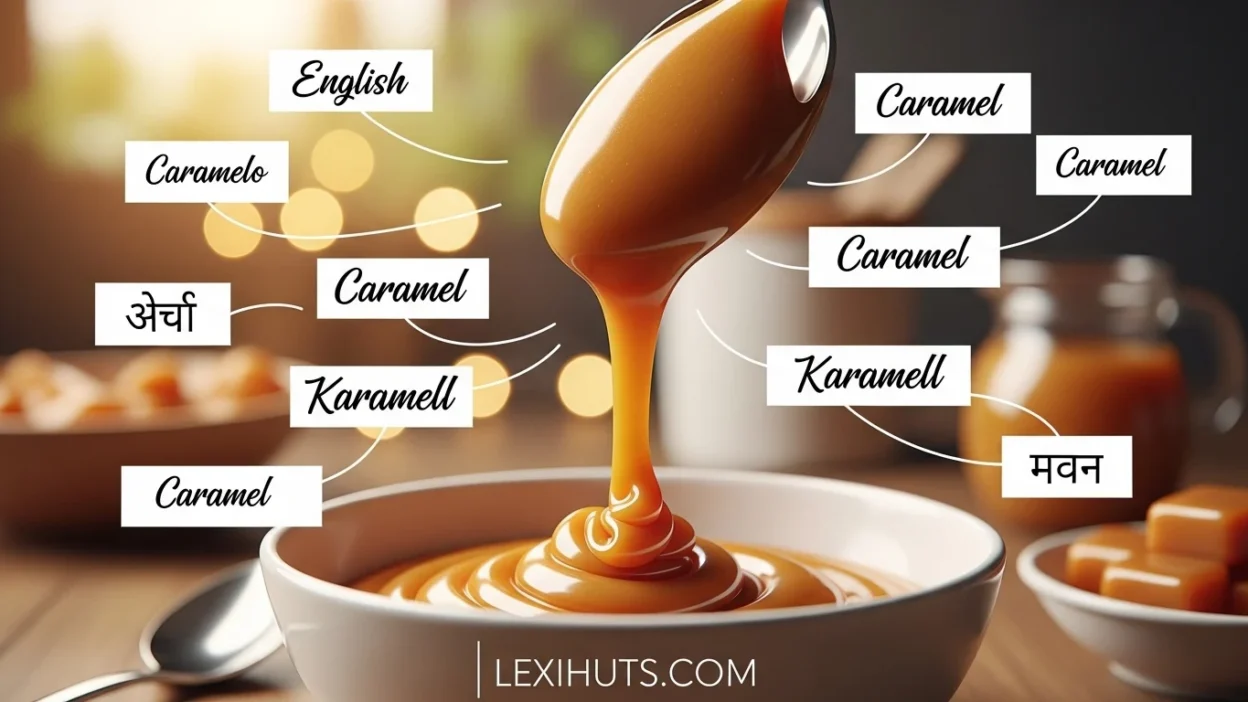
Caramel is a universally loved sweet flavor found in desserts, candies, and beverages across the globe. But have you ever wondered how to say “caramel” in different languages?
If you’re a traveler, a language learner, or simply curious, understanding how this delicious word translates worldwide can be both fun and useful.
In this article, you’ll explore how “caramel” is expressed in various languages, along with pronunciation tips and examples to help you use it confidently in real-life conversations.
What Does Caramel Mean?
Caramel refers to a rich, sweet substance made by heating sugar until it turns golden brown. It is commonly used in desserts like cakes, puddings, candies, and sauces. The word itself originates from Latin and has evolved across many cultures and languages.
Caramel in Different Languages
Below are popular translations of “caramel” across different regions of the world.
1. Spanish
Phrase: Caramelo
Pronunciation: kah-rah-MEH-loh
Meaning: Refers to caramel or candy
Example: Me gusta el caramelo en mi postre.
2. French
Phrase: Caramel
Pronunciation: kah-rah-MEL
Meaning: Same as English, used for desserts and sweets
Example: Le caramel est délicieux.
3. German
Phrase: Karamell
Pronunciation: kah-rah-MELL
Meaning: Caramel, often used in desserts
Example: Ich liebe Karamell-Eis.
4. Italian
Phrase: Caramello
Pronunciation: kah-rah-MEL-loh
Meaning: Caramel or sweet syrup
Example: Il caramello è dolce.
5. Portuguese
Phrase: Caramelo
Pronunciation: kah-rah-MEH-loo
Meaning: Caramel or candy
Example: Eu gosto de caramelo.
6. Hindi
Phrase: कैरेमल (Caramel)
Pronunciation: kai-re-mal
Meaning: Borrowed term, widely understood
Example: मुझे कैरेमल पसंद है।
7. Arabic
Phrase: كراميل
Pronunciation: ka-ra-meel
Meaning: Caramel used in sweets and drinks
Example: أحب الكراميل في القهوة.
8. Chinese (Simplified)
Phrase: 焦糖
Pronunciation: jiāo táng
Meaning: Burnt sugar (caramel)
Example: 我喜欢焦糖味的甜点。
9. Japanese
Phrase: キャラメル
Pronunciation: kyarameru
Meaning: Caramel candy or flavor
Example: キャラメルが大好きです。
10. Korean
Phrase: 캐러멜
Pronunciation: kae-reo-mel
Meaning: Caramel flavor or candy
Example: 캐러멜 맛이 좋아요.
11. Russian
Phrase: Карамель
Pronunciation: ka-ra-MEL
Meaning: Caramel or sweet candy
Example: Я люблю карамель.
12. Turkish
Phrase: Karamel
Pronunciation: kah-rah-MEL
Meaning: Caramel flavor or sauce
Example: Karamel çok lezzetli.
Why Learning “Caramel in Different Languages” Matters
Understanding how to say caramel in multiple languages is more than just a fun fact. It helps in real-world situations such as ordering food abroad, reading international recipes, or expanding your vocabulary. Food-related words are among the most commonly used in daily conversations, making them essential for travelers and language learners alike.
Additionally, learning these translations enhances cultural awareness. You begin to see how different regions interpret and use the same concept, often with slight variations in meaning or pronunciation.
Practical Tips for Using Caramel in Different Languages
Learn Pronunciation First
Focus on how the word sounds in each language. This helps you communicate clearly and confidently.
Practice with Real Examples
Use simple sentences like “I like caramel” or “caramel dessert” to remember the word better.
Watch Food Videos or Menus
Exposure to real-world usage—like cooking shows or restaurant menus—helps reinforce your learning.
Group Similar Languages
Notice patterns. For example, many European languages use similar versions like “caramel,” “caramelo,” or “karamell.”
Use Flashcards
Create quick memory cards with the word, pronunciation, and meaning to speed up learning.
Conclusion
Caramel is not just a sweet treat—it’s a word that connects cultures across the globe.
From “caramelo” in Spanish to “焦糖” in Chinese, each translation reflects linguistic diversity while sharing the same delicious meaning.
Learning these variations can enrich your vocabulary, improve your travel experience, and deepen your appreciation for global languages.
FAQs:
1. What is caramel called in most languages?
Most languages use a similar version of the word, such as “caramel,” “caramelo,” or “karamell.”
2. Is caramel the same in every language?
The meaning is generally the same, but pronunciation and spelling vary across languages.
3. How do you say caramel in Asian languages?
In Chinese, it is “焦糖,” in Japanese “キャラメル,” and in Korean “캐러멜.”
4. Why do many languages use similar words for caramel?
Because the word has Latin roots and spread globally through trade and cultural exchange.
5. Is caramel used the same way worldwide?
Yes, it is widely used in desserts, candies, and drinks, though recipes may differ by region.