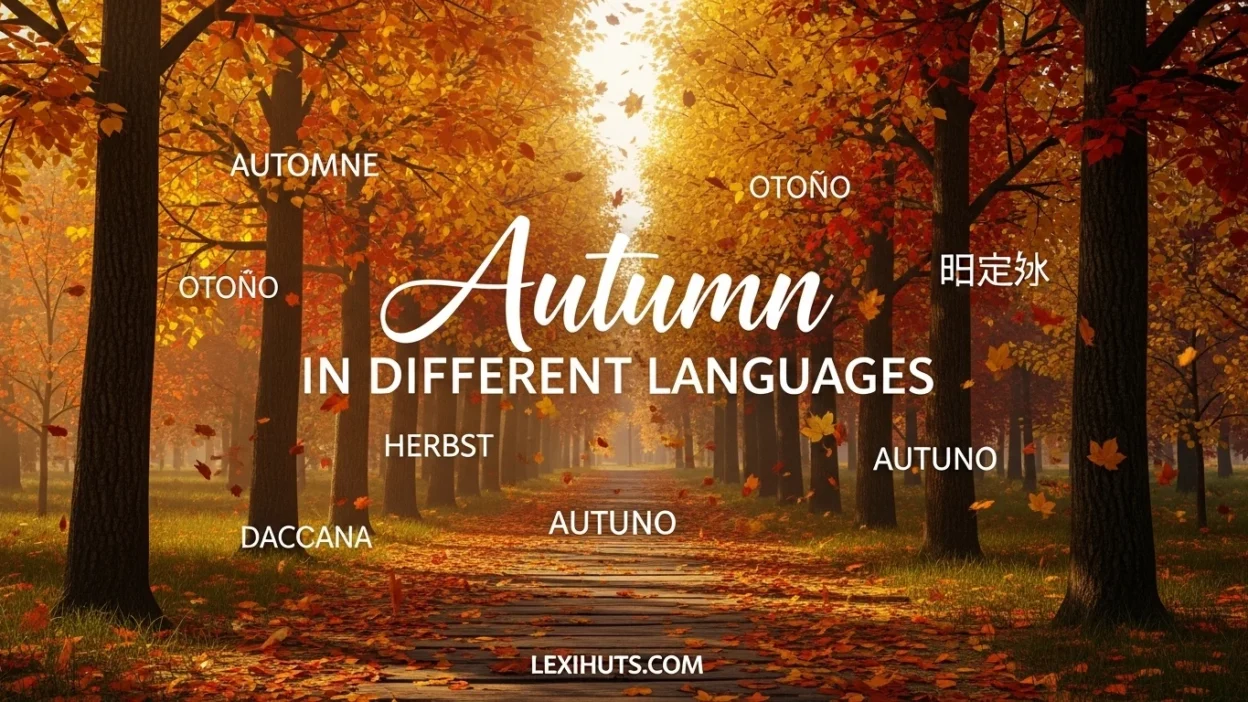
Autumn is one of the most loved seasons around the world, known for its cool breeze, falling leaves, and cozy atmosphere.
But have you ever wondered how people from different countries say “autumn” in their native languages?
Learning autumn in different languages not only improves your vocabulary but also helps you connect with cultures globally.
In this guide, you’ll explore translations, meanings, and examples from various languages in a simple and engaging way.
What Does Autumn Mean?
Autumn, also known as fall in some regions, is the season between summer and winter. It is typically associated with harvest time, changing leaf colors, and cooler temperatures. Many cultures celebrate festivals during this time, making it a rich and meaningful season worldwide.
Autumn in Different Languages Around the World
Below are popular translations of the word “autumn” in different languages, along with pronunciation and examples to help you learn quickly.
1. Spanish
Phrase: Otoño
Pronunciation: oh-TOH-nyoh
Example: Me gusta el otoño por sus colores.
Meaning: I like autumn because of its colors.
2. French
Phrase: Automne
Pronunciation: oh-TON
Example: L’automne est une saison calme.
Meaning: Autumn is a calm season.
3. German
Phrase: Herbst
Pronunciation: HEHRPST
Example: Der Herbst bringt kühle Tage.
Meaning: Autumn brings cool days.
4. Italian
Phrase: Autunno
Pronunciation: ah-TOON-no
Example: L’autunno è molto romantico.
Meaning: Autumn is very romantic.
5. Portuguese
Phrase: Outono
Pronunciation: oh-TOH-no
Example: O outono começa em março no Brasil.
Meaning: Autumn starts in March in Brazil.
6. Urdu
Phrase: خزاں (Khizaan)
Pronunciation: khi-ZAAN
Example: خزاں میں پتے جھڑتے ہیں۔
Meaning: Leaves fall in autumn.
7. Arabic
Phrase: خريف (Kharif)
Pronunciation: kha-REEF
Example: أحب الخريف بسبب الطقس الجميل.
Meaning: I love autumn because of the beautiful weather.
8. Chinese (Mandarin)
Phrase: 秋天 (Qiūtiān)
Pronunciation: chyo-tyen
Example: 秋天的天气很舒服。
Meaning: Autumn weather is very comfortable.
9. Japanese
Phrase: 秋 (Aki)
Pronunciation: ah-kee
Example: 秋は紅葉が美しいです。
Meaning: Autumn leaves are beautiful.
10. Korean
Phrase: 가을 (Gaeul)
Pronunciation: gah-eul
Example: 가을은 선선한 계절입니다.
Meaning: Autumn is a cool season.
11. Russian
Phrase: Осень (Osen’)
Pronunciation: OH-sen
Example: Осень — красивое время года.
Meaning: Autumn is a beautiful time of year.
12. Turkish
Phrase: Sonbahar
Pronunciation: son-ba-HAR
Example: Sonbaharda yapraklar dökülür.
Meaning: Leaves fall in autumn.
Why Learning Autumn in Different Languages Matters
Understanding how to say autumn in multiple languages goes beyond simple vocabulary. It helps you:
- Connect with people from different cultures
- Improve your language learning skills
- Travel more confidently
- Understand seasonal traditions worldwide
Seasonal words like autumn are commonly used in daily conversations, making them essential for beginners and advanced learners alike.
Practical Tips to Learn Seasonal Words Faster
Use Flashcards
Create flashcards with the word “autumn” in different languages and review them daily for better memory retention.
Practice with Sentences
Instead of memorizing just the word, use it in simple sentences to understand context and usage.
Watch Local Content
Watch videos or shows in different languages during autumn to hear how natives use the word naturally.
Repeat Out Loud
Pronunciation improves when you practice speaking regularly. Repeat each word aloud several times.
Group by Similar Words
Many languages have similar words for autumn (like “autunno,” “automne,” and “otoño”), making them easier to remember together.
Conclusion
Learning autumn in different languages is a fun and practical way to expand your vocabulary and cultural understanding.
If you are a traveler, student, or language enthusiast, these translations help you communicate more effectively and appreciate the beauty of this season worldwide.
FAQs:
1. What is autumn called in different languages?
Autumn is called “otoño” in Spanish, “automne” in French, “Herbst” in German, and “秋 (Aki)” in Japanese, among many others.
2. Why do some countries call autumn “fall”?
In countries like the United States, “fall” is used because leaves fall from trees during this season.
3. Is autumn the same worldwide?
Yes, but it occurs at different times depending on the hemisphere, such as September in the north and March in the south.
4. Which language has the easiest word for autumn?
Languages like Spanish (otoño) and Italian (autunno) are often considered easier due to their phonetic pronunciation.
5. How can I remember autumn in multiple languages?
Use repetition, flashcards, and practice sentences to memorize and retain the words effectively.