
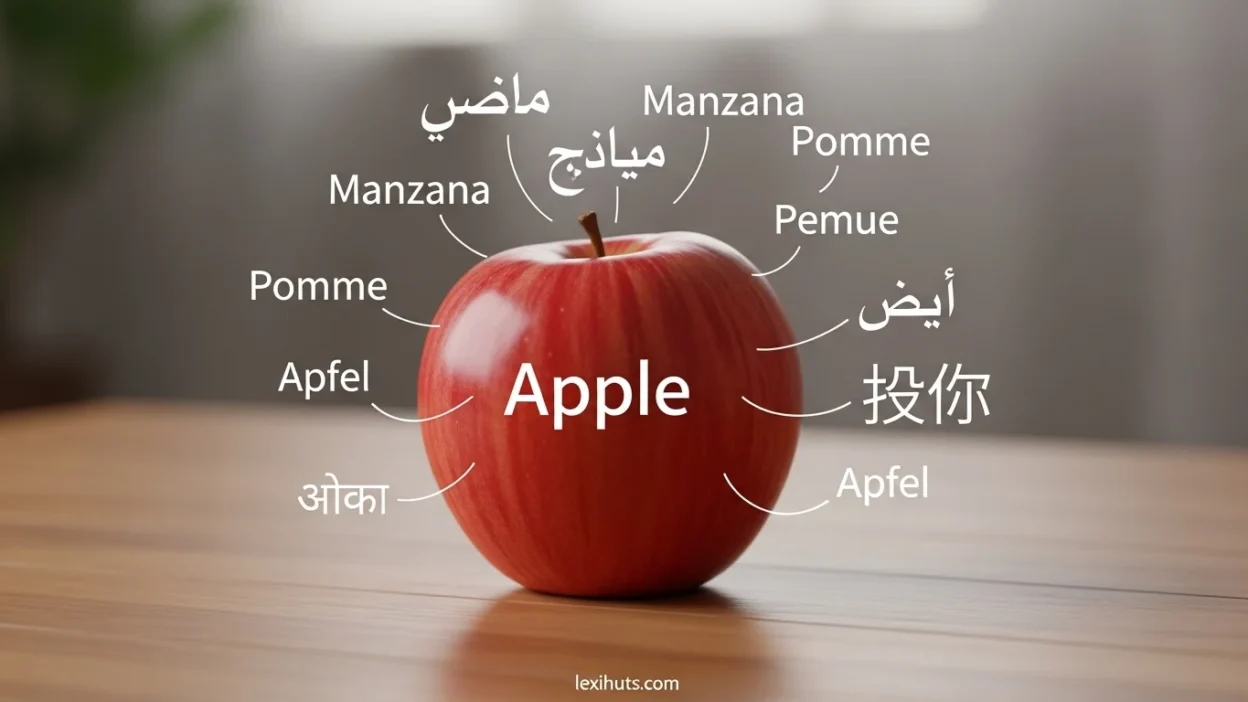
Apples are one of the most common and loved fruits across the globe, and the word “apple” exists in nearly every language.
If you’re learning a new language, traveling, or simply curious about how different cultures express everyday words, understanding how to say “apple” can be both fun and useful.
In this guide, you’ll discover how to say “apple” in different languages, along with pronunciations, meanings, and examples.
This article is designed to help language learners, travelers, and curious readers explore linguistic diversity in a simple and engaging way.
Apple in Different Languages List
1. Spanish
Phrase: Manzana
Pronunciation: mahn-THAH-nah
Meaning: Apple
Example: Me gusta comer una manzana.
Explanation: A commonly used word in Spanish-speaking countries for the fruit apple.
2. French
Phrase: Pomme
Pronunciation: pom
Meaning: Apple
Example: Je mange une pomme.
Explanation: Widely used in France and other French-speaking regions.
3. German
Phrase: Apfel
Pronunciation: AP-fel
Meaning: Apple
Example: Ich esse einen Apfel.
Explanation: A simple and familiar word in German vocabulary.
4. Italian
Phrase: Mela
Pronunciation: MEH-la
Meaning: Apple
Example: Mangio una mela.
Explanation: Commonly used in Italy for the fruit apple.
5. Portuguese
Phrase: Maçã
Pronunciation: mah-SAH
Meaning: Apple
Example: Eu como uma maçã.
Explanation: Used in Brazil and Portugal.
6. Dutch
Phrase: Appel
Pronunciation: AH-pel
Meaning: Apple
Example: Ik eet een appel.
Explanation: Similar to English, making it easy to remember.
7. Russian
Phrase: Яблоко
Pronunciation: YAH-bla-ka
Meaning: Apple
Example: Я ем яблоко.
Explanation: A common fruit term in Russian.
8. Chinese (Mandarin)
Phrase: 苹果
Pronunciation: píng guǒ
Meaning: Apple
Example: 我吃苹果。
Explanation: A widely used word in Mandarin Chinese.
9. Japanese
Phrase: りんご
Pronunciation: RING-go
Meaning: Apple
Example: りんごを食べます。
Explanation: Simple and frequently used in Japan.
10. Korean
Phrase: 사과
Pronunciation: sa-gwa
Meaning: Apple
Example: 사과를 먹어요.
Explanation: Also means “apology” in Korean depending on context.
11. Arabic
Phrase: تفاح
Pronunciation: tuf-fah
Meaning: Apple
Example: أنا آكل تفاح.
Explanation: Common across Arabic-speaking countries.
12. Hindi
Phrase: सेब
Pronunciation: seb
Meaning: Apple
Example: मैं सेब खाता हूँ।
Explanation: Frequently used in everyday Hindi.
13. Urdu
Phrase: سیب
Pronunciation: seb
Meaning: Apple
Example: میں سیب کھاتا ہوں۔
Explanation: Same pronunciation as Hindi.
14. Turkish
Phrase: Elma
Pronunciation: EL-ma
Meaning: Apple
Example: Elma yiyorum.
Explanation: A basic Turkish vocabulary word.
15. Greek
Phrase: Μήλο
Pronunciation: MEE-lo
Meaning: Apple
Example: Τρώω ένα μήλο.
Explanation: Rooted in ancient Greek language.
16. Polish
Phrase: Jabłko
Pronunciation: YAB-ko
Meaning: Apple
Example: Jem jabłko.
Explanation: Common in Polish daily speech.
17. Swedish
Phrase: Äpple
Pronunciation: EP-ple
Meaning: Apple
Example: Jag äter ett äpple.
Explanation: Similar to English in structure.
18. Norwegian
Phrase: Eple
Pronunciation: EH-ple
Meaning: Apple
Example: Jeg spiser et eple.
Explanation: Very close to Swedish.
19. Danish
Phrase: Æble
Pronunciation: EH-ble
Meaning: Apple
Example: Jeg spiser et æble.
Explanation: Scandinavian variation of the word.
20. Finnish
Phrase: Omena
Pronunciation: OH-meh-na
Meaning: Apple
Example: Syön omenan.
Explanation: Unique compared to other European languages.
21. Thai
Phrase: แอปเปิ้ล
Pronunciation: ae-bpə̂n
Meaning: Apple
Example: ฉันกินแอปเปิ้ล
Explanation: Borrowed from English.
22. Vietnamese
Phrase: Táo
Pronunciation: tao
Meaning: Apple
Example: Tôi ăn táo.
Explanation: Simple and easy to pronounce.
23. Indonesian
Phrase: Apel
Pronunciation: AH-pel
Meaning: Apple
Example: Saya makan apel.
Explanation: Similar to Dutch due to historical influence.
24. Malay
Phrase: Epal
Pronunciation: EH-pal
Meaning: Apple
Example: Saya makan epal.
Explanation: Slight variation of Indonesian.
25. Filipino (Tagalog)
Phrase: Mansanas
Pronunciation: man-SA-naas
Meaning: Apple
Example: Kumakain ako ng mansanas.
Explanation: Derived from Spanish influence.
26. Swahili
Phrase: Tufaha
Pronunciation: tu-FA-ha
Meaning: Apple
Example: Ninakula tufaha.
Explanation: Common in East Africa.
27. Hebrew
Phrase: תפוח
Pronunciation: ta-POO-akh
Meaning: Apple
Example: אני אוכל תפוח.
Explanation: Often used in religious and daily contexts.
28. Persian (Farsi)
Phrase: سیب
Pronunciation: sib
Meaning: Apple
Example: من سیب میخورم.
Explanation: Very similar to Urdu and Hindi.
29. Romanian
Phrase: Măr
Pronunciation: mer
Meaning: Apple
Example: Mănânc un măr.
Explanation: Short and easy to remember.
30. Hungarian
Phrase: Alma
Pronunciation: AL-ma
Meaning: Apple
Example: Eszem egy almát.
Explanation: Distinctive Hungarian vocabulary.
Why Learning “Apple” in Different Languages Matters
Learning how to say “apple” in different languages helps build a strong vocabulary foundation. Basic words like fruits are often the first step in mastering a new language. They are practical, easy to remember, and frequently used in daily conversations.
It also opens a window into different cultures. Language reflects history, influence, and lifestyle, and even a simple word like “apple” can reveal fascinating connections between languages.
Practical Tips to Learn Fruit Names in Multiple Languages
Use Flashcards
Create flashcards with the word, pronunciation, and meaning to improve memory retention.
Practice Daily
Repeat the words regularly to build familiarity and confidence.
Watch Native Content
Listen to native speakers using these words in videos or conversations.
Group Similar Words
Notice patterns between languages like Spanish “manzana” and Filipino “mansanas.”
Use in Sentences
Practice full sentences to understand context, not just vocabulary.
Conclusion
Learning how to say “apple” in different languages is a simple yet powerful way to begin exploring global communication.
From “manzana” in Spanish to “りんご” in Japanese, each word carries cultural significance and linguistic beauty.
By practicing these terms, you take a small but meaningful step toward becoming more globally aware and linguistically skilled.
FAQs:
1. What is apple called in most languages?
The word varies widely, but many European languages use similar forms like “appel,” “apfel,” or “apel.”
2. How do you say apple in Asian languages?
In Chinese, it’s “píng guǒ,” in Japanese “ringo,” and in Korean “sagwa.”
3. Why do some languages have similar words for apple?
Historical connections, trade, and shared linguistic roots cause similarities across languages.
4. Is apple an easy word to learn in different languages?
Yes, it’s a basic and commonly used word, making it ideal for beginners.
5. Can learning simple words improve language skills?
Absolutely, basic vocabulary builds a strong foundation for fluency and confidence.