
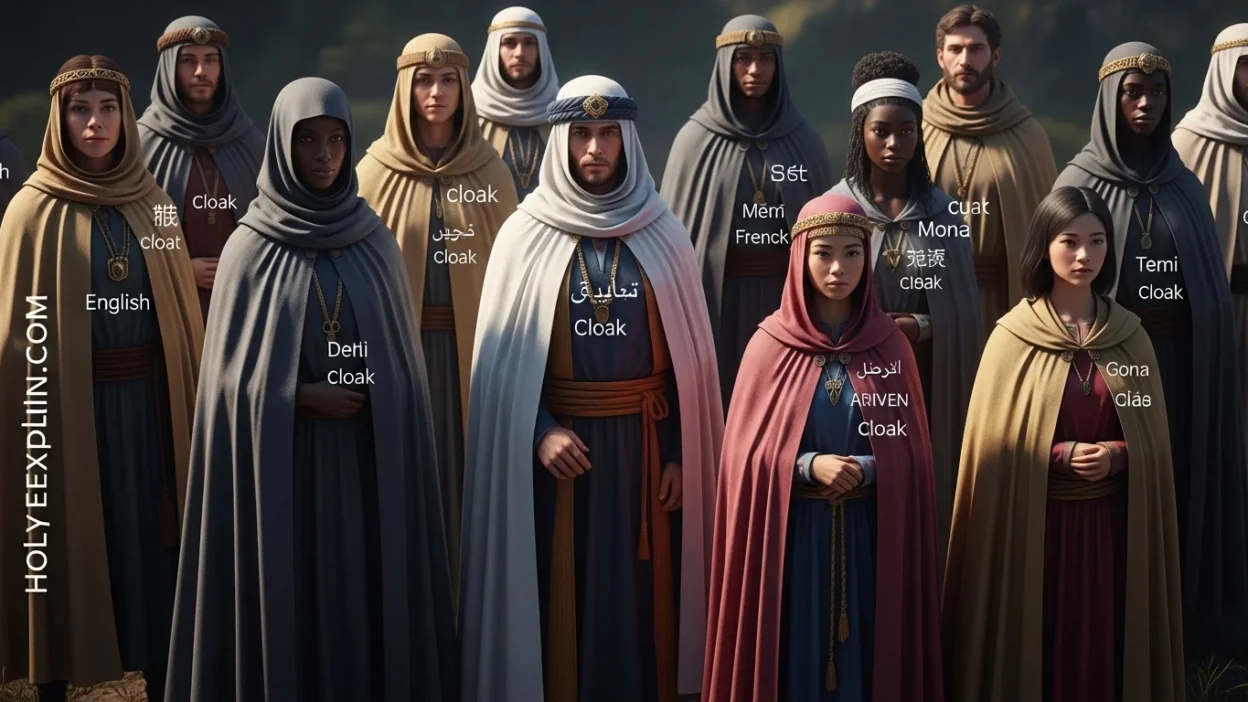
Understanding how the word “cloak” is expressed in different languages offers more than simple translation—it opens a window into culture, symbolism, and human expression.
Across the world, a cloak is not just a garment; it represents protection, mystery, identity, and even transformation.
From ancient civilizations to modern storytelling, cloaks have played a meaningful role in both language and tradition.
In this article, you’ll explore how “cloak” is translated and understood in 30 different languages, along with deeper meanings and practical lessons.
If you’re a language learner, writer, or simply curious, this guide will help you connect words with cultural significance in a powerful and memorable way.
Cloak in Different Languages: Meanings, Uses, and Lessons
1. English – Cloak
Verse/Statement: A cloak symbolizes protection and concealment.
Meaning: In English, a cloak often represents something that hides or shields. It can be physical or metaphorical, like “a cloak of secrecy.”
Lesson: Sometimes protection comes from what we choose to keep private.
2. Spanish – Capa
Verse/Statement: “La capa protege del frío y del peligro.”
Meaning: In Spanish, capa refers to a protective outer garment. It also symbolizes defense against external challenges.
Lesson: Stay prepared to shield yourself from life’s hardships.
3. French – Manteau
Verse/Statement: “Le manteau couvre et réchauffe.”
Meaning: The French word emphasizes warmth and covering. It reflects care and comfort.
Lesson: Provide warmth and comfort to those around you.
4. German – Mantel
Verse/Statement: “Der Mantel schützt vor der Kälte.”
Meaning: In German, it signifies protection from harsh conditions. It also symbolizes responsibility.
Lesson: Be someone others can rely on for protection.
5. Italian – Mantello
Verse/Statement: “Il mantello nasconde e protegge.”
Meaning: Italian connects cloaks with elegance and mystery. It often appears in literature and drama.
Lesson: Embrace both strength and mystery in your personality.
6. Portuguese – Capa
Verse/Statement: “A capa esconde e revela.”
Meaning: The word can mean both hiding and revealing, depending on context.
Lesson: What you hide can shape how others see you.
7. Urdu – چادر (Chadar)
Verse/Statement: چادر عزت اور تحفظ کی علامت ہے۔
Meaning: In Urdu, it symbolizes modesty, respect, and dignity.
Lesson: Protect your values as you would your body.
8. Arabic – عباءة (Abaya)
Verse/Statement: العباءة رمز للستر والوقار
Meaning: The cloak represents modesty and cultural identity.
Lesson: Honor traditions that shape your identity.
9. Hindi – चोगा (Choga)
Verse/Statement: चोगा सुरक्षा और गरिमा का प्रतीक है।
Meaning: It reflects both protection and dignity.
Lesson: Carry yourself with dignity in all situations.
10. Chinese – 披风 (Pīfēng)
Verse/Statement: 披风象征保护和力量。
Meaning: In Chinese culture, cloaks can represent strength and authority.
Lesson: True strength often comes from quiet confidence.
11. Japanese – マント (Manto)
Verse/Statement: マントは守りと神秘を表す。
Meaning: Often used in fiction, it symbolizes mystery and hidden power.
Lesson: Your unseen strengths matter the most.
12. Korean – 망토 (Mangto)
Verse/Statement: 망토는 보호와 변화를 의미한다.
Meaning: Represents transformation and safety.
Lesson: Change can protect and empower you.
13. Russian – Плащ (Plashch)
Verse/Statement: Плащ защищает от непогоды.
Meaning: It stands for protection from adversity.
Lesson: Be prepared for life’s storms.
14. Turkish – Pelerin
Verse/Statement: Pelerin gizem ve koruma sağlar.
Meaning: Associated with mystery and elegance.
Lesson: Balance elegance with strength.
15. Greek – Μανδύας (Mandýas)
Verse/Statement: Ο μανδύας συμβολίζει εξουσία.
Meaning: Historically linked to power and authority.
Lesson: Use power responsibly.
16. Latin – Pallium
Verse/Statement: Pallium est signum honoris.
Meaning: A symbol of honor and status in ancient Rome.
Lesson: Earn respect through actions.
17. Dutch – Mantel
Verse/Statement: De mantel beschermt tegen kou.
Meaning: Reflects care and security.
Lesson: Offer safety to those in need.
18. Swedish – Kappa
Verse/Statement: Kappan ger värme och skydd.
Meaning: Represents warmth and support.
Lesson: Be a source of warmth in relationships.
19. Polish – Płaszcz
Verse/Statement: Płaszcz chroni przed zimnem.
Meaning: Symbolizes endurance.
Lesson: Stay strong through difficulties.
20. Danish – Kappe
Verse/Statement: Kappen skjuler og beskytter.
Meaning: Emphasizes both concealment and protection.
Lesson: Not everything needs to be revealed.
21. Norwegian – Kappe
Verse/Statement: Kappen gir trygghet.
Meaning: Associated with safety and comfort.
Lesson: Create a safe space for yourself.
22. Finnish – Viitta
Verse/Statement: Viitta suojaa kylmältä.
Meaning: Reflects survival in harsh climates.
Lesson: Adapt to your environment.
23. Hungarian – Köpeny
Verse/Statement: A köpeny védelmet ad.
Meaning: Symbol of security and resilience.
Lesson: Build inner strength.
24. Czech – Plášť
Verse/Statement: Plášť chrání před nepřízní.
Meaning: Represents protection from hardship.
Lesson: Prepare for unexpected challenges.
25. Romanian – Mantou
Verse/Statement: Mantoul oferă protecție.
Meaning: Associated with warmth and reliability.
Lesson: Be dependable.
26. Thai – เสื้อคลุม (Suea Khlum)
Verse/Statement: เสื้อคลุมให้ความอบอุ่น
Meaning: Represents care and shelter.
Lesson: Care for others sincerely.
27. Vietnamese – Áo choàng
Verse/Statement: Áo choàng bảo vệ cơ thể
Meaning: Focuses on physical and symbolic protection.
Lesson: Protect your well-being.
28. Indonesian – Jubah
Verse/Statement: Jubah melambangkan kehormatan
Meaning: Often worn in ceremonial contexts.
Lesson: Respect traditions and values.
29. Swahili – Joho
Verse/Statement: Joho ni ishara ya heshima
Meaning: Represents dignity and honor.
Lesson: Carry yourself with respect.
30. Hebrew – גלימה (Glima)
Verse/Statement: גלימה מסמלת כוח והגנה
Meaning: Symbolizes power and divine protection.
Lesson: Strength often comes with responsibility.
FAQs:
1. What does “cloak” mean in different languages?
“Cloak” generally refers to a loose outer garment used for protection. In many languages, it also carries symbolic meanings like secrecy, dignity, or authority.
2. Why is the word “cloak” important across cultures?
Cloaks have historical significance in many societies, representing protection, status, and identity. This makes the word culturally rich and meaningful beyond simple clothing.
3. Are cloak translations always literal?
Not always. Some languages translate it as a general coat or robe, while others attach deeper cultural or symbolic meanings.
4. What is the symbolic meaning of a cloak?
A cloak often symbolizes protection, mystery, transformation, or hidden truth. It can also represent authority or honor depending on context.
5. Which language has the most unique meaning for cloak?
Languages like Arabic, Urdu, and Latin give the word deeper cultural or spiritual significance, linking it to modesty, honor, or tradition.
6. Is cloak used in modern language or only historical contexts?
It is still used today, especially in literature, fashion, and fantasy genres, though less common in everyday clothing terms.
7. How can learning words like “cloak” improve language skills?
It helps you understand cultural context, symbolism, and deeper meanings, making your language skills more expressive and nuanced.
8. Is cloak used metaphorically in writing?
Yes, phrases like “cloak of secrecy” or “cloak of darkness” are common and powerful metaphors in English and other languages.
Final Thoughts
Exploring “cloak in different languages” reveals how a simple word can carry deep cultural, emotional, and symbolic weight.
Across continents and traditions, the cloak stands as a universal symbol of protection, identity, and transformation.
Each language adds its own unique perspective, enriching our understanding of both words and the world.
By learning these translations and meanings, you not only expand your vocabulary but also gain insight into human expression across cultures.
Keep exploring languages—you never know what powerful meanings you’ll uncover next.