
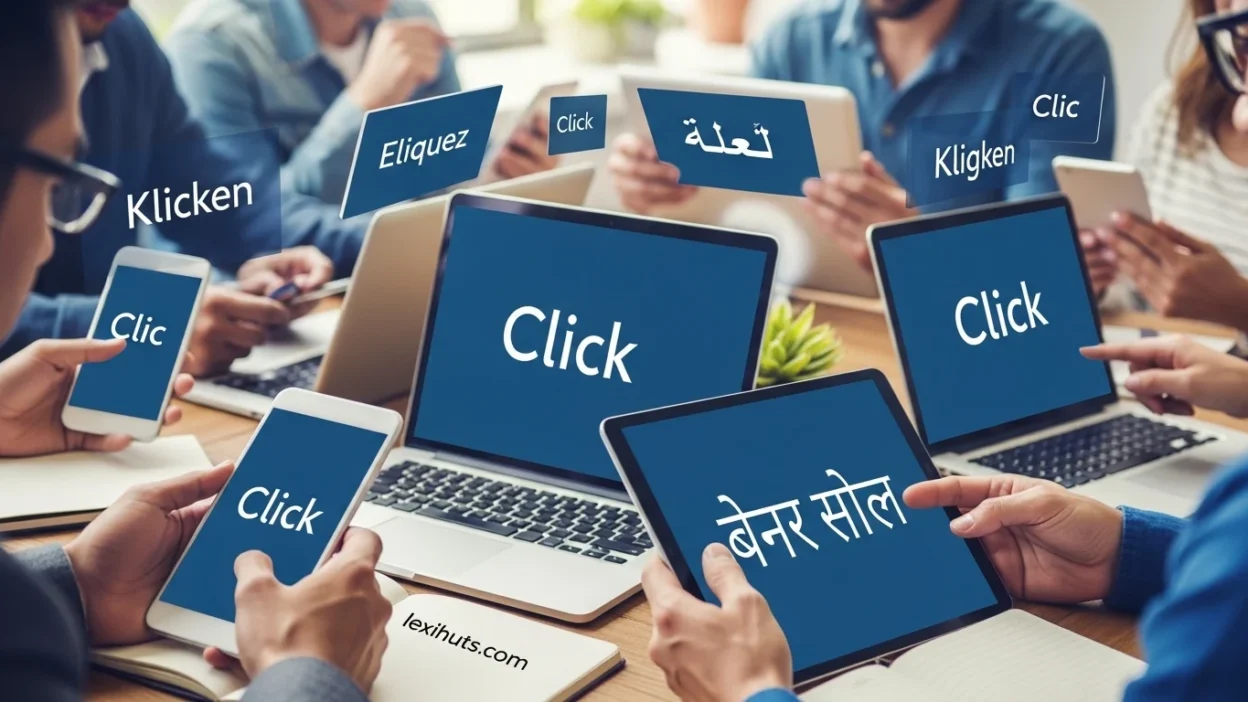
In today’s digital world, the word “click” is used everywhere—from browsing websites to using apps and devices.
But have you ever wondered how “click” is expressed in different languages? If you’re a language learner, traveler, or content creator, understanding these variations can help you communicate more effectively.
This guide explores how to say “click” in different languages, along with pronunciation, meaning, and examples. Let’s dive into a global linguistic journey.
What Does “Click” Mean in Different Contexts?
The word “click” can have multiple meanings depending on context:
- Digital Action: Pressing a mouse button or tapping a screen
- Sound Effect: A short, sharp sound
- Connection: Instantly understanding or bonding with someone
Below, we’ll focus mainly on the digital and action-based meaning of “click.”
Click in Different Languages (30 Examples)
1. Spanish
Phrase: Hacer clic
Pronunciation: ah-ser kleek
Meaning: To click (on a device)
Example: Haz clic en el botón
2. French
Phrase: Cliquer
Pronunciation: klee-kay
Meaning: To click
Example: Cliquez ici
3. German
Phrase: Klicken
Pronunciation: kli-ken
Meaning: To click
Example: Klicken Sie hier
4. Italian
Phrase: Cliccare
Pronunciation: kleek-kah-reh
Meaning: To click
Example: Clicca qui
5. Portuguese
Phrase: Clicar
Pronunciation: klee-kar
Meaning: To click
Example: Clique aqui
6. Dutch
Phrase: Klikken
Pronunciation: klik-ken
Meaning: To click
Example: Klik hier
7. Russian
Phrase: Кликнуть
Pronunciation: klik-noot
Meaning: To click
Example: Кликните сюда
8. Chinese (Mandarin)
Phrase: 点击
Pronunciation: diǎn jī
Meaning: To click/tap
Example: 点击这里
9. Japanese
Phrase: クリックする
Pronunciation: ku-ri-kku su-ru
Meaning: To click
Example: ここをクリック
10. Korean
Phrase: 클릭하다
Pronunciation: keul-lik-ha-da
Meaning: To click
Example: 여기를 클릭하세요
11. Arabic
Phrase: انقر
Pronunciation: an-qur
Meaning: Click (command form)
Example: انقر هنا
12. Hindi
Phrase: क्लिक करना
Pronunciation: klik kar-na
Meaning: To click
Example: यहाँ क्लिक करें
13. Urdu
Phrase: کلک کریں
Pronunciation: klik karein
Meaning: Click here
Example: یہاں کلک کریں
14. Turkish
Phrase: Tıklamak
Pronunciation: tik-la-mak
Meaning: To click
Example: Buraya tıklayın
15. Greek
Phrase: Κάντε κλικ
Pronunciation: kan-te klik
Meaning: Click (formal)
Example: Κάντε κλικ εδώ
16. Polish
Phrase: Kliknąć
Pronunciation: klik-nonch
Meaning: To click
Example: Kliknij tutaj
17. Swedish
Phrase: Klicka
Pronunciation: klik-ka
Meaning: To click
Example: Klicka här
18. Danish
Phrase: Klikke
Pronunciation: klik-ke
Meaning: To click
Example: Klik her
19. Norwegian
Phrase: Klikke
Pronunciation: klik-ke
Meaning: To click
Example: Klikk her
20. Finnish
Phrase: Klikata
Pronunciation: kli-ka-ta
Meaning: To click
Example: Klikkaa tästä
21. Thai
Phrase: คลิก
Pronunciation: khlik
Meaning: Click
Example: คลิกที่นี่
22. Vietnamese
Phrase: Nhấp
Pronunciation: nyap
Meaning: Click
Example: Nhấp vào đây
23. Indonesian
Phrase: Klik
Pronunciation: klik
Meaning: Click
Example: Klik di sini
24. Malay
Phrase: Klik
Pronunciation: klik
Meaning: Click
Example: Klik di sini
25. Hebrew
Phrase: לחץ
Pronunciation: la-chatz
Meaning: Press/click
Example: לחץ כאן
26. Czech
Phrase: Kliknout
Pronunciation: klik-nout
Meaning: To click
Example: Klikněte zde
27. Hungarian
Phrase: Kattintani
Pronunciation: kat-tin-ta-ni
Meaning: To click
Example: Kattintson ide
28. Romanian
Phrase: A face clic
Pronunciation: a fa-che klik
Meaning: To click
Example: Faceți clic aici
29. Bulgarian
Phrase: Кликнете
Pronunciation: klik-ne-te
Meaning: Click (formal)
Example: Кликнете тук
30. Filipino (Tagalog)
Phrase: I-click
Pronunciation: ee-klik
Meaning: To click
Example: I-click dito
Why Learning “Click” in Different Languages Matters
Understanding how to say “click” across languages is especially useful in today’s tech-driven environment. It helps:
- Improve user interface translations
- Enhance global communication
- Support multilingual SEO strategies
- Make content more accessible to international audiences
If you run a website or app, using localized terms like “click here” in different languages can significantly improve user engagement and experience.
Practical Tips for Using “Click” in Different Languages
Use Native Context
Always match the word with the correct tone—formal or informal—based on the language and audience.
Focus on UI/UX Language
For websites and apps, use commonly accepted phrases like “Click here” or “Tap here” in each language.
Consider Cultural Nuances
Some languages prefer “tap” or “press” instead of direct translations of “click.”
Optimize for SEO
Use multilingual keywords like:
- click here in different languages
- how to say click in other languages
- translate click into different languages
Test Translations
Before publishing, test translations with native speakers to ensure accuracy and usability.
Conclusion
Learning how to say “click” in different languages is more than just translation—it’s about effective global communication.
If you’re building a multilingual website or learning new languages, these variations help bridge gaps and create better user experiences.
FAQs:
1. What is the most common translation of “click” globally?
Most languages adopt a variation of “klik” or “click,” especially in digital contexts.
2. Is “click” always translated literally?
No, some languages use alternatives like “press” or “tap” depending on context.
3. Why is “click here” important in multiple languages?
It improves website usability and helps users navigate content in their native language.
4. Do all languages use English-based words for “click”?
Not all, but many modern languages borrow from English due to technology influence.
5. How can I use these translations for SEO?
You can target multilingual keywords and create localized content to reach global audiences.