
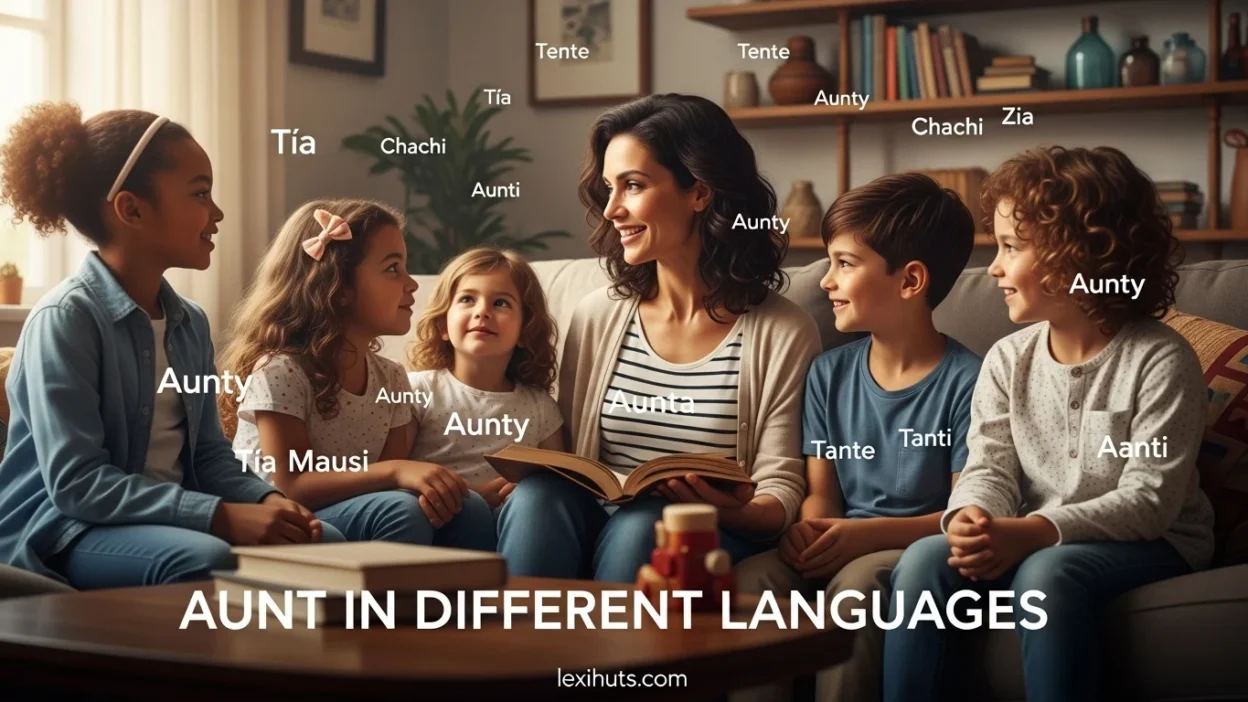
Understanding how to say “aunt in different languages” is both fun and useful, especially for travelers, language learners, and anyone curious about global cultures.
The word “aunt” represents family, respect, and relationships, and its translation varies beautifully across countries and traditions.
In this guide, you’ll discover how different languages express this important family term, along with pronunciation tips and simple examples.
What Does “Aunt” Mean?
An aunt is typically the sister of one’s mother or father, or the wife of an uncle. In many cultures, the word also extends to close family friends or elders as a sign of respect and affection.
Aunt in Different Languages Around the World
Below are popular translations of “aunt” across multiple languages, presented in an easy-to-read format.
1. Spanish
Phrase: Tía
Pronunciation: Tee-ah
Example: Mi tía vive en Madrid.
Meaning: Used for both maternal and paternal aunts
2. French
Phrase: Tante
Pronunciation: Tahnt
Example: Ma tante est très gentille.
Meaning: Common term for aunt in France
3. German
Phrase: Tante
Pronunciation: Tan-tuh
Example: Meine Tante kommt heute.
Meaning: Same word used for all aunts
4. Italian
Phrase: Zia
Pronunciation: Zee-ah
Example: Mia zia cucina bene.
Meaning: Informal and affectionate
5. Portuguese
Phrase: Tia
Pronunciation: Tee-ah
Example: Minha tia mora aqui.
Meaning: Used widely in Brazil and Portugal
6. Hindi
Phrase: Bua / Mausi / Chachi
Pronunciation: Boo-ah / Mau-see / Cha-chee
Explanation:
- Bua: Father’s sister
- Mausi: Mother’s sister
- Chachi: Uncle’s wife
7. Urdu
Phrase: Phuppo / Khala
Pronunciation: Phoop-po / Kha-la
Explanation:
- Phuppo: Father’s sister
- Khala: Mother’s sister
8. Arabic
Phrase: Aamma / Khala
Pronunciation: Aa-ma / Kha-la
Explanation:
- Aamma: Paternal aunt
- Khala: Maternal aunt
9. Chinese (Mandarin)
Phrase: 姑姑 (Gūgu) / 阿姨 (Āyí)
Pronunciation: Goo-goo / Ah-yee
Explanation:
- Gūgu: Father’s sister
- Āyí: Mother’s sister or older woman
10. Japanese
Phrase: おばさん (Obasan)
Pronunciation: Oh-bah-san
Meaning: Can also refer to middle-aged women politely
11. Korean
Phrase: 이모 (Imo) / 고모 (Gomo)
Pronunciation: Ee-mo / Go-mo
Explanation:
- Imo: Mother’s sister
- Gomo: Father’s sister
12. Russian
Phrase: Тётя (Tyotya)
Pronunciation: Tyo-tya
Meaning: Informal and commonly used
13. Turkish
Phrase: Teyze / Hala
Pronunciation: Tay-zeh / Ha-la
Explanation:
- Teyze: Maternal aunt
- Hala: Paternal aunt
14. Greek
Phrase: Θεία (Theia)
Pronunciation: Thee-ah
Meaning: General term for aunt
15. Swahili
Phrase: Shangazi / Auntie
Pronunciation: Shan-gah-zee
Meaning: Traditional and modern usage
Why “Aunt in Different Languages” Is Important
Learning how to say aunt in various languages helps you:
- Understand cultural differences in family structures
- Communicate better when traveling or meeting new people
- Show respect by using correct family terms
- Improve vocabulary in multiple languages
In many cultures, distinguishing between maternal and paternal aunts is very important, reflecting deeper family connections and traditions.
Practical Tips for Learning Family Words in Different Languages
Focus on Cultural Context
Some languages use different words depending on whether the aunt is from the mother’s or father’s side. Learn these distinctions for accuracy.
Practice Pronunciation
Repeat each word aloud to improve fluency and confidence when speaking.
Use Real-Life Examples
Create simple sentences like “My aunt is kind” in different languages to remember better.
Learn Related Words
Expand your vocabulary by learning terms like uncle, cousin, and grandmother alongside “aunt.”
Use Daily Practice
Incorporate new words into daily conversations or language apps to retain them effectively.
Conclusion
Exploring how to say aunt in different languages opens a window into global cultures and family traditions.
From “Tía” in Spanish to “Khala” in Urdu, each term carries unique meaning and emotional value.
If you’re learning a new language or simply curious, these translations help you connect more deeply with people around the world.
FAQs:
1. What is the most common word for aunt worldwide?
“Tia” and “Tante” are among the most commonly used forms across many European languages.
2. Do all languages have different words for maternal and paternal aunts?
No, but many Asian and Middle Eastern languages make this distinction clearly.
3. How do you say aunt in English slang?
“Auntie” is a common informal and affectionate version.
4. Why do some languages have multiple words for aunt?
It reflects cultural importance placed on family roles and relationships.
5. Is “auntie” used globally?
Yes, many cultures use “auntie” informally to show respect to older women, even if not related.