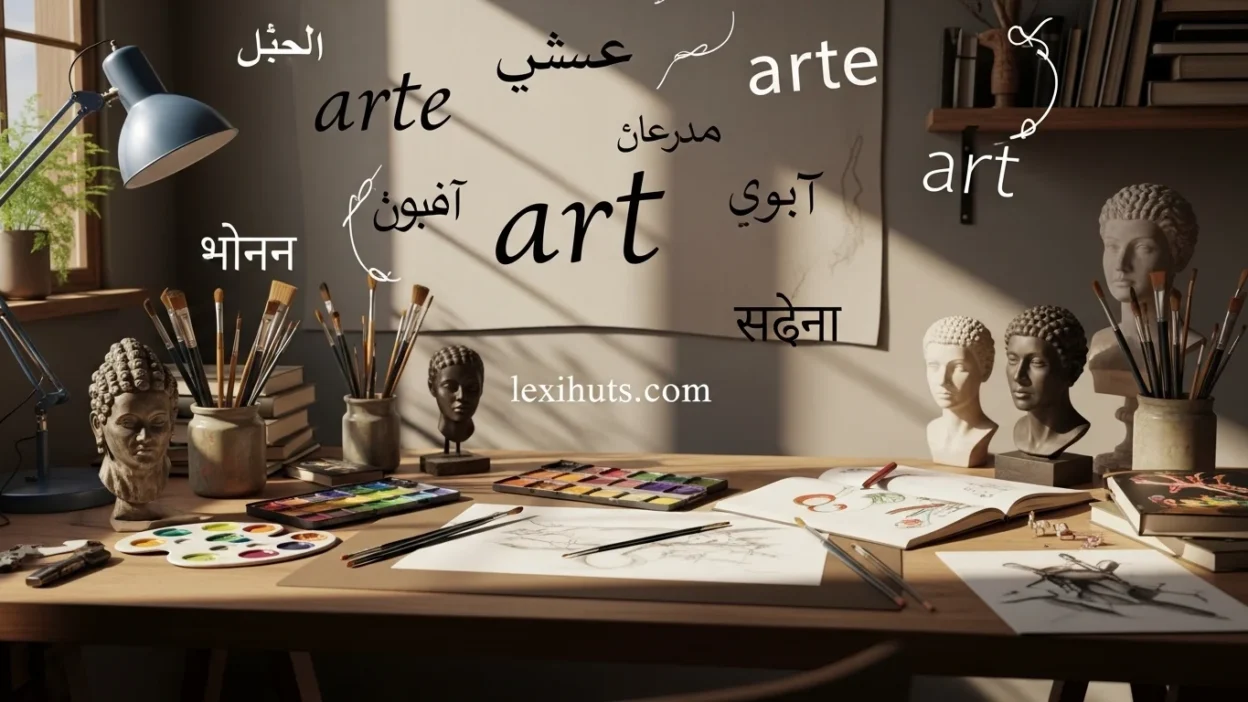
Art is a universal language, but the word “art” itself varies beautifully across cultures and languages.
If you’re learning a new language, traveling, or exploring global creativity, understanding how “art” is expressed worldwide helps you connect deeper with different traditions and perspectives.
In this guide, you’ll discover how to say “art” in multiple languages, along with pronunciation, meaning, and real-world usage.
What Does “Art” Mean Across Cultures?
The concept of art goes beyond paintings and sculptures. It represents creativity, expression, and cultural identity. While the word may differ in sound and structure, its core meaning—creative expression—remains consistent across languages.
Art in Different Languages (Top Global Translations)
1. English
Word: Art
Pronunciation: Ahrt
Meaning: Creative expression through visual, auditory, or performance mediums.
2. Spanish
Word: Arte
Pronunciation: Ar-teh
Example: El arte es una forma de expresión.
Meaning: Refers to visual and creative arts, widely used in Spanish-speaking countries.
3. French
Word: Art
Pronunciation: Ahr
Example: L’art est important dans la culture.
Meaning: Covers fine arts, design, and creative skills.
4. German
Word: Kunst
Pronunciation: Koons-t
Example: Kunst ist ein Teil des Lebens.
Meaning: Encompasses art, craftsmanship, and creativity.
5. Italian
Word: Arte
Pronunciation: Ar-teh
Example: L’arte italiana è famosa nel mondo.
Meaning: Often associated with classical and Renaissance art.
6. Portuguese
Word: Arte
Pronunciation: Ar-chee (Brazilian tone)
Example: A arte inspira pessoas.
Meaning: Refers to all forms of creative expression.
7. Hindi
Word: कला (Kala)
Pronunciation: Ka-laa
Example: कला हमारी संस्कृति का हिस्सा है।
Meaning: Represents art, skill, and talent.
8. Urdu
Word: فن (Fun)
Pronunciation: Fun
Example: فن زندگی کو خوبصورت بناتا ہے۔
Meaning: Refers to artistic skill and creativity.
9. Arabic
Word: فن (Fann)
Pronunciation: Fann
Example: الفن يعبر عن المشاعر.
Meaning: Expresses creativity, emotion, and culture.
10. Chinese (Mandarin)
Word: 艺术 (Yìshù)
Pronunciation: Yee-shoo
Example: 艺术是文化的一部分。
Meaning: Refers to fine arts and artistic expression.
11. Japanese
Word: 芸術 (Geijutsu)
Pronunciation: Gay-joot-su
Example: 芸術は心を表現する。
Meaning: Covers traditional and modern art forms.
12. Korean
Word: 예술 (Yesul)
Pronunciation: Yeh-sul
Example: 예술은 감정을 표현한다.
Meaning: Refers to visual and performing arts.
13. Russian
Word: Искусство (Iskusstvo)
Pronunciation: Is-koos-stvo
Example: Искусство вдохновляет людей.
Meaning: Broad term for artistic creativity.
14. Turkish
Word: Sanat
Pronunciation: Sa-naht
Example: Sanat hayatın bir parçasıdır.
Meaning: Refers to all creative disciplines.
15. Greek
Word: Τέχνη (Techni)
Pronunciation: Tekh-nee
Example: Η τέχνη εκφράζει συναισθήματα.
Meaning: Root word linked to technique and creativity.
Why Learning “Art” in Different Languages Matters
Understanding how “art” is expressed globally helps you appreciate cultural diversity. Each language reflects unique traditions, philosophies, and artistic values. For students, travelers, and creatives, this knowledge enhances communication and cultural awareness.
Practical Tips to Remember These Words Easily
Use Association Techniques
Link each word with a country or cultural symbol. For example, “Arte” can remind you of Spanish or Italian paintings.
Practice Pronunciation Daily
Say each word out loud to improve memory and fluency.
Learn Through Context
Use the word in simple sentences to understand its real-world usage.
Group Similar Words
Notice patterns—many languages like Spanish, Italian, and Portuguese use “Arte.”
Watch Cultural Content
Films, music, and documentaries help reinforce vocabulary naturally.
Conclusion
The word “art” may change across languages, but its essence remains universal—creative expression that connects humanity.
By learning how different cultures express this idea, you gain not only language skills but also a deeper appreciation for global creativity.
FAQs:
1. What is the most common translation of “art” worldwide?
“Arte” is one of the most common translations, used in Spanish, Italian, and Portuguese.
2. How do you say art in Asian languages?
In Chinese, it’s “Yìshù,” in Japanese “Geijutsu,” and in Korean “Yesul.”
3. What does “Kala” mean in Hindi?
“Kala” means art, skill, or talent and is deeply connected to cultural traditions.
4. Is the meaning of art the same in every language?
While the core idea is similar, cultural interpretations can slightly differ.
5. Why should I learn art vocabulary in different languages?
It improves cultural understanding, communication skills, and global awareness.