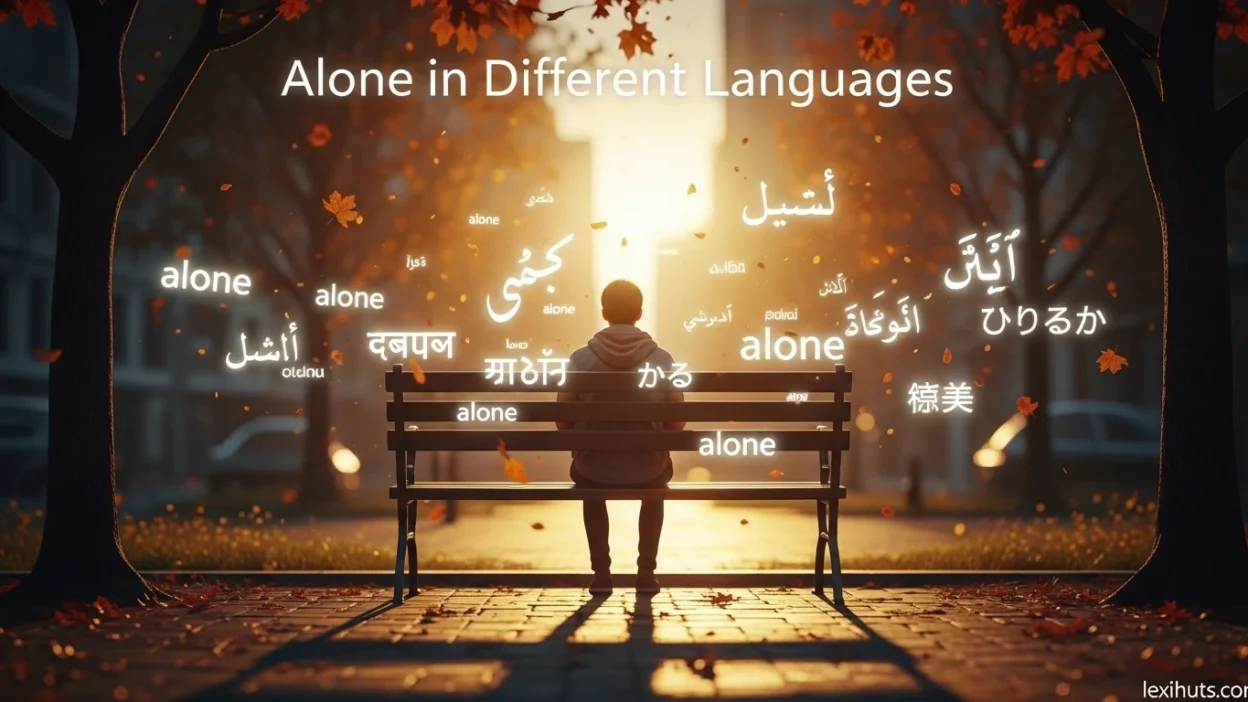
Feeling “alone” is a universal human experience, but every language expresses it with its own emotional tone and cultural depth.
If you’re learning a new language, traveling, writing, or simply curious, understanding how to say “alone in different languages” can help you connect more deeply with people and emotions worldwide.
In this guide, you’ll discover how “alone” is translated across popular languages, along with pronunciation, meaning, and real-life examples.
The content is simple, practical, and designed to match exactly what users search for.
Why Learn “Alone” in Different Languages?
Learning how to say “alone” in multiple languages helps you:
- Express emotions clearly in conversations
- Improve vocabulary for travel and communication
- Understand cultural nuances of loneliness and independence
- Enhance writing, storytelling, or translation skills
25 Ways to Say “Alone” in Different Languages
1. English
Phrase: Alone
Pronunciation: uh-lohn
Meaning: Being by yourself without others
Example: I prefer to be alone sometimes.
2. Spanish
Phrase: Solo / Sola
Pronunciation: soh-loh / soh-lah
Meaning: Alone (gender-specific)
Example: Estoy solo en casa.
3. French
Phrase: Seul / Seule
Pronunciation: suhl
Meaning: Alone or by oneself
Example: Je suis seul aujourd’hui.
4. German
Phrase: Allein
Pronunciation: ah-line
Meaning: Alone, without company
Example: Ich bin allein.
5. Italian
Phrase: Solo / Sola
Pronunciation: soh-loh
Meaning: Alone or only
Example: Sono solo.
6. Portuguese
Phrase: Sozinho / Sozinha
Pronunciation: soh-zeen-yoh
Meaning: Alone (masculine/feminine)
Example: Estou sozinho.
7. Dutch
Phrase: Alleen
Pronunciation: ah-lane
Meaning: Alone or only
Example: Ik ben alleen.
8. Russian
Phrase: Один / Одна
Pronunciation: ah-deen / ahd-nah
Meaning: Alone (male/female)
Example: Я один.
9. Chinese (Mandarin)
Phrase: 一个人
Pronunciation: yī gè rén
Meaning: One person / alone
Example: 我一个人。
10. Japanese
Phrase: 一人 (Hitori)
Pronunciation: hee-toh-ree
Meaning: Alone or by oneself
Example: 一人で行きます。
11. Korean
Phrase: 혼자
Pronunciation: hon-ja
Meaning: Alone
Example: 혼자 있어요.
12. Arabic
Phrase: وحدي
Pronunciation: wah-dee
Meaning: I am alone
Example: أنا وحدي.
13. Hindi
Phrase: अकेला / अकेली
Pronunciation: uh-kay-la / uh-kay-lee
Meaning: Alone (male/female)
Example: मैं अकेला हूँ।
14. Urdu
Phrase: اکیلا
Pronunciation: akeela
Meaning: Alone
Example: میں اکیلا ہوں۔
15. Turkish
Phrase: Yalnız
Pronunciation: yal-nuz
Meaning: Alone or lonely
Example: Yalnızım.
16. Greek
Phrase: Μόνος / Μόνη
Pronunciation: mo-nos / mo-nee
Meaning: Alone (male/female)
Example: Είμαι μόνος.
17. Swedish
Phrase: Ensam
Pronunciation: en-sam
Meaning: Alone or lonely
Example: Jag är ensam.
18. Polish
Phrase: Sam / Sama
Pronunciation: sahm / sah-ma
Meaning: Alone
Example: Jestem sam.
19. Thai
Phrase: คนเดียว
Pronunciation: kon-dee-ow
Meaning: Alone / single person
Example: ฉันอยู่คนเดียว
20. Vietnamese
Phrase: Một mình
Pronunciation: mot minh
Meaning: Alone
Example: Tôi ở một mình.
21. Indonesian
Phrase: Sendiri
Pronunciation: sen-dee-ree
Meaning: Alone
Example: Saya sendiri.
22. Filipino (Tagalog)
Phrase: Mag-isa
Pronunciation: mag-ee-sa
Meaning: Alone
Example: Mag-isa ako.
23. Hebrew
Phrase: לבד
Pronunciation: leh-vad
Meaning: Alone
Example: אני לבד.
24. Danish
Phrase: Alene
Pronunciation: ah-leh-neh
Meaning: Alone
Example: Jeg er alene.
25. Finnish
Phrase: Yksin
Pronunciation: uyk-sin
Meaning: Alone
Example: Olen yksin.
Different Meanings of “Alone” Across Cultures
Emotional vs Physical Meaning
- In some languages, “alone” can mean physically alone (no one around)
- In others, it can imply loneliness or emotional isolation
Positive vs Negative Tone
- English and French can express both independence and loneliness
- Japanese often emphasizes peaceful solitude
- Arabic and Urdu can carry deeper emotional weight depending on context
Why This Topic Matters for Language Learners
Understanding “alone in different languages” is important because:
- It’s a commonly used everyday word
- It helps express emotions clearly
- It appears in conversations, literature, and media
- It improves your cultural awareness and communication skills
This keyword is also widely searched because people want quick translations, meanings, and examples in one place.
Practical Tips for Using “Alone” Correctly
Learn Gender Rules
Some languages like Spanish, Hindi, and Russian change the word based on gender.
Understand Context
“Alone” can mean peaceful solitude or sadness—use it carefully depending on the situation.
Practice with Sentences
Instead of memorizing just the word, use full sentences to improve fluency.
Listen to Native Speakers
Hearing pronunciation helps you speak naturally and confidently.
Use in Real Conversations
Try using these words when chatting, traveling, or learning online.
Conclusion
Learning how to say “alone in different languages” opens the door to better communication and emotional expression across cultures.
From “solo” in Spanish to “hitori” in Japanese, each variation carries its own nuance and meaning.
By practicing these phrases, you not only expand your vocabulary but also gain a deeper understanding of how different cultures view solitude and independence.
FAQs:
1. What is the most common translation of “alone”?
The most common translations include “solo” (Spanish), “seul” (French), and “allein” (German).
2. Does “alone” always mean lonely?
No, “alone” can mean being by yourself without feeling lonely. Context matters.
3. How do you say “I am alone” in different languages?
Examples include “Estoy solo” (Spanish), “Je suis seul” (French), and “Ich bin allein” (German).
4. Is “alone” different for male and female in some languages?
Yes, languages like Spanish, Hindi, and Russian use gender-specific forms.
5. Which language has the simplest word for “alone”?
Languages like English (“alone”) and Indonesian (“sendiri”) are simple and easy to use.